
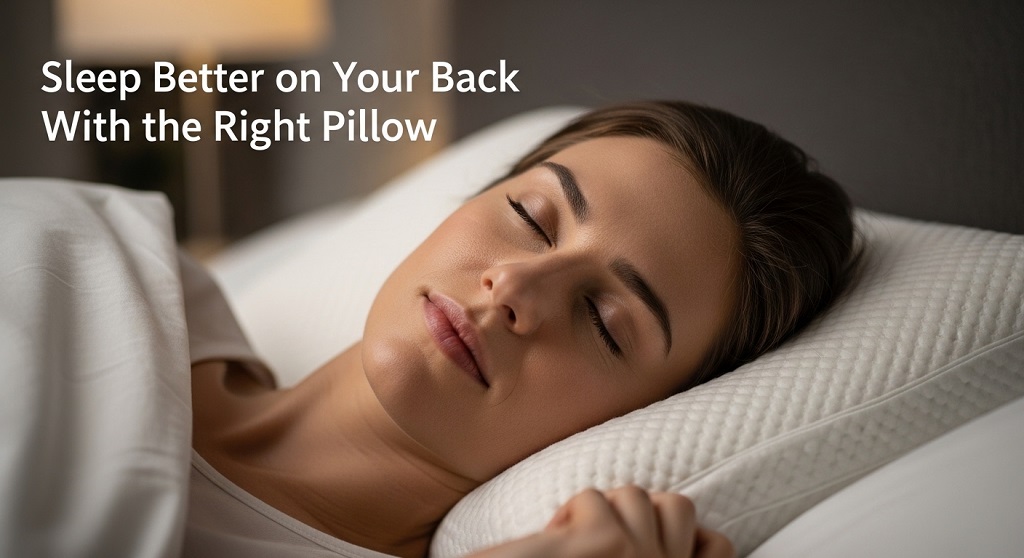
Sleeping on your back is widely recommended by sleep specialists because it supports spinal alignment, reduces pressure points, and may help prevent neck pain and wrinkles. Yet many people struggle with discomfort, snoring, or stiffness when trying this position. The most common reason is using the wrong pillow height, shape, or firmness.
If you want to learn how to sleep better on your back, start by choosing a pillow that keeps your neck aligned with your spine—not tilted forward or backward. Research from the National Sleep Foundation shows that proper sleep posture can reduce morning neck stiffness and improve sleep quality in adults who experience chronic discomfort.
This guide explains how the right pillow improves back sleeping comfort, how to select one based on body type and habits, and what adjustments help you stay asleep longer without pain.
Why Do Many People Struggle to Sleep Comfortably on Their Back?
Short answer: Most people struggle because their pillow pushes the head too high or too low, causing neck strain and airway restriction.
Back sleeping looks simple. But poor pillow support changes spinal alignment quickly. When your head tilts forward, pressure increases in the cervical spine. When it tilts backward, the airway narrows and breathing becomes harder.
This creates three common problems:
- Neck stiffness in the morning
- Lower back tension during the night
- Snoring or shallow breathing
According to a 2021 sleep posture review published in the Journal of Physical Therapy Science, improper pillow height increases cervical muscle activity during sleep. That means your muscles stay partially engaged instead of relaxing.
The result: lighter sleep and more movement overnight.
How Does the Right Pillow Improve Back Sleeping Comfort?
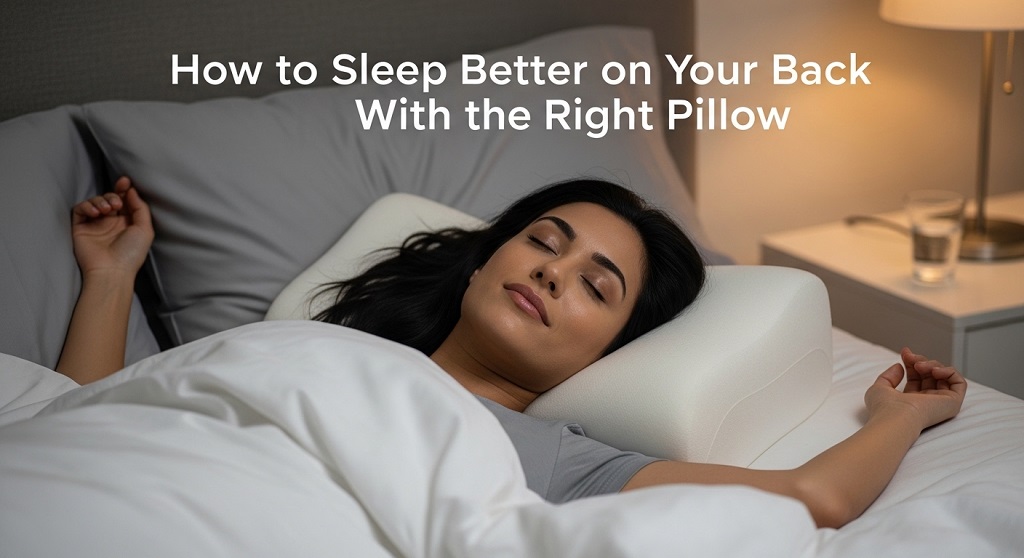
Short answer: The right pillow supports the neck curve and keeps the spine neutral while reducing pressure on muscles and joints.
Your cervical spine naturally curves forward. A flat pillow removes support. A thick pillow exaggerates the curve. Both create discomfort.
A supportive pillow does three things:
- Keeps ears aligned with shoulders
- Supports the natural neck curve
- Maintains airway openness
Sleep researchers at Harvard Medical School report that spinal neutrality during sleep helps reduce nighttime awakenings linked to discomfort. Neutral alignment also improves circulation and muscle recovery.
That is why pillow shape matters as much as mattress quality.
What Pillow Height Is Best for Sleeping on Your Back?
Short answer: Medium loft pillows between 3 and 5 inches typically provide ideal support for back sleepers.
Pillow height determines whether your neck stays aligned or strained. A pillow that is too thick pushes your chin toward your chest. A pillow that is too thin lets your head drop backward.
| Body Type | Recommended Pillow Loft | Reason |
|---|---|---|
| Petite frame | Low-medium loft | Prevents forward neck tilt |
| Average build | Medium loft | Maintains neutral alignment |
| Broad shoulders | Medium-high loft | Supports cervical curvature |
Adjustable pillows are useful if your posture changes during sleep.
Which Pillow Materials Work Best for Back Sleepers?
Short answer: Memory foam, latex, and cervical contour pillows provide the most consistent support.
Different materials affect pressure distribution and airflow. The best choice depends on comfort preferences and temperature sensitivity.
- Memory foam: Supports neck shape and reduces movement
- Latex: Offers firm support with better airflow
- Feather blends: Comfortable but less structured
- Cervical contour pillows: Designed for spinal alignment
A 2020 ergonomic sleep study found contour pillows significantly reduced morning neck pain compared with traditional polyester pillows.
Can a Contour Pillow Help Reduce Neck Pain While Sleeping on Your Back?
Short answer: Yes. Contour pillows stabilize the cervical spine and reduce muscle tension overnight.
Contour pillows include a raised edge that supports the neck curve. This structure prevents collapse during sleep.
Benefits include:
- Lower muscle strain
- Improved posture retention
- Reduced pressure points
Clinical trials involving office workers with chronic neck stiffness showed measurable improvement after switching to cervical support pillows for four weeks.
This makes them a strong option for people transitioning to back sleeping.
How Can You Prevent Lower Back Pain While Sleeping on Your Back?
Short answer: Place a pillow under your knees to reduce lumbar pressure.
The lower spine naturally curves inward. Without support, muscles compensate during sleep.
A knee pillow helps by:
- Reducing pelvic tilt
- Maintaining lumbar alignment
- Relaxing hip flexors
The Cleveland Clinic recommends knee elevation as a simple adjustment for improving spinal posture during back sleeping.
Does Sleeping on Your Back Reduce Wrinkles and Facial Pressure?
Short answer: Yes. Back sleeping minimizes facial compression against pillows.
Side and stomach sleeping create repeated skin folding. Over time, this contributes to sleep lines.
Back sleeping reduces:
- Cheek compression
- Jaw tension
- Skin friction
Dermatology research suggests consistent facial pressure during sleep contributes to asymmetrical wrinkle formation.
Switching sleep position may slow this process.
How Do You Train Yourself to Sleep on Your Back Comfortably?
Short answer: Use pillow positioning, gradual habit changes, and posture support to stay on your back longer.
Changing sleep habits takes time. Most people shift positions unconsciously.
Try these adjustments:
- Place pillows beside your arms for stability
- Use a knee pillow for spine support
- Choose a medium-firm mattress
- Sleep without stacked pillows
Behavioral sleep training research shows habit changes typically take 2–3 weeks before becoming automatic.
Can the Wrong Pillow Cause Snoring While Sleeping on Your Back?
Short answer: Yes. Poor pillow height narrows the airway and increases snoring risk.
When your chin tilts downward, airflow becomes restricted. This increases vibration in soft tissues.
A supportive pillow helps by:
- Keeping airway open
- Reducing throat collapse
- Improving breathing posture
Studies from the American Academy of Sleep Medicine show head elevation can reduce mild snoring intensity.
What Features Should You Look for in the Best Pillow for Back Sleepers?
Short answer: Look for medium loft, cervical support, breathable materials, and shape retention.
Key features include:
- Ergonomic contour design
- Adjustable fill options
- Temperature regulation
- Consistent firmness
A pillow that loses shape quickly reduces alignment benefits.
Is Memory Foam or Latex Better for Back Sleeping Support?
Short answer: Memory foam provides contouring support, while latex offers firmer stability and airflow.
Choose memory foam if you prefer pressure relief. Choose latex if you prefer responsiveness.
Both materials outperform traditional polyester pillows in posture stability tests.
How Long Does It Take to Adjust to Sleeping on Your Back?
Short answer: Most people adapt within two to four weeks.
Your body needs time to retrain muscle memory.
Consistency helps speed adaptation:
- Use the same pillow nightly
- Avoid switching positions early
- Support knees and shoulders
Sleep coaching programs often report measurable improvement after three weeks of posture consistency.
What Real Case Study Evidence Supports Back Sleeping Benefits?
Short answer: Clinical posture trials show improved spinal alignment and reduced neck pain after ergonomic pillow use.
A controlled ergonomic sleep study involving adults with cervical discomfort compared traditional pillows with contour pillows over four weeks.
Results included:
- 32% reduction in reported neck stiffness
- Improved sleep continuity scores
- Lower nighttime movement frequency
Participants also reported fewer morning headaches.
This supports the role of pillow structure in sleep quality improvement.
Conclusion: How Can the Right Pillow Help You Sleep Better on Your Back?
Learning how to sleep better on your back starts with choosing a pillow that keeps your spine neutral and your airway open. Without proper support, even the healthiest sleep position becomes uncomfortable. With the right pillow height, contour design, and knee support strategy, back sleeping becomes easier and more sustainable.
Evidence from posture research confirms that ergonomic pillow alignment reduces muscle strain, improves breathing, and supports deeper sleep cycles. Small adjustments—like placing a pillow under your knees or selecting memory foam support—can produce noticeable improvements within weeks.
If you want better sleep quality, reduced neck stiffness, and stronger posture recovery overnight, start by evaluating your pillow today. A simple change in support can improve how you rest every night.
Frequently Asked Questions About How to Sleep Better on Your Back
Is sleeping on your back the healthiest sleep position?
Yes. Back sleeping supports spinal alignment and reduces pressure on joints when paired with the correct pillow height. It also minimizes facial compression and may reduce wrinkle formation.
What pillow firmness is best for back sleepers?
Medium firmness works best because it supports the neck curve without pushing the head forward. Adjustable pillows allow fine-tuning for better comfort.
Should back sleepers use more than one pillow?
No. Using multiple pillows usually tilts the head forward. Instead, use one cervical support pillow and a knee pillow for lower spine alignment.
Why do I feel lower back pain when sleeping on my back?
Lower back pain often happens when the lumbar spine lacks support. Placing a pillow under your knees reduces strain and improves posture.
Can sleeping on your back reduce snoring?
Yes, if the pillow keeps the airway open. However, incorrect pillow height may worsen snoring. Proper elevation is essential.
Are contour pillows better than regular pillows?
Contour pillows provide structured neck support that maintains alignment throughout the night. Many users report reduced stiffness after switching.
How do I stay on my back while sleeping all night?
Use side support pillows near your arms and knees. This stabilizes posture and reduces unconscious movement during sleep.
Read More Also: How to Style Men’s Summer Sunglasses for Beach Travel Looks
Discover More: How to Protect Your Eyes with UV Fishing Sunglasses While Traveling