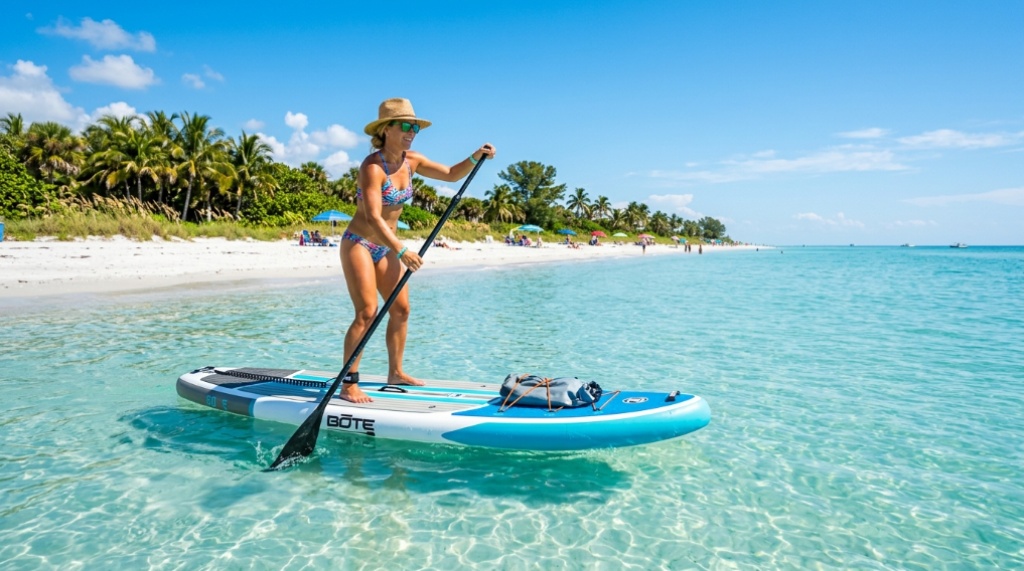
You’ve found a calm inlet near Sarasota or a glassy morning on the Intracoastal. The water is warm, the sun is forgiving, and the last thing you want is to wrestle a heavy board onto a roof rack. But before you commit to buying, the choice between an inflatable and a hard paddleboard can feel like a trade-off between convenience and performance. For many paddlers heading to Florida’s flats, springs, and coastal mangroves, a Niphean Inflatable Paddle Board Florida setup offers a practical starting point, but it isn’t the only option. Here is how to decide which board type actually fits your launch spots and storage space.
Quick Answer
For Florida’s warm-water conditions, an inflatable paddleboard is usually the better choice for beginners, travelers, and anyone with limited storage. It handles flat water, mangroves, and mild chop well, and it won’t delaminate in the heat. A hard board is better if you prioritize speed, glide, and performance surfing, and you have a safe, shaded place to store it.
Key Takeaways
- Florida’s heat and humidity are tough on hard epoxy boards stored outdoors; inflatables handle temperature swings without cracking or delaminating.
- Inflatables win on portability and storage, which matters if you live in an apartment or drive a small car.
- Hard boards win on glide, speed, and responsiveness, especially for surfing or long-distance touring.
- For bay, spring, and mangrove paddling, a quality inflatable at the right PSI feels rigid enough for most recreational riders.
- Your launch location and storage situation should decide the purchase more than brand hype.
Why Florida’s Climate Changes the Usual Debate
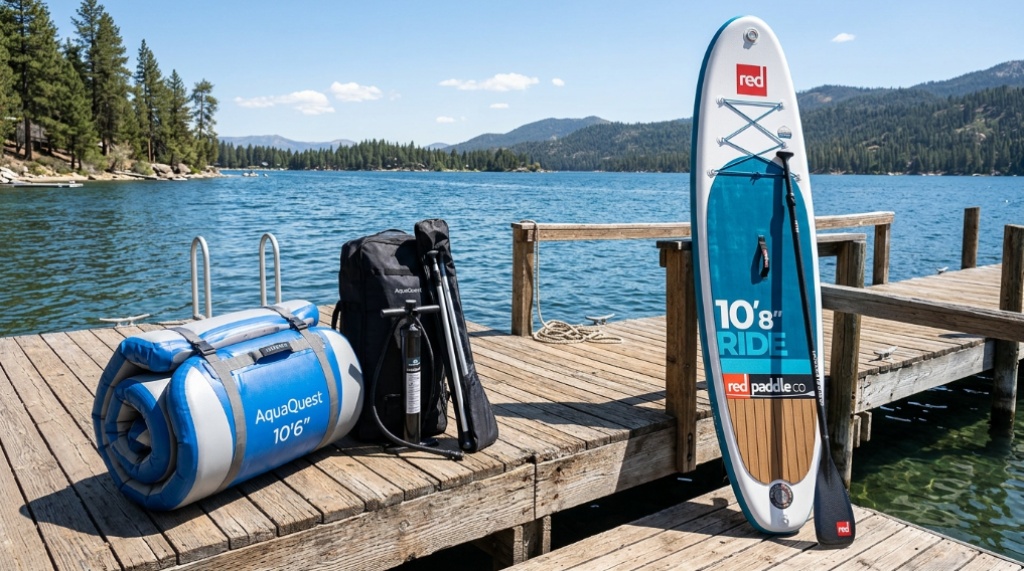
Most inflatable vs. hard board comparisons focus on performance and price. Florida adds a third factor that is just as important: heat. A hard board left on a car rack or in a garage that hits triple-digit temperatures can suffer from delamination, where the fiberglass skin separates from the foam core. Inflatables are built from PVC or drop-stitch material that expands and contracts without cracking. That doesn’t mean hard boards fall apart in Florida—plenty of people own them here—but it does mean storage and transport matter more than they would in a cooler climate.
The warm water also means you’ll be paddling year-round. Boards that sit unused for months in cold regions get stored indoors. In Florida, your board might live on a balcony, in a shed, or in the back of a truck. That reality favors inflatables for casual paddlers.
Performance on Florida’s Flat Water and Mild Chop
On the calm, shallow flats near Cedar Key or the spring runs around Ocala, an inflatable pumped to its recommended PSI tracks well enough for recreational paddling. You won’t win a race, but you’ll keep up on a group paddle and have no trouble fishing from it. Hard boards still glide faster with less effort per stroke, which matters if you’re covering five or more miles.
Where hard boards pull ahead is in chop and boat wakes. A hard board’s rigid hull cuts through confused water more predictably. An inflatable with a displacement nose or a wider profile can feel bouncier in the same conditions. That said, many Florida paddlers stick to protected waters—intracoastal waterways, bays, and springs—where the difference is small.
Storage, Transport, and Daily Practicality
This is where inflatables usually win for Florida residents. A hard board needs a roof rack, a garage, or a storage unit. It’s a commitment every time you paddle. An inflatable rolls into a bag that fits in a closet or trunk. If you live in a condo near Clearwater or a small apartment in Miami, that difference is often the deciding factor. You can also inflate at the launch, which takes a few minutes with a good pump, and deflate when you’re done.
The trade-off is setup time. A hard board is always ready. An inflatable requires inflation, and if you’re paddling daily, that routine can get old. A quality electric pump reduces the friction, but it’s still an extra step, If you are looking for more buying guides and expert evaluations before making your purchase, check out this detailed guide to see what makes a funwater sup review worth reading.
Durability and Heat: What Actually Fails in Florida
Hard boards fail in Florida mainly from heat exposure and impact. A dropped board on a boat ramp can crack the shell, and long-term UV exposure breaks down the resin. Inflatables fail from punctures, seam leaks, and valve issues. The good news is that punctures are rare in normal recreational use, and most come with repair kits. Heat is less of a problem for inflatables, though you should still avoid leaving one inflated on a black car roof in direct summer sun for hours.
If you plan to paddle in oyster-lined mangroves or rocky spring runs, an inflatable’s flexible skin can actually handle glancing contact better than a hard shell in some cases. A direct hit on a sharp oyster reef can damage either type, so carry a repair kit regardless.
Which Board Fits Your Florida Paddling Style?
| Factor | Inflatable | Hard Board |
|---|---|---|
| Storage | Rolls into a bag; fits in closets and car trunks | Needs rack or dedicated space |
| Heat tolerance | Handles Florida heat without delamination | Can delaminate if stored in extreme heat |
| Glide and speed | Good for recreational use | Excellent for touring and racing |
| Setup time | Requires inflation | Ready immediately |
| Surfing | Limited responsiveness | Better for waves |
| Best for | Beginners, travelers, small storage | Performance paddlers, surfers, long-distance touring |
If you paddle springs, bays, and calm coastal areas a few times a month, an inflatable is the more practical choice. If you surf regularly at Sebastian Inlet or paddle long distances for fitness, a hard board earns its space.
Common Mistakes Florida Paddlers Make
- Leaving any board inflated on a hot car roof for hours. Even inflatables can suffer valve or seam stress.
- Storing a hard board in a hot garage without ventilation or a cover.
- Buying a cheap inflatable that won’t hold enough PSI, then blaming the category for poor performance.
- Choosing a board based on price alone and ignoring how you’ll transport it.
- Forgetting that Florida’s afternoon thunderstorms can turn calm water rough quickly, regardless of board type.
Frequently Asked Questions
Do inflatable paddleboards get too hot in Florida?
They can get warm to the touch, but the material handles heat far better than hard epoxy boards. Avoid leaving any board in direct sun for extended periods, and deflate slightly if storing it inflated in a hot car.
Can you surf with an inflatable paddleboard in Florida?
You can catch small waves on some inflatables, but hard boards offer much better control and responsiveness. For serious surfing, a hard board is the better tool.
How much PSI should I use for Florida flat-water paddling?
Most quality inflatables perform best at the upper end of their recommended range, often 12 to 15 PSI. Higher pressure means better rigidity and tracking on flat water.
Is a hard board worth it if I only paddle occasionally?
Usually not. If you paddle a few times a month and don’t have a dedicated storage spot, an inflatable will get used more often because it’s easier to transport and store.
Do I need a different board for springs versus the ocean?
Springs are calm and shallow, so almost any recreational board works. Ocean paddling involves chop and currents, where a hard board or a rigid inflatable with a touring shape performs better.
How long does it take to inflate a paddleboard?
With a manual pump, expect five to ten minutes depending on the board size and your pace. An electric pump can cut that to a few minutes.
Conclusion
For most Florida paddlers, an inflatable paddleboard is the smarter first purchase. It tolerates the heat, stores easily, and performs well on the calm flats, springs, and bays that define warm-water paddling here. Choose a hard board only if you need speed, surf performance, and have a cool, secure place to keep it. Match the board to your launch spots and storage reality, and you’ll paddle more often.