

You slide into bed after a long day, expecting that cloud-like comfort you experienced at a boutique hotel last summer, but something feels off. The sheets are fine. The mattress is decent. Yet the whole setup feels ordinary. More often than not, the missing piece is the pillow—and not just any pillow, but the kind of supportive, plush, perfectly lofted option hotels seem to have figured out. Finding the best hotel quality bed pillows is often the single biggest upgrade you can make, and it costs far less than replacing your mattress. This guide walks through the practical steps—from pillow selection to layering and washing routines—that turn a normal bedroom into something that feels genuinely luxurious.
Quick Answer
To recreate 5-star bedding comfort at home, focus on three things: choose pillows that match your sleep position and offer both support and plushness, layer your bedding with a breathable sheet, a light duvet, and a textured throw, and maintain everything with regular washing and rotation. Hotel luxury comes less from expensive thread counts and more from correct loft, crisp layering, and consistent care.
Key Takeaways
- Pillow loft should match your sleep position—stomach sleepers need low loft, back sleepers medium, side sleepers high.
- Hotels often use two pillows per side (a firmer support pillow plus a softer top pillow) to create that plush but supportive feel.
- Bedding layers matter more than thread count: a breathable sheet, a mid-weight duvet, and a decorative throw do most of the visual and tactile work.
- Washing pillows every 3–6 months and rotating them monthly extends their life and keeps them hygienic.
- A mattress topper can bridge the gap between a standard mattress and a true hotel feel for a fraction of the cost of a new bed.
Why Hotel Beds Feel Different (It’s Not Just the Mattress)
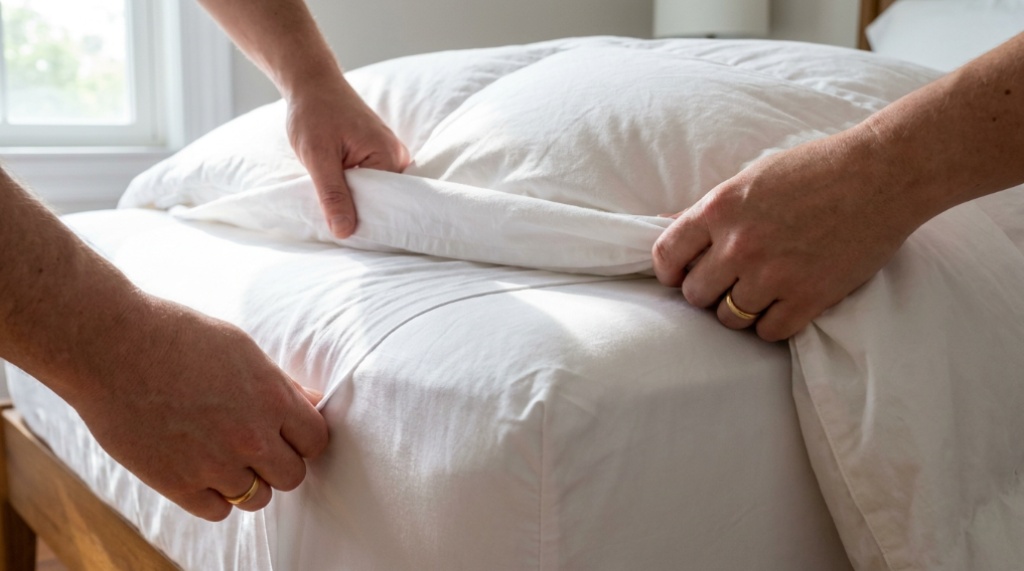
Most people assume hotel beds feel better because of the mattress. That is part of it, but mattresses are only one layer of a very deliberate system. Hotels typically use a firm, high-density mattress as a base, then add a plush mattress topper, then crisp sheets, then a duvet, then a carefully chosen pillow arrangement. Each layer contributes something specific. Remove any one of them and the whole experience collapses into something ordinary.
The pillow is where most home setups fall short. Hotels usually stock pillows in multiple lofts and firmness levels so guests can find something that works. At home, most people own one or two pillows that are years old, compressed, and chosen without much thought. That is the gap you are trying to close.
Choosing the Right Pillow for Your Sleep Position
The single most impactful change you can make is matching your pillow to how you sleep. A pillow that is too high for a stomach sleeper strains the neck. A pillow that is too flat for a side sleeper lets the head drop and misaligns the spine. Here is a simple breakdown:
| Sleep Position | Recommended Loft | Firmness | Best Fill Types |
|---|---|---|---|
| Stomach | Low (2–3 inches) | Soft | Down, down-alternative |
| Back | Medium (3–4 inches) | Medium | Down, memory foam, hybrid |
| Side | High (4–6 inches) | Firm | Memory foam, latex, buckwheat |
| Combination | Adjustable | Medium | Shredded memory foam, down |
If you toss and turn or sleep in more than one position, a shredded memory foam pillow is usually the most forgiving choice because you can remove or add fill to adjust the height. Down pillows are plush but tend to flatten overnight, which is why hotels often pair them with a firmer pillow underneath.
The Two-Pillow Layering Trick Hotels Use
Walk into most upscale hotel rooms and you will notice two pillows stacked on each side of the bed—sometimes even three. This is not decoration. The bottom pillow is typically firmer and provides structural support. The top pillow is softer and provides the plush, sinking-in sensation. Together they create a sleep surface that feels both supportive and indulgent, which is hard to achieve with a single pillow.
At home, you can replicate this with a firm memory foam or latex pillow as the base and a softer down or down-alternative pillow on top. If you only want to buy one new pillow, choose the base pillow first—support matters more for neck health than plushness.
Beyond Pillows: Layering Your Bed Like a Hotel
Pillows get most of the attention, but the bedding stack does equal work. Here is the layering order that most luxury hotels follow, from bottom to top:
- Mattress protector — protects the mattress and adds a thin cushioning layer.
- Mattress topper — usually 2–4 inches of memory foam, latex, or down alternative. This is what creates the sink-in feel.
- Fitted sheet — should be tight and smooth. Percale or sateen cotton both work; percale feels crisp, sateen feels silkier.
- Flat sheet — tucked in at the foot and sides. This is the layer that touches your skin most directly.
- Duvet or comforter — mid-weight is usually better than heavy. Hotels often use a duvet inside a removable cover so it can be washed frequently.
- Decorative throw — folded at the foot of the bed. Purely aesthetic and tactile, but it completes the visual.
Thread count matters less than most people think. A well-made 300-thread-count percale sheet can feel better than a poorly woven 800-thread-count sheet. Focus on the weave and the fiber quality instead of chasing a number.
Common Mistakes That Undermine the Hotel Feel
Even with good products, a few habits can wreck the effect:
- Using an old, compressed pillow. Pillows lose loft over time. If yours folds in half and stays folded, it is done.
- Skipping the mattress topper. A firm mattress with no topper feels like a board, no matter how nice the sheets are.
- Overloading the bed with heavy comforters. Hotels use lighter layers that regulate temperature better than one thick blanket.
- Ignoring pillow hygiene. Pillows absorb sweat, oils, and dust mites. Unwashed pillows can smell and trigger allergies, which destroys the luxury feeling immediately.
- Mismatching pillow height to sleep position. A beautiful pillow that is the wrong loft will still give you a stiff neck.
How to Maintain the Luxury Feel Over Time
Hotel bedding feels great partly because it is replaced and maintained on a strict schedule. You do not need to replace everything yearly, but a simple routine keeps the feel intact:
- Wash sheets weekly in warm water with a mild detergent. Avoid fabric softener, which coats fibers and reduces breathability.
- Wash pillows every 3–6 months, following the care label. Down and down-alternative pillows are usually machine washable; memory foam generally is not.
- Rotate and fluff pillows monthly to prevent uneven compression.
- Air out the duvet periodically and wash the cover every couple of weeks.
- Replace pillows every 1–2 years depending on fill type and how well they hold their shape.
If you follow the two-pillow layering approach, the top pillow will wear out faster than the base pillow. Replace the top one first and keep the firmer base pillow longer.
Do You Need to Spend a Lot?
No. The hotel feel is achievable at mid-range prices if you prioritize correctly. The highest-impact upgrades, in order, are:
- A pillow matched to your sleep position
- A mattress topper
- A decent duvet with a washable cover
- Crisp, well-fitting sheets
You can skip the decorative pillows, the monogrammed throw, and the high thread count sheets until the basics are in place. A $60 pillow that fits your sleep position will improve your nights more than a $300 sheet set. if you struggle with warm nights, check out this guide on how to stay cool while sleeping in summer (pillow guide).
Frequently Asked Questions
What makes hotel pillows feel different from regular pillows?
Hotel pillows are usually chosen for a balance of support and plushness, and hotels often provide multiple loft options. They also replace pillows more frequently than most households, so the pillows have not compressed or lost their shape.
How often should I replace my pillows?
Most pillows should be replaced every 1–2 years. Memory foam and latex pillows can last longer, sometimes up to 3 years, if they are cared for properly. If a pillow no longer springs back when folded, it is time to replace it.
Can I get the hotel feel without buying a new mattress?
Yes. A quality mattress topper plus a properly matched pillow and a fresh duvet can transform a standard mattress into something that feels significantly more luxurious without the cost of a new bed.
Are down pillows better than memory foam for hotel-style comfort?
They serve different purposes. Down pillows are plush and soft, which gives the sinking-in feel associated with luxury hotels. Memory foam provides firmer support and holds shape better. Many hotels use both, layered together.
Is thread count important for hotel-quality sheets?
Thread count matters less than fiber quality and weave. A 300-thread-count percale sheet made from long-staple cotton often feels better than a higher-count sheet made from shorter fibers. Focus on the material and construction rather than the number.
How do I keep pillows from going flat?
Fluff and rotate them regularly, wash them according to the care label, and avoid placing heavy objects on them during the day. Using a pillow protector can also reduce moisture and oil buildup that causes compression over time.
Conclusion
Bringing 5-star comfort into your bedroom is less about spending a fortune and more about getting the fundamentals right. Match your pillow to your sleep position, layer a firm support pillow under a softer one, add a mattress topper, and keep your bedding clean and breathable. These changes are simple, affordable, and repeatable. Start with the pillow, because that is where most home beds fall short—and it is the fastest way to feel the difference on your very first night.