
Key Takeaways
- Lip grippers work best when used to support, not suspend, larger fish.
- Correct jaw angle prevents damage to a fish’s mouth and spine.
- Supporting the body reduces stress during hook removal and photos.
- Quick handling improves survival rates for catch-and-release fishing.
- Cleaning your gripper regularly prevents rust and bacterial buildup.
Lip grippers make fish handling easier and safer for anglers; however, incorrect use can injure fish badly. As the gear experts at CrazyFishingGear.com frequently warn, many anglers unknowingly cause severe harm during simple hook removal. This guide explains how to use lip grippers correctly so you can protect your catch while handling fish with confidence.
Why Proper Gripper Use Matters
Fish handling directly affects survival rates after release. Improper gripper use can dislocate jaws or damage internal organs. Therefore, learning correct technique protects fish populations long term.
Many species face real risk from careless handling practices. Bass, for example, have a hinge-like jaw structure. This structure can suffer damage if a fish hangs freely by its mouth alone. As a result, injured fish may struggle to feed after release.
According to the American Fisheries Society, proper fish handling techniques significantly improve post-release survival rates across many species. This research highlights why technique matters just as much as intention. Good handling habits benefit both sport fishing and conservation goals together.
Lip grippers offer real benefits when used correctly. They keep hands away from sharp teeth and spiny fins. Additionally, they reduce slime loss compared to bare-hand handling. However, these benefits only apply when anglers use proper support techniques.
Careless use creates a false sense of safety for both angler and fish. An angler may feel secure holding a heavy fish vertically. Meanwhile, the fish’s jaw and spine absorb unnecessary strain. Balancing convenience with proper care keeps every catch healthy.
Choosing the Right Lip Gripper
Different lip grippers suit different fish sizes and species. Picking the right tool improves both safety and control.
- Spring-loaded grippers for quick, one-handed hook sets
- Boga-style scale grippers for weighing and holding larger fish
- Floating grippers designed to prevent tool loss overboard
- Coated jaw grippers that reduce damage to a fish’s mouth
- Long-handled grippers for toothy or dangerous species
Spring-loaded grippers work well for typical bass and panfish situations. They open and close quickly with light thumb pressure. However, they may lack the strength needed for larger saltwater species.
Boga-style grippers suit anglers who want a built-in scale feature. These tools often handle heavier fish with confidence. Many tournament anglers prefer this style for accurate, quick weigh-ins.
Long-handled grippers matter most for species with sharp teeth. Pike, muskie, and many saltwater fish fall into this category. Extra handle length keeps your fingers safely away from danger.
Choose coated jaws whenever possible for softer-mouthed fish. This coating reduces pressure points that could tear delicate tissue. Small upgrades like this protect fish without sacrificing angler safety.
Step-by-Step Guide to Using a Lip Gripper
Follow these steps to handle fish safely and reduce unnecessary stress.
- Approach the fish calmly to avoid sudden thrashing movements.
- Open the gripper jaws fully before reaching toward the fish.
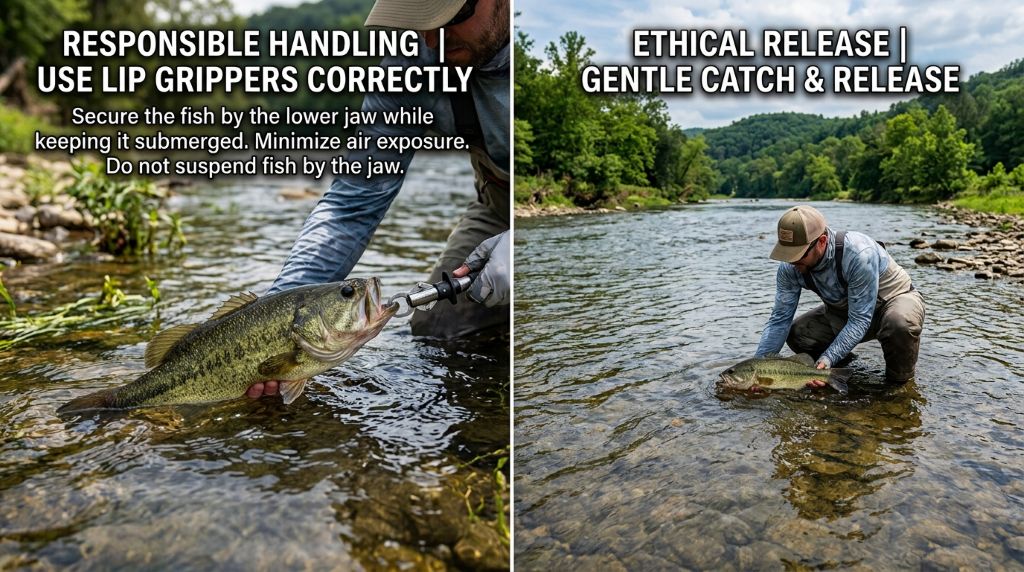
- Clamp the gripper onto the fish’s lower lip only.
- Avoid gripping the tongue, gills, or upper jaw area.
- Lift the fish horizontally rather than straight up and down.
- Support the fish’s belly with your free hand immediately.
- Remove the hook quickly using pliers or a hook remover.
- Take photos fast, keeping the fish close to the water.
- Release the gripper gently once the fish is back in water.
- Allow the fish time to recover before it swims away.
Step five deserves special attention during every use. Holding a fish vertically strains its jaw and spine significantly. Horizontal support distributes weight more evenly across the body.
Step six also protects internal organs from unnecessary pressure. Large fish held only by the lip can suffer organ damage. Therefore, always cradle the belly with your other hand.
Speed matters throughout this entire process. Fish outside water experience stress and oxygen deprivation quickly. Working efficiently reduces harm and improves release survival rates.
Handling Different Fish Sizes and Species
Fish size and species change how you should use a lip gripper. Adjusting your technique protects fish of every type.
- Small panfish rarely need a gripper at all
- Medium bass benefit from horizontal support during lifting
- Large bass and walleye need two-handed support always
- Toothy species require long-handled grippers for safety
- Delicate-mouthed fish need gentle, coated gripper jaws
Small panfish have delicate mouths that grippers can easily damage. Bare-hand or wet-hand holding often works better for these species. Reserve grippers for situations where hands need extra protection.
Medium-sized bass handle grippers well with proper horizontal support. Avoid letting these fish hang vertically for extended photo sessions. A quick, supported lift keeps stress and injury to a minimum.
Large fish always need two-handed support, regardless of gripper use. One hand controls the gripper while the other supports the body. This approach prevents spinal injury from the fish’s own body weight.
Toothy species like pike demand extra caution during every step. Long-handled grippers keep fingers safely away from sharp teeth. Never attempt to remove hooks from these species bare-handed.
Maintaining Your Lip Gripper for Long-Term Use
Proper maintenance keeps your gripper working safely for years. Neglected tools can rust, stick, or fail at critical moments.
- Rinse the gripper with fresh water after every trip
- Dry the tool fully before storing it in your tackle bag
- Lubricate moving joints with a light, fishing-safe oil
- Check the spring mechanism for smooth, consistent action
- Inspect jaws regularly for cracks, rust, or sharp edges
Saltwater exposure causes faster corrosion than freshwater use. Therefore, saltwater anglers should rinse their gripper every single trip. This simple habit extends the tool’s working lifespan significantly.
Sticking springs often signal a need for lubrication. A few drops of fishing-safe oil restore smooth movement quickly. Avoid heavy grease, which can attract dirt and sand buildup.
Cracked or rusted jaws pose a real risk to fish and anglers alike. Sharp edges can tear delicate mouth tissue during normal use. Replace damaged grippers promptly instead of risking fish injury.
Regular inspection takes only a minute before each fishing trip. This quick check prevents equipment failure during an important catch. A well-maintained gripper protects both your gear and your fish.
Conclusion
Using a fish lip gripper correctly protects your catch and improves release survival. Choose the right gripper for your target species, then support the body during every lift. Proper technique reduces stress, prevents injury, and keeps fish healthy after release. These same safety principles are especially important when exploring hands-on techniques, such as the art of noodling for catfish safely, where careful handling helps protect both the angler and the fish.
Small adjustments in handling make a big difference for fish welfare. Practice horizontal lifting and two-handed support on your next trip. Grab your gripper, handle your next catch with care, and help protect fishing for the future.
Frequently Asked Questions
Can lip grippers hurt a fish’s jaw?
Yes, vertical hanging can strain or dislocate a fish’s jaw. Always support the body horizontally to prevent this injury.
Are lip grippers safe for catch-and-release fishing?
Yes, when used correctly with body support and quick handling. They reduce slime loss and keep hands away from teeth.
Should I use a lip gripper on small fish?
Not usually, since small fish have delicate mouths. Bare-hand or wet-hand holding often works better for panfish.
How do I stop my lip gripper from rusting?
Rinse it with fresh water after every trip. Dry it fully before storing it in your tackle bag.
What is the best gripper for toothy fish like pike?
Long-handled grippers work best for toothy species. They keep your fingers safely away from sharp teeth.