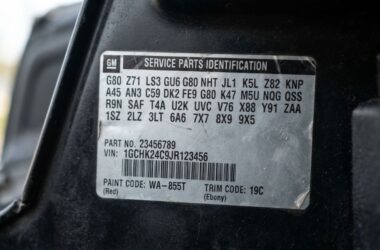

Key Takeaways
- GM RPO codes are three-character alphanumeric labels that document every factory-installed feature.
- You can find these codes on the Service Parts Identification label inside the glovebox or console.
- Codes like Z71 and Z51 identify specific performance and off-road packages.
- Every GM vehicle carries RPO codes, even base models with no extra options.
- Mechanics and parts stores rely on these codes to match exact replacement parts.
Buying replacement parts for a Chevrolet or GMC without checking the RPO codes often leads to wasted money—an expensive mistake that the automotive experts at https://vehicletradeus.com/ frequently warn truck owners against. A friend once ordered a rear differential for his Silverado based on the model year alone. The part arrived, but it didn’t fit his axle ratio. One quick check of his GM RPO codes would have prevented the mistake entirely.
This guide breaks down what these codes mean, where to find them, and how to read the most common ones correctly.
What Are GM RPO Codes
Regular Production Option codes form General Motors’ internal system for documenting factory builds. Each code uses three alphanumeric characters, such as Z71 or LS1. GM assigns one code to every feature, trim color, engine, and package installed during production.
Every vehicle carries RPO codes, regardless of trim level. A base model still needs codes for its engine type and paint color, since these details must appear somewhere in the build record. Therefore, no GM car ever leaves the factory without at least a handful of codes attached to it.
The system dates back decades, with GM’s electronic database preserving records since at least 1990. This means owners of older vehicles can still pull historical build information through VIN records at many dealerships. Some dealers even provide this printout free of charge for customers.
Codes exist for nearly every vehicle system. Seats, door panels, axles, transmissions, and even radio units each receive their own designation. This granular approach helps GM manage a massive parts catalog across dozens of models built over multiple decades.
According to automotive industry documentation, RPO codes help automakers, dealerships, and service centers understand exact vehicle specifications without extensive paperwork. This function matters enormously when repair shops need to order parts matching original factory equipment exactly, not just approximately.
Understanding this system gives owners real leverage. You stop relying on guesswork or salesperson claims. Instead, you read factory data straight from the source, which removes ambiguity from repairs, upgrades, and resale negotiations.
Where to Find RPO Codes on Your Vehicle
Locating your RPO codes takes only a few minutes once you know where to look. GM standardized this process decades ago, making it consistent across most modern models.
For vehicles from 1984 onward, every car and truck carries a Service Parts Identification label. This label typically sits in one of these locations:
- Inside the glovebox door
- On the console lid
- Inside the trunk lid
- On the spare tire cover
The SPID label lists every RPO code alphabetically, making cross-referencing straightforward. Codes appear in rows, running left to right and top to bottom. This layout stays fairly consistent across Chevrolet, Buick, Cadillac, and GMC vehicles.
Older vehicles work differently. Classic Corvette owners often find their build sheet, nicknamed the “tank sticker,” tucked above the fuel tank. This document predates the modern SPID system and contains similar information in a different format.
I always recommend photographing both the VIN and SPID label before visiting a parts store. This habit saves time and prevents miscommunication with counter staff who need exact specifications. A blurry memory of “it’s a V8 something” rarely gets you the correct part on the first try.
Some newer GM vehicles have shifted toward QR-coded labels. These scan directly into dealership systems, pulling full build data instantly. However, the physical SPID sticker remains standard across most current production models.
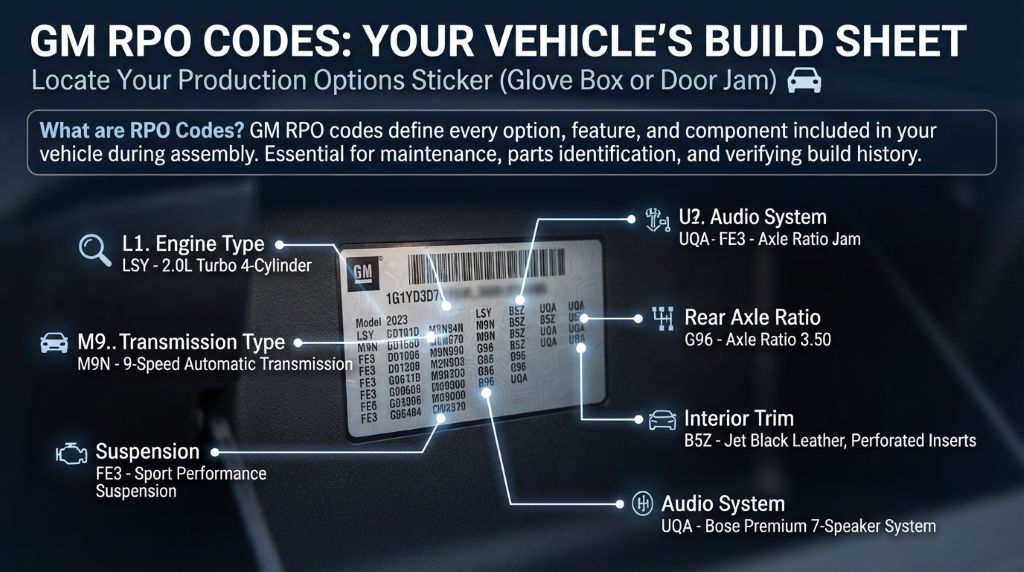
Common GM RPO Codes and What They Mean
Certain RPO codes appear frequently enough that GM enthusiasts recognize them by memory. Learning these saves time whenever you’re researching a vehicle’s original configuration.
Performance and suspension codes rank among the most recognized:
- Z71 signals an off-road suspension package on Chevrolet and GMC trucks
- Z51 identifies the Corvette’s performance package, covering brakes, cooling, and aerodynamics
- Z06 and ZR1 mark high-performance Corvette model designations with unique equipment
Engine codes carry similar weight for enthusiasts and mechanics alike. LS1 denotes the 5.7-liter V8 used in late-1990s performance vehicles, including the Corvette. However, this same code appeared decades earlier on a different engine, so model year context always matters when decoding.
Axle and differential codes typically start with F, G, or H. For example, G80 commonly represents a locking rear differential, while various G-prefix codes indicate specific gear ratios. These codes matter enormously for anyone replacing drivetrain components.
Trim and interior codes, though less exciting, prove just as useful during restoration work. Codes like 4AA or 4BK specify exact interior color combinations, helping owners match replacement upholstery precisely.
Technology packages have expanded this list significantly in recent years. Magnetic Ride Control identifies adaptive suspension damping, while Super Cruise marks factory-installed hands-free driving hardware on Cadillac models. As GM adds more technology, expect this code list to keep growing.
Why RPO Codes Matter for Buyers and Owners
Understanding RPO codes changes how you approach buying, repairing, or selling a GM vehicle. These codes remove guesswork from decisions that otherwise rely on trust alone.
For used car buyers, RPO codes confirm whether a vehicle truly has the features advertised. A seller might claim their truck has the off-road package, but the SPID label either confirms or contradicts that claim immediately. This protects buyers from paying premium prices for standard equipment.
For repair shops, these codes eliminate compatibility errors. Ordering the wrong axle ratio or suspension component wastes both time and money. Matching parts to the original RPO code guarantees correct fitment on the first attempt, every time.
Resale value benefits too. Vehicles with documented performance packages, like Z51 or Z71, typically command higher prices. Buyers researching these codes online often specifically search for vehicles carrying them, since the packages add real driving capability.
Insurance and appraisal processes sometimes reference RPO codes as well. Accurately documenting original equipment helps establish fair value after an accident or theft claim. Without this data, insurers might undervalue vehicles missing paperwork for factory-installed options.
For deeper research, the Regular Production Option reference on Wikipedia offers additional historical context on how GM developed this system.
Frequently Asked Questions
What does RPO stand for on a GM vehicle?
RPO stands for Regular Production Option, GM’s internal coding system for documenting factory-installed features and configurations.
Where do I find my car’s RPO codes?
Check the Service Parts Identification label, usually located in the glovebox, console lid, trunk, or spare tire cover.
Does every GM vehicle have RPO codes?
Yes, every vehicle carries RPO codes, even base models, since engine type and paint color always require a designation.
What does the Z71 RPO code mean?
Z71 identifies an off-road suspension package commonly found on Chevrolet and GMC trucks and SUVs.
Can RPO codes mean different things across model years?
Yes, some codes were reused across decades for different equipment, so always confirm the meaning against your specific model year.
Decoding your GM RPO codes puts real factory data in your hands, whether you’re buying, repairing, or restoring a vehicle. Have you used RPO codes to verify a car’s options before? Share your experience in the comments, and pass this guide along to fellow GM owners.