

Key Takeaways
- Your hair type determines which cuts and styles will actually work for you.
- There are four main hair types: straight, wavy, curly, and coily.
- Matching your hairstyle to your texture reduces daily styling time and damage.
- Face shape, hair density, and lifestyle also affect the right hairstyle choice.
- A skilled stylist can help you pick a cut suited to your natural texture.
Choosing a hairstyle can feel overwhelming with endless options online. However, as the hair experts at https://newjerseystylist.com/ warn, not every trending style suits every hair type. A cut that looks great on straight hair may frizz badly on curly hair. Therefore, understanding your hair type is the first real step. This guide breaks down each hair type and explains which styles work best. It also covers face shape, hair density, and simple styling tips.
Understanding the Four Main Hair Types
Hair type refers to your natural texture, not your hair color or length. Experts generally group hair into four categories: straight, wavy, curly, and coily. Each type has unique needs and reacts differently to cuts and products.
Straight hair tends to be smooth and reflects light easily. It typically produces oil faster than other types. Wavy hair falls between straight and curly, forming loose S-shaped bends. Curly hair forms tighter loops and often feels drier than straight hair. Coily hair has the tightest curl pattern and shrinks significantly when dry.
Globally, hair texture varies widely by region and genetics. Researchers at L’Oréal estimate that curly hair will represent 40% of the world’s population by 2030. This shows curly and coily textures are far from rare. Additionally, hair type often varies even within the same family.
Knowing your exact type helps you avoid guesswork. Many people misjudge their type because hair can look different when wet versus dry. Therefore, examine your hair when it air-dries naturally, without product. This reveals your true pattern more accurately than styled hair does.
Once you identify your type, you can begin narrowing down suitable cuts. The next sections explain specific options for each texture.
Best Hairstyles for Straight Hair
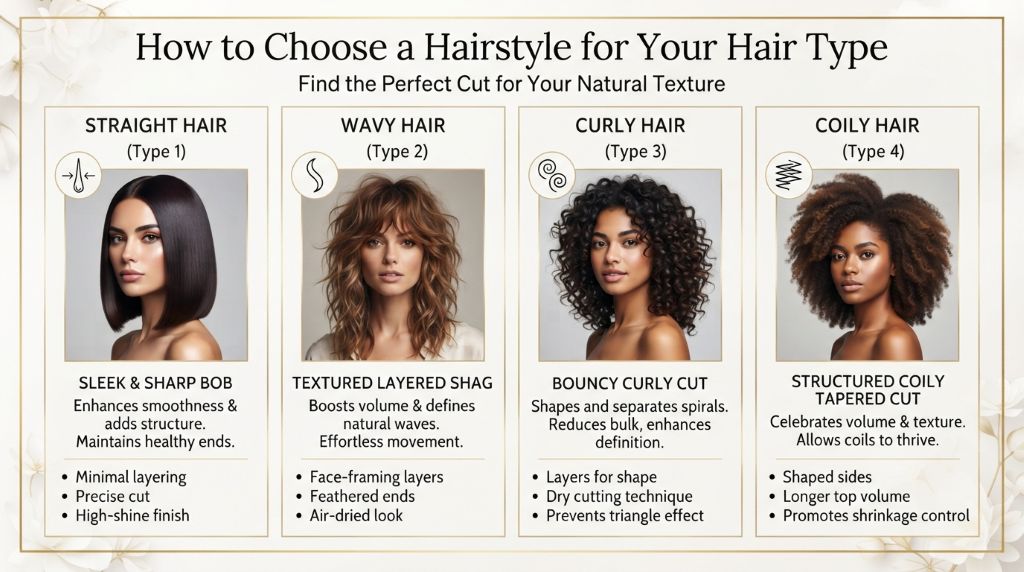
Straight hair offers a smooth, sleek base for many styles. However, it can also look flat without the right cut. Layers work well because they add movement and volume. Blunt cuts also suit straight hair, creating a clean, polished look.
Long straight hair benefits from face-framing layers around the front. These layers soften sharp face angles and add dimension. Additionally, a blunt bob is a popular choice for straight textures. It creates a bold, structured shape that holds well throughout the day.
Straight hair tends to get oily faster than curly or coily hair. Therefore, shorter styles often require more frequent washing. Longer styles can help absorb oil along the length, reducing daily upkeep. Bangs are another good option, though they need regular trimming to stay neat.
Volume is often the biggest challenge for straight hair. Choppy layers and textured ends help combat flatness. Additionally, a slight wave from styling tools can boost body without much effort. Avoid overly heavy one-length cuts, as these can weigh hair down further.
Straight hair also shows shine more easily than other textures. Therefore, healthy ends matter greatly for straight hair’s overall appearance. Regular trims prevent split ends from becoming visible and distracting. Choosing the right shampoo also helps maintain shine and reduce oil buildup.
Best Hairstyles for Wavy Hair
Wavy hair is versatile and works with many different cuts. It holds curl patterns loosely, giving natural texture without extreme frizz. Layered cuts enhance waves by allowing each layer to move freely.
Medium-length cuts often work best for wavy hair types. Very short cuts can sometimes fight the natural wave pattern. Meanwhile, very long styles may weigh waves down, reducing their natural bounce. Therefore, shoulder-length or slightly longer cuts tend to balance both.
Face-framing layers also complement wavy hair beautifully. They highlight the wave pattern while adding softness around the face. Additionally, a shag cut has become popular for wavy textures recently. This style embraces texture instead of fighting against it.
Wavy hair generally needs less heat styling than straight hair. However, it does benefit from some definition to avoid looking undone. Diffusing with a blow dryer helps waves form without excess frizz. Additionally, lightweight curl creams can enhance definition without weighing hair down.
Density also matters for wavy hair choices. Thicker wavy hair handles more layers well without losing shape. Thinner wavy hair may need fewer layers to avoid looking sparse. Therefore, always factor in thickness alongside texture when choosing a cut.
Best Hairstyles for Curly and Coily Hair
Curly and coily hair require cuts that respect their natural shrinkage. Many stylists now use dry-cutting techniques for these textures. This method allows curls to be shaped exactly as they naturally fall.
Layered curly cuts help distribute volume evenly across the head. Without layers, curls can form a heavy, triangular shape. Therefore, adding layers prevents excess bulk while maintaining defined curl clusters. A curly bob has also become a popular low-maintenance option recently.
Coily hair often benefits from styles that protect the ends. Protective styles, such as twists or braids, reduce daily manipulation. This helps prevent breakage, since coily hair is naturally more fragile. Additionally, coily hair typically needs more moisture than other textures.
Length also plays a role in how curls and coils behave. Shorter curly cuts tend to bounce more and appear fuller. Longer curly styles carry more weight, which can loosen the curl pattern slightly. Therefore, choose length based on how much definition you want to keep.
Curl-specific cutting techniques matter significantly for these hair types. A stylist trained in curly hair can shape each curl individually. This approach creates a more balanced, symmetrical result than traditional cutting methods. Seeking an experienced curly hair specialist often makes a noticeable difference.
Factors Beyond Hair Type to Consider
Hair type is essential, but it is not the only factor. Face shape also influences which hairstyles will look most flattering. For example, round faces often benefit from styles with height and angles.
Hair density matters too, separate from texture itself. Density refers to how many strands grow per square inch. Fine, low-density hair often looks better with fewer heavy layers. Thick, high-density hair can handle more texturizing without losing shape.
Lifestyle also plays a major role in hairstyle selection. Busy schedules may call for low-maintenance cuts that need less daily styling. Additionally, active lifestyles might favor styles that hold up well through exercise and sweat.
Hair health should factor into your decision as well. Damaged or chemically treated hair may need extra care regardless of type. Therefore, discussing hair history with your stylist ensures a more suitable recommendation. A good stylist considers all these factors together, not texture alone.
Consider these questions before your next haircut:
- What is my natural hair texture when fully dry?
- How much time can I realistically spend styling daily?
- Does my current cut suit my face shape?
- Is my hair damaged, and does it need lighter styling?
- Do I prefer low-maintenance or more elaborate daily routines?
Answering these honestly leads to better hairstyle decisions overall.
How to Work With a Stylist Effectively
Communication with your stylist greatly affects your final result. Bring reference photos, but explain your hair type clearly too. A photo alone cannot show how a style behaves on different textures.
Ask your stylist directly about their experience with your hair type. Many stylists specialize in certain textures, such as curly or coily hair. Therefore, choosing someone experienced with your specific type improves outcomes significantly.
Discuss your daily routine honestly during consultations. If you rarely use styling tools, mention this clearly upfront. A stylist can then recommend a cut that looks good with minimal effort. This prevents disappointment once you style hair at home yourself.
Additionally, ask about maintenance requirements before committing to a cut. Some styles need frequent trims to maintain their shape properly. Others grow out more gracefully with less frequent salon visits. Understanding this beforehand helps you choose realistically.
Finally, trust gradual changes over dramatic transformations, especially with new stylists. Small adjustments let you evaluate results without major risk. Once you build trust, you can explore bolder changes together confidently.
Conclusion
Choosing the right hairstyle starts with understanding your natural hair type. Straight, wavy, curly, and coily hair each need different approaches to cutting and styling. However, texture is not the only consideration. Face shape, density, and lifestyle also shape the best choice for you. Therefore, take time to observe your hair’s natural behavior before your next cut. If you are considering a bold and versatile option, a Mullet haircut for men can be adapted to different hair textures and personal styles. Communicate clearly with your stylist about your routine and hair history. The right hairstyle should feel effortless, not like a daily battle.
Ready to find your best look? Book a consultation with a stylist who understands your hair type.
Frequently Asked Questions
How do I know my true hair type?
Let your hair air-dry naturally without product. Observe the pattern it forms, from straight to coily.
Can hair type change over time?
Yes, hair type can shift due to hormones, aging, or chemical treatments over the years.
What haircut suits thin, straight hair best?
Layered cuts or a blunt bob work well, adding volume without weighing hair down.
Is curly hair harder to maintain than straight hair?
Curly hair often needs more moisture and gentler handling, but not necessarily more overall effort.
Should I choose a stylist based on hair type experience?
Yes, stylists experienced with your specific texture usually deliver better, more suitable results.