Saving vegetable scraps for homemade stock is a smart kitchen practice. However, many home cooks worry about losing flavor during freezer storage. The good news is that proper freezing techniques can preserve both nutrients and aromatic qualities. At Houston Bamboo House, we believe in maximizing every ingredient’s potential while minimizing waste.
Freezing vegetable scraps transforms kitchen waste into culinary gold. Instead of tossing onion peels, carrot tops, and celery leaves into the trash, you can store them for future use. This practice saves money and reduces environmental impact. Additionally, it ensures you always have stock ingredients on hand.
Many people wonder can you freeze vegetable scraps for stock, and the answer is absolutely yes. The key lies in understanding which scraps freeze well and how to store them properly. Fresh scraps maintain their aromatic compounds when frozen correctly. Therefore, your homemade stock will taste just as flavorful as one made from fresh vegetables.
Understanding Which Scraps Work Best
Not all vegetable scraps are suitable for stock making. Some vegetables contribute bitter flavors or become musty during freezer storage. Choosing the right scraps ensures your stock tastes delicious every time.
Ideal scraps include onion skins, garlic peels, carrot ends, celery leaves, and mushroom stems. These vegetables contain natural glutamates that enhance savory flavors. Leek tops and parsley stems also add depth to stock. Additionally, fennel trimmings and fresh herb stems work wonderfully.
However, certain vegetables should be avoided. Cruciferous vegetables like broccoli, cabbage, and Brussels sprouts create overpowering flavors. Beets turn stock an unappetizing color. Bell pepper scraps can taste bitter after freezing. Similarly, asparagus ends and artichoke trimmings overwhelm other flavors.
According to The New York Times cooking section, properly selected vegetable scraps can produce restaurant-quality stock at home. The publication emphasizes washing scraps thoroughly before freezing to remove dirt and pesticides.
Preparing Scraps for Optimal Freezer Storage
Preparation is crucial for maintaining aroma and flavor. Clean scraps prevent contamination and ensure food safety. Meanwhile, proper sorting makes stock preparation easier later.
Start by rinsing all scraps under cool running water. Remove any dirt, especially from root vegetables. Pat scraps dry with clean kitchen towels. Excess moisture creates ice crystals that damage cell structures. Therefore, drier scraps retain better texture and flavor.
Sort scraps by type if desired. Some cooks prefer keeping onion family scraps separate from others. This allows for customized stock blending. However, mixed bags work perfectly fine for general-purpose stock.
Cut larger scraps into smaller pieces. Smaller pieces freeze faster and more evenly. They also pack more efficiently into storage containers. Additionally, smaller pieces release flavors more quickly during cooking.
Choosing the Right Storage Containers
Container selection significantly impacts aroma retention. The right packaging prevents freezer burn and odor absorption. Moreover, proper containers make stock preparation more convenient.
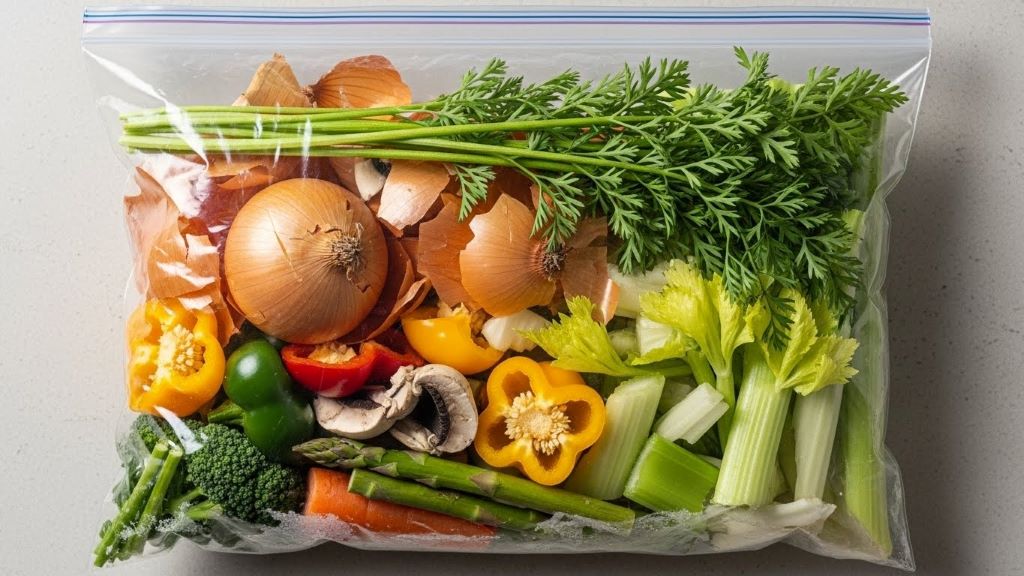
Freezer-safe ziplock bags offer excellent value and flexibility. Squeeze out excess air before sealing to minimize oxidation. Label bags with dates and contents. Stack flat bags horizontally to save freezer space.
Rigid plastic containers with tight-fitting lids work well for frequent stock makers. Choose containers sized appropriately for your typical stock batches. Leave some headspace for expansion during freezing. Glass containers are another option, though they require more careful handling.
Vacuum-sealed bags provide the best protection against freezer burn. These bags remove virtually all air, preserving aromatics exceptionally well. However, they require special equipment. For most home cooks, regular freezer bags suffice.
Freezing Techniques That Preserve Aromatics
How you freeze scraps matters as much as what you freeze. Proper techniques lock in flavor compounds and prevent quality degradation. Furthermore, good freezing habits extend storage life.
Flash freezing prevents scraps from clumping together. Spread scraps in a single layer on a baking sheet. Place the sheet in the freezer for two hours. Transfer frozen scraps to permanent storage containers. This method keeps scraps loose and easy to portion.
Alternatively, fill containers directly and freeze immediately. This approach works well when you plan to use entire batches at once. Press scraps down gently to remove air pockets. Seal containers tightly before freezing.
Maintain consistent freezer temperatures at or below zero degrees Fahrenheit. Temperature fluctuations damage cell structures and release moisture. Consequently, consistent cold preserves both texture and aroma.
Avoid opening freezer doors unnecessarily. Each opening introduces warm air and moisture. Store stock scraps in the main freezer compartment rather than the door. Door storage experiences more temperature variation.
Strategic Collection and Rotation
Building a collection of stock scraps requires planning. Smart collection ensures you always have enough variety for flavorful stock. Meanwhile, proper rotation prevents freezer-burned waste.
Keep a designated container in your freezer for accumulating scraps. Add scraps after each meal preparation session. This habit makes scrap saving effortless and automatic. Mark the container’s start date to track age.
Aim to use frozen scraps within three months for optimal flavor. After three months, aromatic compounds begin degrading noticeably. However, scraps remain safe to use for up to six months. Beyond six months, quality declines significantly.
Practice first-in-first-out rotation when you maintain multiple containers. Use older collections before newer ones. This system ensures nothing languishes forgotten in freezer corners. Additionally, it maintains consistent stock quality.
Consider seasonal variations in your scrap collection. Summer might yield more tomato cores and corn cobs. Winter brings more root vegetable trimmings and squash peels. Seasonal variety creates interesting stock flavor profiles throughout the year.
Thawing and Using Your Frozen Scraps
Proper thawing and usage maximize your frozen scraps’ potential. The right approach extracts maximum flavor while maintaining food safety. Furthermore, correct techniques save time during stock preparation.
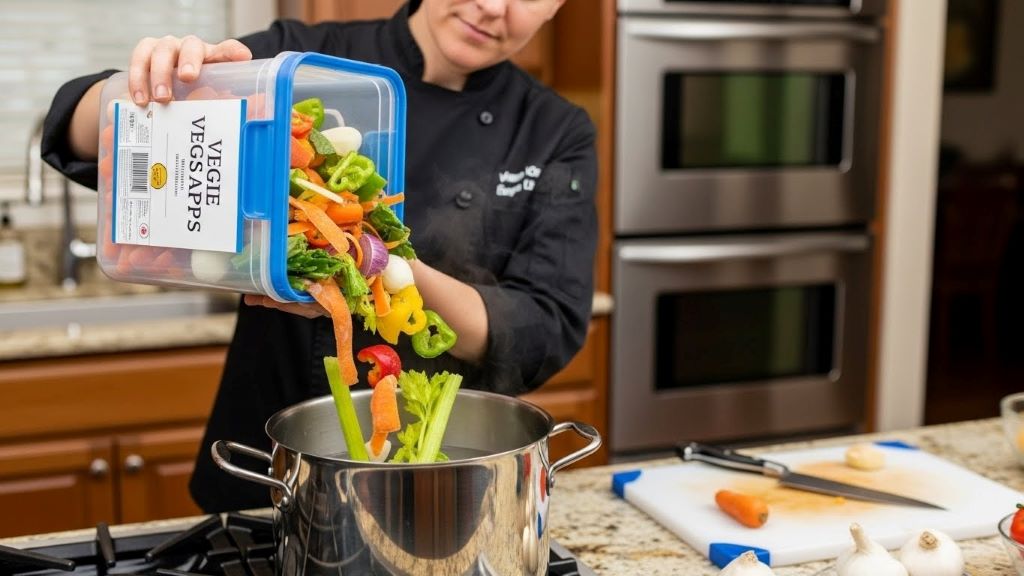
No thawing is necessary for stock making. Add frozen scraps directly to your stockpot with cold water. Starting with cold water allows flavors to release gradually as temperature rises. This method produces clearer, more flavorful stock than starting with hot water.
Use approximately four to six cups of scraps per gallon of water. This ratio creates well-balanced stock without overwhelming vegetable flavors. Adjust quantities based on scrap types and desired intensity.
Simmer stock gently for 45 minutes to one hour. Aggressive boiling creates cloudy, bitter stock. Gentle simmering extracts flavors while maintaining clarity. Skim foam from the surface occasionally during cooking.
Strain finished stock through fine-mesh sieves or cheesecloth. Press scraps gently to extract remaining liquid. Compost spent scraps or discard them appropriately. Cool stock quickly in ice baths before refrigerating or freezing.
Enhancing Aroma Retention With Additions
Beyond proper freezing techniques, certain additions boost aroma preservation. These strategies enhance your frozen scraps’ flavor potential. Moreover, they create more complex, restaurant-quality stocks.
Add fresh herbs to your scrap collection periodically. Parsley, thyme, and bay leaves withstand freezing well. Their essential oils remain potent for months. Tuck whole herb sprigs between vegetable layers in storage containers.
Include garlic cloves and ginger slices in your frozen collection. These aromatics intensify stock depth considerably. Freeze them whole or roughly chopped. Their strong flavors persist through extended freezer storage.
Consider adding dried mushrooms to frozen scrap bags. Dried mushrooms contribute umami richness that complements vegetable flavors beautifully. A small handful per batch makes noticeable differences. Porcini and shiitake varieties work particularly well.
Wine corks, when saved and frozen with scraps, release subtle tannins during simmering. This old-world technique adds complexity to stocks. Use only natural corks, not synthetic ones. Two or three corks per gallon suffice.
Troubleshooting Common Storage Problems
Even experienced cooks encounter freezer storage challenges. Understanding common problems helps you maintain scrap quality. Therefore, quick troubleshooting preserves your kitchen efforts.
Freezer burn appears as grayish-brown dry spots on scraps. It results from air exposure and temperature fluctuations. While freezer-burned scraps remain safe, their flavors diminish. Prevent freezer burn by removing air from storage bags and maintaining steady temperatures.
Off odors indicate absorption from other freezer contents. Strong-smelling foods like fish or onions can transfer flavors. Store stock scraps away from pungent items. Use odor-absorbing containers or double-bag scraps for protection.
Ice crystal formation suggests temperature problems or excess moisture. Large crystals damage cell walls and degrade quality. Ensure scraps are dry before freezing. Check freezer temperature settings regularly.
Containers that crack during freezing were overfilled. Remember that water expands when frozen. Leave adequate headspace in rigid containers. For bags, remove as much air as possible while avoiding overstuffing.
Maximizing Kitchen Efficiency
Freezing vegetable scraps represents broader kitchen efficiency principles. This practice connects to sustainable cooking and budget management. Additionally, it demonstrates creative resourcefulness in meal planning.
Calculate potential savings from scrap collection. A typical household generates enough scraps monthly for several batches of stock. Store-bought stock costs several dollars per container. Homemade stock from saved scraps costs essentially nothing beyond utility expenses.
Reduce your household’s environmental footprint through scrap saving. Food waste contributes significantly to landfill methane emissions. Composting is excellent, but using scraps first maximizes their value. Every scrap used for stock is waste diverted from disposal.
Integrate scrap saving into your cooking routine seamlessly. Place a small container near your cutting board during prep work. Transfer scraps immediately rather than accumulating them separately. This habit requires minimal additional effort while yielding significant benefits.
Share excess stock with neighbors or friends. If your collection outpaces your usage, consider community sharing. Frozen stock makes thoughtful gifts for busy families. Similarly, teach others these practices to multiply positive impacts.
Conclusion
Freezing vegetable scraps for stock is both practical and rewarding. Proper techniques preserve aromatics and flavors effectively for months. By selecting appropriate scraps, using correct storage methods, and maintaining consistent freezer conditions, you create high-quality stock ingredients from kitchen waste. This sustainable practice saves money, reduces environmental impact, and ensures flavorful homemade stock whenever needed. Start collecting scraps today and discover how freezer storage transforms cooking efficiency.
Frequently Asked Questions
How long can frozen vegetable scraps be stored before making stock?
Frozen vegetable scraps maintain optimal quality for three months. They remain safe to use for up to six months, though aromatic compounds gradually diminish. Label containers with freezing dates to track age. Beyond six months, scraps lose significant flavor and should be composted instead.
Should vegetable scraps be washed before freezing for stock?
Yes, always wash vegetable scraps before freezing. Rinsing removes dirt, pesticides, and potential contaminants. Pat scraps dry thoroughly to prevent excess ice crystal formation. Clean scraps produce clearer, better-tasting stock. This step also ensures food safety in your final product.
What vegetables should never be frozen for stock?
Avoid freezing cruciferous vegetables like broccoli, cabbage, and Brussels sprouts for stock. These create bitter, sulfurous flavors. Skip beets, which discolor stock unappetizingly. Bell peppers and asparagus also develop off-flavors after freezing. Stick to onions, carrots, celery, mushrooms, and herbs instead.
Can you mix frozen vegetable scraps with fresh vegetables for stock?
Absolutely, combining frozen scraps with fresh vegetables works excellently. This approach adds variety and complexity to stock flavor. The frozen scraps contribute depth while fresh vegetables provide brightness. Simply add frozen scraps directly to the pot without thawing. Both cook together seamlessly.
Does freezing vegetable scraps reduce their nutritional value?
Freezing minimally affects nutritional content when done properly. Water-soluble vitamins like vitamin C decrease slightly over time. However, minerals and most nutrients remain stable. Quick freezing at proper temperatures preserves nutrition best. Stock made from frozen scraps still provides valuable nutrients and minerals.
Related Topics:
Essential Kitchen Gadgets for Pasta Lovers: Antree Review