Athletes who transition from swimming to running face unique challenges. Your muscles work differently in water compared to land. Therefore, understanding recovery techniques becomes essential for peak performance. Many competitors discover this during multisport events organized by Swimrun The Riviera, where smooth transitions make all the difference.
The shift from horizontal swimming to vertical running demands special attention. Your leg muscles need time to regain their natural elasticity. Additionally, your cardiovascular system must adjust to supporting an upright posture. This article explores proven methods to help your body recover faster and perform better.
Understanding Stride Elasticity After Swimming
Stride elasticity refers to your muscles’ ability to store and release energy efficiently. When you swim, your legs work in a horizontal plane with reduced impact. However, running requires explosive vertical movements and shock absorption. This transition temporarily reduces your stride’s spring-like quality.
Water supports your body weight during swimming. Consequently, your tendons and ligaments experience less mechanical stress. When you exit the water and start running, gravity immediately challenges these structures. Your body needs specific recovery techniques to adapt quickly.
Many athletes competing in running and swimming race events experience heavy legs during the transition. This sensation occurs because blood pools in your lower extremities after horizontal swimming. Furthermore, your proprioceptive system must recalibrate to land-based movement patterns.
Immediate Post-Swim Recovery Strategies
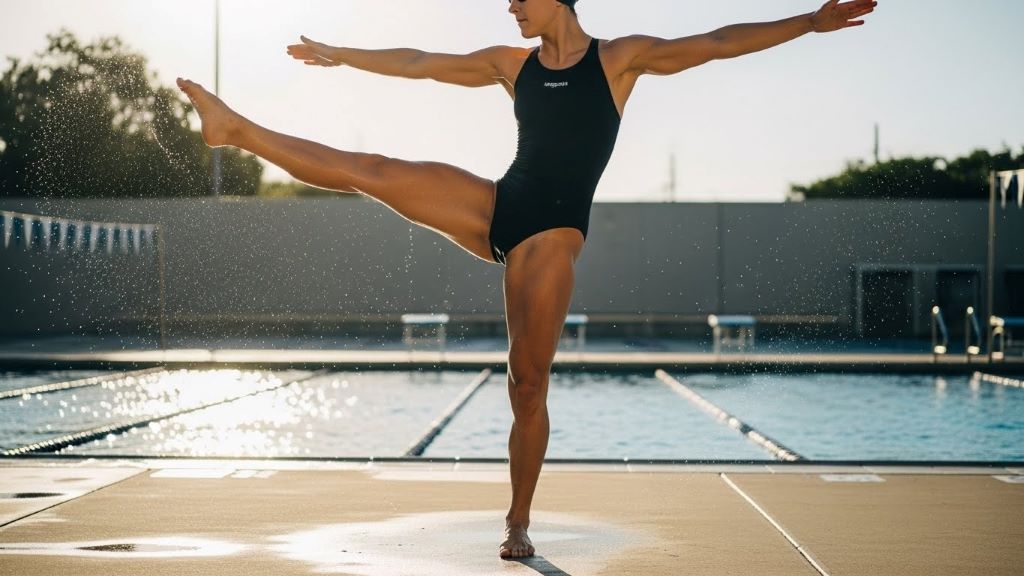
The first few minutes after leaving the water are critical. Start with gentle leg swings to restore range of motion. Move your legs forward and backward, then side to side. This simple activity reactivates your hip flexors and stabilizing muscles.
Next, perform 10 to 15 ankle circles in each direction. This exercise promotes blood flow and prepares your lower legs for impact. Additionally, it helps prevent the stiffness that commonly affects the Achilles tendon after swimming.
Walk briskly for 30 to 60 seconds before attempting to run. This gradual progression allows your cardiovascular system to adjust. Moreover, it gives your nervous system time to switch from swimming-specific patterns to running mechanics.
Dynamic Stretching for Elasticity Restoration
Dynamic stretching differs from static stretching because it involves movement. Research from the National Institutes of Health shows that dynamic stretches improve athletic performance more effectively than static holds before activity. These movements prepare your muscles for explosive actions.
Try high knees for 20 seconds to activate your hip flexors. Follow with butt kicks to engage your hamstrings and quadriceps. These exercises restore the stretch-shortening cycle that creates efficient running strides.
Leg swings against a wall or tree provide excellent elasticity benefits. Swing each leg forward and backward 10 times, gradually increasing the range. Then perform lateral swings to activate your hip abductors and adductors. These muscles stabilize your pelvis during running.
Foam Rolling and Self-Myofascial Release
Foam rolling targets tight fascia that restricts muscle movement. After swimming, focus on your calves, quadriceps, and iliotibial bands. Spend 30 to 60 seconds on each muscle group, rolling slowly to identify tender spots.
When you find a tight area, pause and apply steady pressure for 15 to 20 seconds. This technique releases tension and improves blood flow. However, avoid rolling directly on joints or bones, as this can cause injury.
The tibialis anterior muscle on your shin often becomes tight after swimming. Roll this area gently to prevent shin splints during your run. Additionally, address your glutes and hip flexors, which work hard during both swimming and running.
Neuromuscular Activation Drills
Your nervous system controls muscle firing patterns. After swimming, these patterns need recalibration for running. Start with short, quick steps in place to wake up your fast-twitch muscle fibers.
Perform A-skips and B-skips for 20 meters each. These drills teach your body to coordinate hip flexion with knee drive. Furthermore, they reinforce proper foot strike patterns that maximize elasticity.
Single-leg hops help restore reactive strength. Jump on one foot 10 times, focusing on minimal ground contact time. This exercise trains your tendons to store and release energy efficiently. Switch legs and repeat the sequence.

Hydration and Nutrition Timing
Proper hydration affects muscle elasticity significantly. Swimming in chlorinated pools can be dehydrating, even though you’re surrounded by water. Therefore, drink 16 to 20 ounces of water immediately after your swim.
Electrolyte balance matters for muscle function. Sodium, potassium, and magnesium support nerve signals and muscle contractions. Consider a sports drink or electrolyte supplement within 15 minutes of starting your run.
Quick-absorbing carbohydrates provide immediate energy for your transition run. A banana or energy gel delivers glucose to working muscles rapidly. Protein becomes more important later for muscle repair and recovery.
Breathing Pattern Adjustment
Swimming restricts your breathing to specific moments in your stroke cycle. Running allows continuous breathing, but your body needs time to adjust. Start your run with controlled, rhythmic breathing to stabilize your heart rate.
Use a 3:3 breathing pattern initially. Inhale for three steps, then exhale for three steps. This technique prevents the gasping that often occurs during swim-to-run transitions. Moreover, it helps you maintain a steady pace.
As your breathing normalizes, you can shift to a more natural pattern. Pay attention to your exhalation, ensuring you fully empty your lungs. Complete exhalation allows for deeper, more effective inhalations on your next breath.
Temperature Regulation Considerations
Water temperature affects your core body temperature and muscle function. Cold water can decrease muscle elasticity by reducing blood flow to extremities. Warm up gradually to restore optimal operating temperature.
If you’ve been swimming in cold water, wear a light jacket during your initial run. This approach helps maintain core temperature while your body generates heat through movement. However, remove excess layers once you feel warm to prevent overheating.
Hot weather presents different challenges. Swimming cools your body, but running quickly raises your temperature. Start conservatively to allow your thermoregulation system to adapt. Additionally, seek shade when possible during the early miles.
Progressive Intensity Building
Avoid starting your run at race pace immediately after swimming. Your stride elasticity needs 5 to 10 minutes to fully return. Begin at 60 to 70 percent of your target pace, then gradually increase speed.
Monitor your perceived exertion rather than relying solely on pace. Your legs may feel heavy initially, even at slower speeds. This sensation improves as blood redistributes and your nervous system adapts to running mechanics.
Include short acceleration intervals after your warm-up period. Run at race pace for 30 seconds, then recover for 60 seconds. Repeat this pattern three to five times to sharpen your stride and improve elasticity.
Long-Term Adaptation Strategies
Consistent brick workouts train your body to handle swim-to-run transitions. Schedule these sessions weekly, gradually increasing both swimming and running duration. Your body adapts by improving the efficiency of physiological transitions.
Strength training supports stride elasticity through enhanced muscle power. Focus on plyometric exercises like box jumps and bounding. These movements develop the explosive strength needed for efficient running strides.
Flexibility work complements your recovery routine. Incorporate yoga or dedicated stretching sessions twice weekly. Improved flexibility allows for greater range of motion and better energy storage in tendons and ligaments.
Conclusion
Recovering stride elasticity after swimming requires a multifaceted approach. Start with immediate activation drills and dynamic stretching to prepare your muscles. Then, use foam rolling and neuromuscular exercises to restore optimal function. Additionally, proper hydration and gradual intensity building ensure safe transitions.
These techniques help athletes perform better during multisport events. Therefore, practice them regularly during training to develop automatic habits. Your body will learn to transition smoothly, giving you a competitive advantage. Remember that consistency matters more than perfection when building these skills.
Frequently Asked Questions
How long does it take for legs to feel normal after swimming?
Most athletes need 5 to 10 minutes of easy running before their stride elasticity returns. However, individual recovery time varies based on swimming intensity, water temperature, and fitness level. Regular brick training shortens this adaptation period significantly.
Should I stretch before or after the swim-to-run transition?
Dynamic stretching works best immediately after swimming and before running. Static stretching should be saved for after your complete workout. Dynamic movements prepare muscles for activity, while static holds are better for flexibility development.
Why do my legs feel heavy when running after swimming?
Blood pools in your extremities during horizontal swimming. Additionally, your muscles use different activation patterns in water versus on land. This combination creates temporary heaviness that improves as your cardiovascular system adjusts to upright running.
Can foam rolling help with post-swim leg fatigue?
Yes, foam rolling increases blood flow and releases muscle tension. Focus on your calves, quadriceps, and hip flexors for best results. Spend 30 to 60 seconds on each area, applying steady pressure to tight spots.
How often should I practice swim-to-run transitions?
Include brick workouts once or twice weekly during training. This frequency allows your body to adapt without excessive fatigue. Gradually increase workout duration to match your race distance requirements.
Related Topics:
The Ultimate Guide to Fixed Gear Bike Maintenance for Urban Commuting