
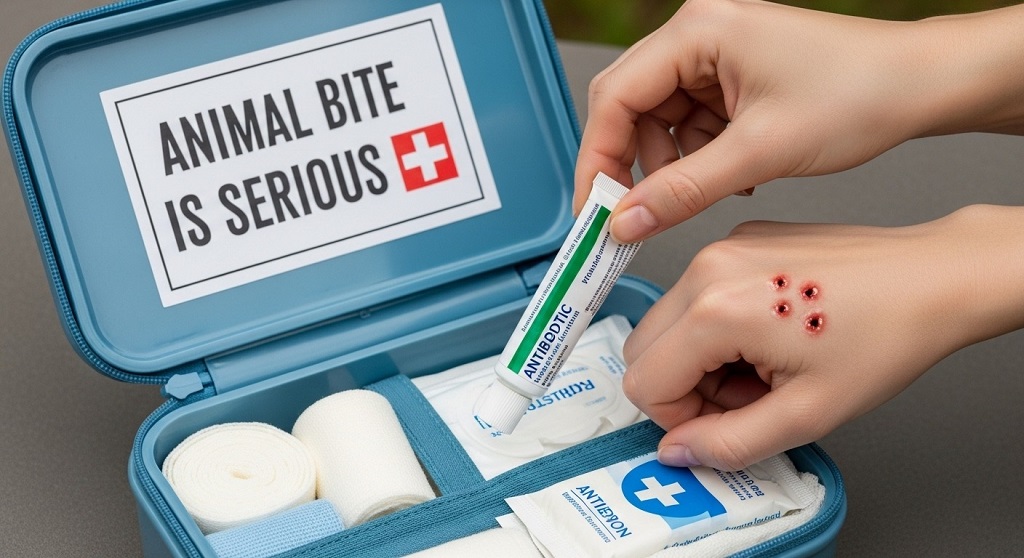
An animal bite is serious when it breaks the skin, causes swelling or bleeding, or comes from an unknown or unvaccinated animal.
An animal bite may look small at first. A tiny puncture. A quick scratch. Many people brush it off and move on. That’s where the real danger starts.
Animal bites are not just skin injuries. They are infection risks. According to the CDC, over 4.5 million animal bites occur each year in the U.S., and nearly 800,000 require medical attention. Dogs cause most bites, followed by cats and wild animals. The problem is not just the bite. It’s what enters the body through it.
Bacteria, viruses, and nerve damage can develop fast. Rabies, tetanus, and deep tissue infections do not always show symptoms right away. This is why knowing how to know if animal bite is serious matters.
This guide explains the warning signs, risks, and exactly how to manage animal bite wound properly. No panic. Just facts.
How to Know If an Animal Bite Is Serious Right Away?

Short answer: An animal bite is serious if it breaks the skin, bleeds, swells, causes pain after 24 hours, or comes from a wild or unknown animal.
Doctors use clear indicators to assess bite severity. You can use the same logic.
- Skin is broken or punctured
- Bleeding does not stop after 10 minutes
- Swelling or redness spreads
- Increasing pain after the first day
- Pus or fluid leaking from the wound
- Fever or chills
Even a small puncture can trap bacteria deep under the skin. Cat bites are a classic example. A 2018 hospital study showed that over 50% of cat bites become infected due to narrow but deep puncture wounds.
If you notice any of these signs, the bite is not minor.
Does the Type of Animal Change How Serious the Bite Is?
Short answer: Yes. Dog, cat, wild animal, and human bites all carry different levels of risk.
| Animal Type | Main Risk | Infection Rate |
|---|---|---|
| Dog | Tissue tearing, nerve damage | 5–15% |
| Cat | Deep puncture infection | 30–50% |
| Wild animals | Rabies exposure | High |
| Human | Severe bacterial infection | 10–50% |
Wild animal bites are always considered serious. Raccoons, bats, monkeys, foxes, and stray animals may carry rabies. Rabies is nearly 100% fatal once symptoms appear.
Dog bites cause most ER visits due to crushing injuries. Cat bites cause delayed infections. Both matter.
How Deep Does an Animal Bite Have to Be to Be Dangerous?
Short answer: Any bite that breaks the skin can be dangerous, even if it looks shallow.
Depth is deceptive. A small hole can hide deep damage.
Medical professionals classify bites into:
- Superficial: Skin scratched but not broken
- Puncture: Small hole, deep bacteria entry
- Laceration: Torn skin and tissue
- Crush injury: Muscle and nerve damage
Puncture wounds are the most underestimated. Bacteria such as Pasteurella multocida can cause infection within 24 hours.
If you can see fat, muscle, or bone, the bite is an emergency.
What Are the Infection Signs After an Animal Bite?
Short answer: Infection signs include redness, warmth, swelling, pus, fever, and worsening pain.
Infections do not always show immediately. Most appear within 8–72 hours.
Watch for:
- Red streaks moving away from the wound
- Skin feeling hot to touch
- Yellow or green discharge
- Swollen lymph nodes
- Limited movement near the bite area
A published emergency care study found that delayed treatment beyond 24 hours increases complication risk by 2.5 times.
If symptoms worsen instead of improve, medical care is required.
How to Manage Animal Bite Wound at Home Safely?
Short answer: Clean immediately, stop bleeding, disinfect, cover, and monitor closely.
Knowing how to manage animal bite wound in the first 10 minutes can reduce infection risk.
Step-by-Step First Aid
- Wash hands with soap
- Rinse wound under running water for 5 minutes
- Use mild soap around the area
- Apply antiseptic (iodine or chlorhexidine)
- Stop bleeding with clean pressure
- Cover with sterile bandage
Do not seal deep wounds tightly. Trapped bacteria grow faster.
Never apply home remedies like turmeric, oil, or toothpaste. These increase infection risk.
When Should You See a Doctor for an Animal Bite?
Short answer: See a doctor if the skin is broken, bleeding continues, infection signs appear, or the animal is unknown.
Immediate medical care is required if:
- Bite is on face, hands, or joints
- Animal was wild or stray
- You have diabetes or weak immunity
- Tetanus shot is outdated
- Bite victim is a child
Doctors may prescribe antibiotics, rabies shots, or perform wound closure depending on risk.
Does Rabies Risk Make Every Animal Bite Serious?
Short answer: Yes, if the animal’s rabies status is unknown.
Rabies spreads through saliva entering broken skin. According to WHO data, 99% of rabies deaths are caused by dog bites, mostly from unvaccinated animals.
Post-exposure rabies treatment is nearly 100% effective if given early.
Delay is what kills.
What Happens If an Animal Bite Is Ignored?
Short answer: Ignored bites can lead to infection, nerve damage, scarring, or life-threatening disease.
Documented complications include:
- Sepsis
- Permanent nerve loss
- Joint infection
- Amputation in severe cases
A case review from emergency departments showed that untreated hand bites resulted in surgery in 1 out of 5 patients.
How Long Does an Animal Bite Take to Heal?
Short answer: Minor bites heal in 7–10 days. Infected or deep bites may take weeks.
Healing depends on:
- Wound depth
- Infection control
- Location on body
- Overall health
Delayed healing is often a sign of infection.
Conclusion: Don’t Guess. Know the Signs.
Animal bites are common. Serious complications are avoidable.
The key is knowing how to know if animal bite is serious and acting fast. If the skin breaks, the risk begins. If symptoms worsen, the danger increases.
Clean early. Watch closely. Get medical help when signs appear.
CTA: If you or someone you care about has suffered an animal bite and you’re unsure what to do next, don’t wait. Get medical advice immediately and document the injury. Early action saves health, time, and long-term damage.
Frequently Asked Questions (FAQs)
How do I know if an animal bite is infected?
Redness, swelling, pus, fever, warmth, and increasing pain are infection signs.
Is a small animal bite dangerous?
Yes. Small puncture wounds can trap bacteria and cause deep infections.
How long after an animal bite can infection start?
Most infections appear within 24–72 hours after the bite.
Should all animal bites get antibiotics?
No. Antibiotics are prescribed based on risk, depth, and infection signs.
What animal bite is most likely to get infected?
Cat bites have the highest infection rate due to deep puncture wounds.
Can I treat an animal bite without seeing a doctor?
Only minor, shallow bites without skin break may be managed at home with care.
What if I don’t know the animal that bit me?
Seek medical care immediately due to rabies risk.