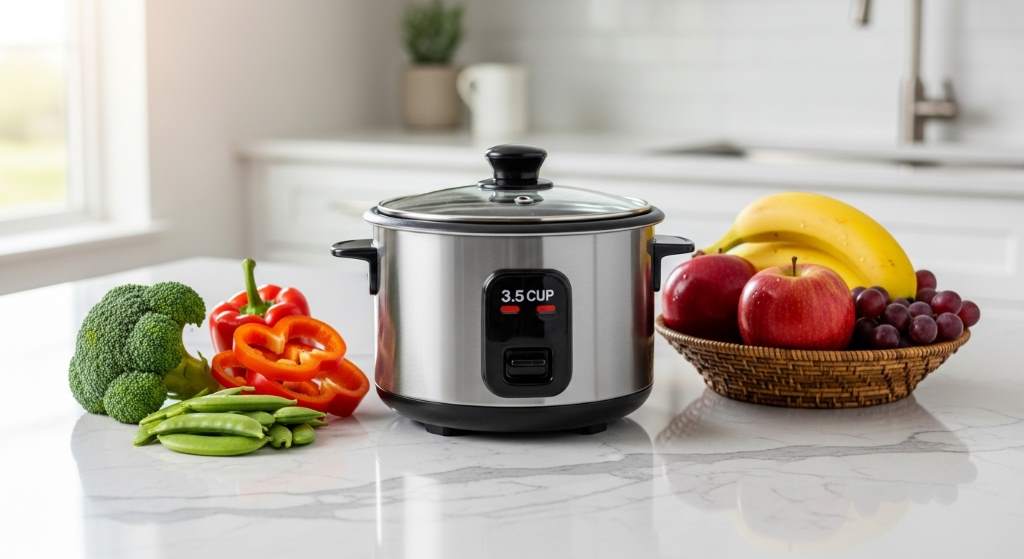
Imagine coming home after a long day. You open your rice cooker and find fluffy, perfectly cooked rice waiting for you. That simple joy starts with choosing the right size. Many people struggle with this decision.
In this rice cooker size guide, we compare 3.5-cup and 8-cup models to help you pick wisely. Rice remains a staple food for billions. The Food and Agriculture Organization of the United Nations reports that global rice consumption stays strong, especially in Asia where people eat over 100 kilograms per person each year in many countries. Meanwhile, the U.S. Census Bureau notes that the average household size stands at about 2.5 people, though larger families are common too. These facts show why size matters so much.
Understanding Rice Cooker Cup Measurements
Rice cooker sizes confuse many buyers at first. Manufacturers use a special “rice cup” that holds 180 milliliters. This differs from the standard U.S. cup of 240 milliliters.
Most models include this smaller measuring cup. One rice cooker cup of uncooked rice yields about two cups of cooked rice. The expansion happens because rice absorbs water during cooking.
For example, a 3.5-cup model holds 3.5 of these special cups uncooked. That produces roughly 7 cups cooked. An 8-cup model handles 8 cups uncooked and gives around 16 cups cooked.
This measurement standard comes from Japanese traditions. Brands like Zojirushi and Aroma follow it closely. Always check the manual to confirm.
Moreover, brown rice expands more than white rice. Jasmine or basmati varieties behave differently too. Keep these details in mind when planning portions.

Who Benefits Most from a 3.5-Cup Rice Cooker
Small households love the 3.5-cup size. Singles or couples find it perfect for daily meals. It serves 2 to 4 people comfortably.
Picture a young professional in a small apartment. They cook rice a few times a week. This compact model fits neatly on the counter.
Additionally, it saves energy. Smaller units use 300 to 500 watts during cooking. That keeps electricity use low for small batches.
Storage becomes easy too. The unit slides into a cabinet without taking much room. Many users in apartments praise this feature.
However, guests can stretch its limits. You might need multiple batches for parties. Leftovers work well though.
In addition, cleaning stays simple. Fewer parts and a smaller pot make maintenance quick. Busy people appreciate that.
For example, one user shared how their 3.5-cup cooker became a daily helper. They prepare rice for lunches all week. It fits their routine perfectly.
Advantages of Choosing an 8-Cup Rice Cooker
Larger families turn to the 8-cup model naturally. It serves 6 to 12 people depending on portions. Weeknight dinners become stress-free.
Think about a home with kids and grandparents. Everyone eats together often. This size handles big meals without extra work.
Moreover, batch cooking shines here. Prepare rice for several days at once. Save time during busy weeks.
Entertaining guests feels easier too. Holiday gatherings or potlucks need plenty of rice. An 8-cup cooker delivers without worry.
In addition, versatility grows. Many models include settings for steaming vegetables or making soups. Use the full capacity creatively.
However, it takes more counter space. Measure your kitchen before buying. Some users store it in lower cabinets.
Energy use rises to 600 or 1000 watts. Full loads justify the power though. Efficiency stays good for large amounts.
One family described their switch to an 8-cup unit. Meal prep improved dramatically. They cook once and eat well all week.
Side-by-Side Comparison: Key Differences
Both sizes cook great rice. Differences appear in practical use. Let’s break them down.
Capacity stands out first. The 3.5-cup yields 7 cups cooked. The 8-cup produces 16 cups.
Space needs vary greatly. Small models fit tight kitchens. Larger ones demand more room.
Energy efficiency favors smaller units for daily small batches. However, large models work better for full loads.
Cooking time stays similar. Modern units adjust automatically. Quality rice comes out either way.
Portability helps with the 3.5-cup. Take it to events easily. The 8-cup stays home usually.
Here is a quick overview:
- Servings: 3.5-cup serves 2-4 people. 8-cup serves 6-12.
- Best for: Small homes versus big families.
- Storage: Compact versus spacious needed.
- Energy: Lower for small versus higher for large.
On the other hand, features overlap in good brands. Both offer keep-warm functions. Choose based on your lifestyle.
Factors to Consider When Deciding
Household size guides the choice most. Count regular eaters at your table. Add occasional guests.
Cooking frequency matters too. Daily rice users need reliability. Occasional cooks can go smaller.
Kitchen space plays a big role. Measure counters and cabinets carefully. Small apartments limit options.
Meal prep habits influence decisions. Batch cookers prefer larger sizes. Fresh daily meals suit smaller ones.
Rice types affect performance. Sticky rice or brown varieties need space to expand. Plan accordingly.
Budget for electricity enters the picture. Smaller units save on small cooks. Larger ones cost more per use if underfilled.
Future changes count as well. Growing families might outgrow small models quickly. Think ahead.
For instance, a couple planning kids chose the 8-cup. They avoided upgrading later. Smart planning paid off.
Cooking Performance and Quality Tips
Both sizes deliver excellent results when used right. Fill to recommended levels always. Underfilling large models can dry rice.
Small amounts in big cookers sometimes cook unevenly. However, premium brands handle it better. Read reviews carefully.
Rinsing rice improves texture in any size. Remove excess starch first. Water ratios stay crucial.
Keep-warm functions work well in both. Rice stays fresh for hours. Avoid long periods to prevent drying.
Cleaning matters for longevity. Non-stick pots simplify the task. Detachable parts help thoroughly.
Experiment with settings. Porridge or sushi rice modes add variety. Both sizes support creativity.
Many users find their chosen size becomes indispensable. Perfect rice boosts every meal.
Real-Life Scenarios and Examples
Consider Alex, a single teacher. He picked the 3.5-cup model. It fits his tiny kitchen perfectly.
Every Sunday, he cooks rice for the week. Portions stay fresh in the fridge. Life feels organized.
Now meet the Rahman family of six. They upgraded to 8-cup last year. Dinner preparation sped up.
They host relatives often. The large capacity handles crowds easily. Everyone enjoys hot rice.
Another example involves a college student. Limited dorm space led to a small cooker. It became their go-to appliance.
Couples starting out often choose mid-range. The 3.5-cup grows with them initially. Later upgrades come naturally.
These stories show personal needs drive choices. Your situation guides the best pick.
Related:
Compact Rice Cookers: Why the Aroma 2-Cup Stands Out
Maintenance and Longevity Tips
Regular care extends any rice cooker’s life. Wipe the exterior after use. Keep it dry.
Inner pots need gentle washing. Avoid metal utensils to protect non-stick surfaces. Hand wash when possible.
Lids and steam vents collect residue. Clean them weekly. Prevent buildup for better performance.
Store properly when not in use. Cool, dry places work best. Avoid humid areas.
Check cords for damage regularly. Safety comes first always. Replace if needed.
Many units last years with good habits. Users report decade-long service. Care makes the difference.
Making Your Final Decision
Review your daily routine honestly. Count people you feed most often. Consider space limits.
Think about entertaining frequency. Occasional large meals favor bigger sizes. Daily small portions suit compact models.
Test in stores if possible. Feel the actual dimensions. Visualize in your kitchen.
Read user experiences online. Real feedback reveals practical insights. Patterns emerge quickly.
Trust your needs above trends. The right size brings daily convenience. Wrong choices cause frustration.
Take time to decide. Your perfect rice awaits the smart choice.
In summary, the 3.5-cup excels for small households and limited spaces. The 8-cup powers through family meals and gatherings. Both deliver delicious results when matched well.
Choose based on your lifestyle today and tomorrow. Enjoy perfect rice every time you cook.
Ready to upgrade your kitchen? Assess your needs now and find your ideal rice cooker size today.
Frequently Asked Questions
What does the cup measurement mean in rice cookers?
Rice cooker cups hold 180 milliliters. This standard comes from Japanese measuring tools. It equals about three-quarters of a U.S. cup. Capacity refers to uncooked rice volume.
How many people does a 3.5-cup rice cooker serve?
It comfortably feeds 2 to 4 people. Cooked yield reaches about 7 cups. Perfect for couples or small families with occasional extras.
Is an 8-cup rice cooker suitable for a small family?
It works but may feel oversized daily. Better for families of 4 or more. Consider it if you batch cook or entertain often.
Can I cook small batches in an 8-cup rice cooker?
Yes, most modern models handle it well. Results stay good with proper water ratios. Premium units perform better at low fills.
Which size is better for meal prepping?
The 8-cup wins for meal prep. Cook large amounts at once. Store portions for the week easily.
References
- Aroma Housewares Rice Cooker Capacity Guide: https://www.aromaco.com/recipes/rice-cooker-capacity-how-to-pick-the-perfect-size
- Yum Asia Rice Cooker Capacity Guide: https://yum-asia.com/us/rice-cooker-capacity-guide
- FAO Rice Market Information: https://www.fao.org/markets-and-trade/commodities/rice/en
- U.S. Census Bureau Household Data: https://www.census.gov/newsroom/press-releases/2024/families-and-living-arrangements.html