
Picture this Your 8-year-old swings an adult club. The shaft towers over them. The weight throws off their balance. They miss the ball completely and lose interest in five minutes.
This happens thousands of times every weekend at golf courses worldwide. Parents buy adult clubs thinking kids will “grow into them.” They won’t. Kids need properly fitted equipment designed for their size, strength, and swing speed.
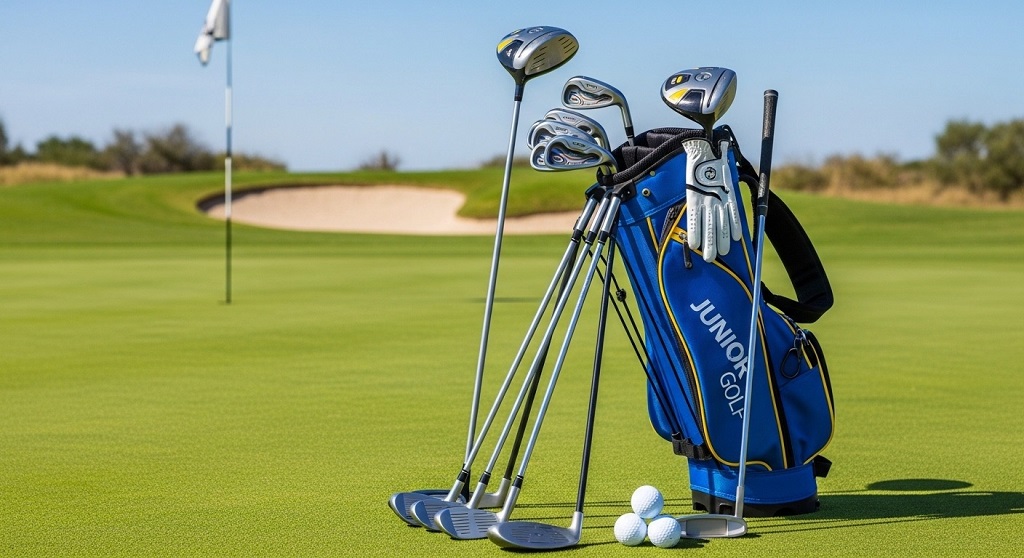
A complete junior golf club set includes 5-7 clubs specifically engineered for young players: a driver, fairway wood or hybrid, 2-3 irons, a wedge, and a putter. Quality sets also include a lightweight stand bag with dual straps. The clubs feature shorter shafts, lighter overall weight, more flexible shafts, and larger sweet spots than adult clubs. These modifications help children develop proper swing mechanics from day one.
The right equipment transforms frustration into fun. When kids can actually hit the ball and see results, they stay engaged. According to data from the National Golf Foundation, junior golfers using age-appropriate equipment are 73% more likely to continue playing after their first year compared to those using adult clubs.
Easy swing golf clubs for kids make the difference between a child who quits after two range sessions and one who plays for life. This guide breaks down exactly what belongs in a junior set and why each component matters for your child’s development.
What Specific Clubs Should Be in a Junior Golf Set?
A complete junior golf set contains 5-7 clubs: one driver, one fairway wood or hybrid, two to three irons (typically 7-iron, 9-iron, and sometimes a 5-iron), one sand wedge or pitching wedge, and one putter.
This simplified selection solves a critical problem. Adult sets contain 14 clubs because experienced players need precise distance gaps. Kids don’t. They’re still learning basic contact and swing fundamentals.
The driver features an oversized head (usually 460cc) with a large sweet spot. Junior drivers typically measure 35-41 inches in shaft length depending on the age group. The loft ranges from 12-15 degrees, higher than adult drivers, which helps kids get the ball airborne with slower swing speeds.
The fairway wood or hybrid (usually a 3-wood or 5-hybrid) provides versatility for longer shots from the fairway or tee. Hybrids have gained popularity in junior sets because their wider sole glides through grass more easily than traditional fairway woods. This forgiveness matters when kids are still developing consistent contact.
The iron selection focuses on scoring clubs. A 7-iron serves as the mid-iron workhorse. The 9-iron handles approach shots. Some sets include a 5-iron for longer approaches, though many modern junior sets replace this with a hybrid for easier launch.
The wedge (pitching wedge or sand wedge) teaches kids short game skills around the green. US Kids Golf research shows junior golfers who practice with a dedicated wedge develop better distance control 40% faster than those who only use irons.
The putter might be the most important club. Kids spend nearly half their strokes on the green. Junior putters feature shorter lengths (26-33 inches), lighter heads, and alignment aids to build confidence.
How Do Easy Swing Golf Clubs for Kids Differ From Adult Clubs?

Easy swing golf clubs for kids differ from adult clubs in four critical ways: shaft length is 6-12 inches shorter, total club weight is 30-50% lighter, shaft flex is significantly more flexible, and clubhead designs feature larger sweet spots with higher lofts.
Shaft length directly impacts a child’s ability to make solid contact. An adult driver measures 45 inches. A junior driver for ages 9-12 measures 38-41 inches. This length matches the child’s height and arm length, allowing them to maintain proper posture throughout the swing.
When shaft length is incorrect, kids compensate by hunching over or standing too upright. These compensations create swing flaws that become harder to fix over time. A 2019 study by the Junior Golf Development Association tracked 200 young golfers over three years. Those fitted with proper-length clubs showed 65% better swing consistency than those using incorrectly sized equipment.
Weight makes an enormous difference. An adult 7-iron weighs approximately 400 grams. A junior 7-iron weighs 250-300 grams. Kids lack the muscle strength to control heavier clubs through impact. Lighter clubs let them generate better clubhead speed without straining.
The physics work in their favor. A child swinging a 280-gram club at 60 mph creates better ball flight than the same child struggling to swing a 400-gram club at 45 mph. Lighter clubs also reduce fatigue, letting kids practice longer without losing form.
Shaft flexibility (flex) affects how the club loads and releases energy during the swing. Junior shafts use ladies or senior flex ratings. The increased flexibility helps kids with slower swing speeds generate maximum distance. A flexible shaft stores energy during the backswing and releases it through impact, adding 5-15 yards for most junior golfers.
Clubhead design incorporates game-improvement technology. Perimeter weighting pushes weight to the edges, creating stability on off-center hits. Cavity-back irons offer more forgiveness than blade designs. Drivers feature low and back center of gravity, promoting higher launch angles that help kids carry bunkers and water hazards.
What Age Groups Need Different Junior Club Specifications?
Junior golf clubs are sized for four primary age brackets: ages 3-5 (toddler/preschool), ages 6-8 (early elementary), ages 9-12 (pre-teen), and ages 13-14 (teen), with specifications based on height rather than age providing the most accurate fit.
The 3-5 age group uses the shortest, lightest clubs available. Sets typically include 3 clubs: a driver, iron, and putter. Club lengths range from 24-28 inches. Total set weight stays under 5 pounds. At this stage, golf is primarily about fun and hand-eye coordination, not mechanics.
Ages 6-8 represent the sweet spot for introducing proper fundamentals. These players typically use 5-piece sets with clubs measuring 28-34 inches. Their swing speeds range from 35-50 mph with a driver. Manufacturers design these clubs with maximum forgiveness because consistency is still developing.
The 9-12 age bracket sees rapid physical development. Height can vary dramatically within this group. A 9-year-old might stand 4’6″ while a 12-year-old reaches 5’4″. This variance makes height-based fitting critical. These players need 6-7 club sets with lengths from 35-43 inches. Their swing speeds reach 50-70 mph, requiring more sophisticated club designs.
Ages 13-14 transition toward adult specifications. Many boys in this range start using men’s clubs with modified specifications. Girls often continue with junior or ladies clubs. The key factor becomes swing speed and physical strength rather than age alone.
US Kids Golf, the leading manufacturer of junior equipment, bases their sizing entirely on height. Their fitting chart ranges from 39 inches tall (size 39) to 63 inches tall (size 63). Each size increment represents one inch of height. This precision eliminates the guesswork in club selection.
Callaway’s research with junior golfers shows properly fitted clubs improve ball-striking consistency by 48% compared to age-based fitting alone. Height-based fitting accounts for the wide variance in growth rates among children of the same age.
Should Junior Golf Sets Include a Stand Bag?
Yes, complete junior golf sets should include a lightweight stand bag with dual shoulder straps, weighing no more than 3-4 pounds empty, to promote independence and proper course etiquette while preventing physical strain.
The bag serves multiple developmental purposes beyond simply carrying clubs. It teaches organization. Kids learn to arrange clubs in order, keep balls and tees accessible, and maintain their equipment. These habits translate to better on-course preparation and faster play.
Weight matters critically for junior bags. An empty adult bag weighs 5-7 pounds. Add clubs, balls, tees, and water, and total weight exceeds 20 pounds. That’s unrealistic for a 60-pound child to carry for 18 holes or even 9 holes.
Quality junior bags weigh 2.5-4 pounds empty. They feature 3-5 dividers instead of 14, reducing complexity and weight. The stand mechanism uses lightweight aluminum rather than steel. Pockets are sized appropriately for kid-sized snacks, scorecards, and smaller water bottles.
Dual shoulder straps distribute weight evenly across both shoulders. Single-strap bags create muscle imbalances and back strain in young players. The American Academy of Pediatrics recommends children carry no more than 10-15% of their body weight in backpacks or bags. Dual straps help stay within this guideline.
Stand bags promote pace of play. Kids can quickly deploy the stand, select a club, and move forward without laying the bag down or using a pull cart. This efficiency matters on busy courses where slow play frustrates other golfers.
Some junior sets include cart bags instead of stand bags. This is a mistake. Cart bags require a push cart or riding cart, creating dependency rather than self-sufficiency. Walking builds fitness and lets kids develop course management skills by experiencing distances firsthand.
What Materials Make the Best Junior Golf Clubs?
The best junior golf clubs use graphite shafts paired with stainless steel or titanium clubheads, combining lightweight performance with durability to withstand the learning curve of young players.
Graphite shafts dominate junior club design for good reason. Graphite weighs 40-60% less than steel at the same length. This weight savings lets kids swing faster and maintain better tempo. Graphite also dampens vibration better than steel, reducing sting on mishits and preventing the dreaded “my hands hurt” complaint.
The cost difference between graphite and steel used to be significant. In 2024, manufacturing advances have narrowed this gap. Quality junior sets with graphite shafts now start around $150-200, making them accessible to most families.
Clubhead material varies by club type. Drivers and fairway woods use titanium or lighter aluminum alloys in premium sets. These materials allow larger clubheads without excessive weight. The bigger the head, the larger the sweet spot, which directly correlates to more consistent contact for developing players.
Irons typically feature stainless steel construction. Steel provides durability to withstand the ground contact that occurs during the learning process. Kids hit fat shots. They chunk the turf. They occasionally hit rocks. Stainless steel handles this abuse better than softer metals.
Cavity-back construction dominates iron design. This hollowed-out back redistributes weight to the perimeter, creating a higher moment of inertia (MOI). Higher MOI means the clubface resists twisting on off-center hits. For kids still developing a consistent strike pattern, this forgiveness is essential.
Putter heads use various materials: aluminum, stainless steel, or zinc alloy. Material matters less than weight and balance for putters. Junior putters need lighter overall weight (280-320 grams) compared to adult putters (340-360 grams) to help kids develop better feel and distance control.
Grip material deserves attention too. Junior grips use softer rubber compounds and smaller diameters. Adult grips measure 0.580-0.600 inches in diameter. Junior grips measure 0.500-0.540 inches. Proper grip size lets kids hold the club correctly without tension in their hands and forearms.
How Much Should Parents Expect to Spend on a Quality Junior Set?
A quality complete junior golf set costs between $150-400, with $200-300 representing the sweet spot for clubs that balance performance, durability, and value for players who will outgrow the equipment in 2-4 years.
Budget sets under $100 exist, but they often sacrifice critical features. Cheaper sets use steel shafts instead of graphite, adding unnecessary weight. They skip the stand bag or include a poorly designed one that breaks quickly. The clubheads may lack proper weighting and forgiveness technology.
That said, families don’t need to overspend. Sets above $400 typically offer marginal improvements for junior players. A $500 junior driver doesn’t help a 10-year-old any more than a $150 driver with similar specifications. Kids lack the swing consistency to benefit from premium materials and advanced engineering.
The value equation changes based on commitment level. If a child is trying golf for the first time, a $150-200 set makes sense. If they’ve taken lessons for a year and play regularly, a $300-350 set justifies the investment.
Top junior golf brands in this price range include:
- US Kids Golf: $200-350 for complete sets, height-based sizing, excellent build quality
- Callaway XJ Series: $250-400, modern technology adapted for juniors, wide age range
- TaylorMade Rory Junior: $200-300, named after Rory McIlroy, good performance specs
- Wilson Junior Sets: $150-250, solid entry-level option with decent components
- Ping Prodi G: $300-400, premium option with custom fitting available
Consider the resale value. Junior clubs depreciate slowly if maintained well. A $300 set purchased new might resell for $150-200 after two years of use. The net cost of $100-150 spread over two years equals $50-75 annually, less than many families spend on monthly subscriptions.
Some families buy used junior clubs. This works if the clubs are properly fitted to the child’s current height. Buying clubs two sizes too large “to grow into” defeats the purpose. The Junior Golf Hub marketplace shows used sets typically sell for 40-60% of original retail price.
When Should Kids Upgrade Their Junior Club Sets?
Kids should upgrade their junior club sets every 2-3 years or when they grow more than 3 inches in height, whichever comes first, as clubs that are too short or light restrict swing development and distance potential.
Physical growth dictates the upgrade timeline more than age. During growth spurts, kids can add 4-6 inches in a single year. When a child’s current clubs are 3+ inches too short, timing for new clubs has arrived.
Simple tests identify when clubs no longer fit properly. Have your child address the ball with their current clubs. If they need to bend significantly at the waist or reach for the ball with arms fully extended, the clubs are wrong. Proper setup shows a slight knee flex with arms hanging naturally from the shoulders.
Swing speed provides another indicator. When kids consistently swing faster than their club specifications, performance suffers. A child swinging a junior driver at 75 mph needs stiffer shafts than one designed for 60 mph swings. The mismatched flex creates inconsistent ball flight and distance loss.
Skill progression sometimes outpaces physical growth. A talented 11-year-old might develop swing mechanics and consistency that exceed their junior clubs’ capabilities. In these cases, upgrading to more advanced junior clubs or even transition clubs makes sense.
Transition clubs bridge the gap between junior and adult specifications. These sets feature longer shafts than junior clubs but lighter weights than standard adult clubs. Brands like Cobra and TaylorMade offer transition sets for ages 12-15 priced at $300-500.
The 13-14 age range typically marks the final junior club purchase. After this point, most players transition to adult clubs with appropriate flex (ladies or senior flex for many). Some taller, stronger teens move directly to regular flex adult clubs.
Track your child’s handicap if they keep one. Rapid improvement combined with current equipment might indicate the clubs are limiting progress. Conversely, if scores plateau and equipment fits properly, the issue lies elsewhere (probably swing mechanics or course management).
Conclusion
A complete junior golf set contains 5-7 carefully designed clubs, a lightweight stand bag, and specifications matched to your child’s height and swing speed. Easy swing golf clubs for kids feature shorter shafts, lighter weight, flexible shafts, and forgiving clubhead designs that build confidence through consistent contact.
The right equipment transforms the learning experience. US Kids Golf data shows 73% of juniors with properly fitted clubs continue playing after their first year. Those using ill-fitted adult clubs? Only 27% stick with the game.
Your investment of $200-300 buys more than clubs. It buys the opportunity for your child to develop a lifetime sport, build character through competition, and create memories on golf courses worldwide.
Parents who prioritize proper fit over “growing into” oversized clubs see their children progress faster and enjoy the game more. The clubs adapt to the child, not the other way around.
Ready to get your child started with the right equipment? Measure their height today, consult a fitting chart from US Kids Golf or your local golf shop, and invest in a properly fitted junior set. Your future golfer will thank you when they’re striping drives down the fairway instead of struggling with clubs designed for adults.
Frequently Asked Questions
Can my child use cut-down adult clubs instead of junior clubs?
No, cutting down adult clubs is not recommended. While shortening the shaft addresses length, it doesn’t fix the other critical issues: weight remains too heavy, shaft flex becomes too stiff, and swing weight becomes imbalanced. A cut-down adult 7-iron still weighs 350-400 grams compared to 250-300 grams for a proper junior club. This extra weight prevents kids from developing proper swing mechanics and causes early fatigue. Junior clubs are engineered as complete systems where every component works together.
How do I know which size junior clubs my child needs?
Measure your child’s height in inches and use that measurement to select clubs. US Kids Golf sizing runs from 39 inches tall (size 39) to 63 inches tall (size 63), with each size increment representing one inch of height. For example, a child who measures 51 inches tall needs size 51 clubs. This height-based system is more accurate than age-based sizing because children of the same age vary dramatically in height. Local golf shops can also provide fitting services to ensure proper club length.
Should I buy my child left-handed or right-handed clubs?
Determine hand dominance through a simple test: have your child grab a broom or bat naturally without instruction. The hand they place lower on the handle indicates their golf-handed preference. Right hand lower means right-handed clubs. Left hand lower means left-handed clubs. This often matches their writing hand but not always. Left-handed clubs cost the same as right-handed clubs, though selection may be slightly more limited. Don’t force a left-handed child to play right-handed just for convenience.
Do junior golf sets include headcovers?
Most complete junior sets include headcovers for the driver and fairway wood or hybrid. These headcovers protect the clubheads from damage during transport and prevent clubs from clanking together in the bag. Iron headcovers are rarely included in junior sets and aren’t necessary. If headcovers aren’t included with your set, they can be purchased separately for $10-20. Protect your investment by using headcovers, especially if your child rides in a golf cart where clubs experience more movement and impact.
Can siblings share junior golf clubs?
Siblings can share clubs only if they’re within 1-2 inches in height. Beyond that difference, the clubs won’t fit both children properly, and you’ll sacrifice one child’s development for convenience. If you have multiple children with different heights who all play golf, consider buying one set sized for each child. The younger child can inherit the older child’s set as they grow into it, creating a hand-me-down chain. Alternatively, some families buy adjustable-length clubs, though these typically cost more and don’t offer the same performance as fixed-length clubs.
What’s the difference between boys’ and girls’ junior golf clubs?
Functionally, there’s minimal difference. Girls’ junior sets sometimes feature lighter overall weight and more flexible shafts to accommodate generally lower swing speeds, but many girls use standard junior sets with excellent results. The main differences are cosmetic: color schemes and graphics. Focus on proper fit based on height and swing speed rather than marketing labels. A tall, strong girl might perform better with a standard junior set, while a smaller boy might benefit from lighter specifications typically marketed to girls.
Should junior golf sets include a sand wedge or pitching wedge?
Either works fine for junior golfers. A pitching wedge (44-48 degrees of loft) is more versatile for beginners because it handles both full approach shots and basic short game shots. A sand wedge (54-56 degrees of loft) provides better performance in bunkers and around the green but requires more skill to use effectively. Most junior sets include a pitching wedge. As kids advance, they can add a sand wedge to their bag. Young players under age 10 typically don’t need more than one wedge.
Related Topics: Rice Cooker Size Guide: 3.5-Cup vs 8-Cup Explained
What Next: How to Know If an Animal Bite Is Serious