
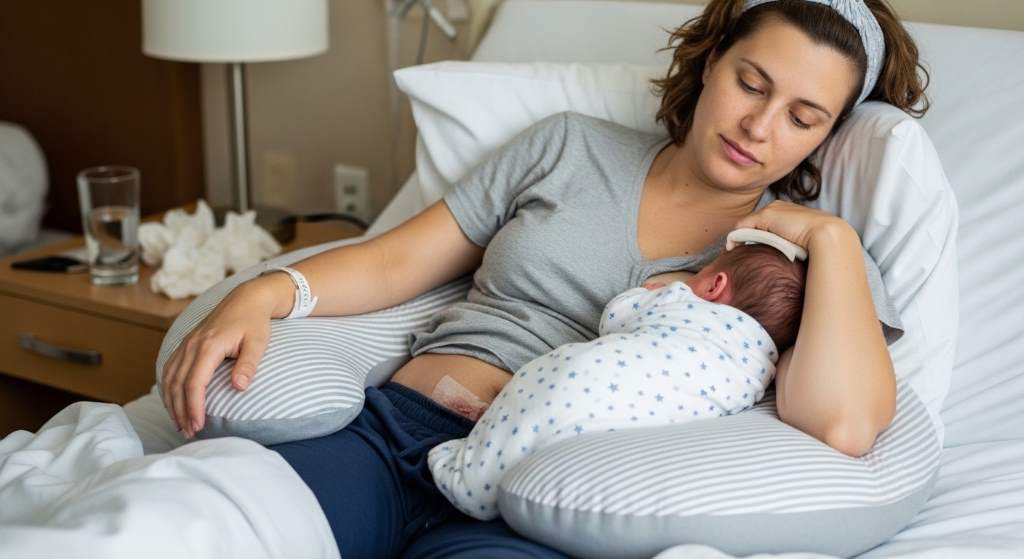
Imagine finally holding your newborn after a long recovery from surgery. You feel joy mixed with sharp pain at every movement. Many new moms face this reality after a cesarean section. Worldwide, cesarean rates have climbed to about 21%, according to recent data from reliable health organizations. Moreover, studies show that moms who deliver by C-section often start breastfeeding later than those with vaginal births. However, you can overcome these hurdles. With the right approach and tools, you can nurse comfortably and build that precious bond. For excellent c-section breastfeeding support, focus on smart positioning and supportive pillows. This guide walks you through every step.
Why Breastfeeding After a C-Section Feels Challenging
Cesarean delivery brings unique obstacles to breastfeeding. First, the incision site stays tender for weeks. Any pressure on your abdomen causes discomfort. Next, medications from surgery sometimes slow milk production initially. Mobility limits also play a role. You avoid sudden moves that strain stitches.
In addition, separation after birth delays skin-to-skin contact. This contact helps trigger milk flow naturally. Research confirms these issues. One large review found that early breastfeeding rates drop significantly after C-sections compared to vaginal deliveries. Yet, most moms succeed with patience and the right setup.
Furthermore, fatigue hits harder after major surgery. You need extra rest, but your baby needs frequent feeds. These factors combine to make standard nursing positions painful or impossible at first. Therefore, you adjust your approach early.
How a Nursing Pillow Changes Everything

A good nursing pillow acts as your best ally during recovery. It lifts your baby to breast level without straining your core. This elevation protects your incision from direct pressure.
Additionally, the pillow supports your arms and back. You maintain better posture, which reduces overall body tension. Many moms report less shoulder and neck pain too.
Moreover, pillows help your baby latch properly. A strong latch prevents sore nipples and ensures efficient milk transfer. When your little one feeds well, your supply builds faster.
In short, the right pillow turns challenging feeds into relaxed bonding time. You feel more confident and less overwhelmed.
Top Breastfeeding Positions After a C-Section
Certain positions keep weight off your belly while allowing easy access. Experiment gently in the first days. Always prioritize comfort.
Football Hold (Clutch Hold)
You tuck your baby under your arm like a football. Their legs point toward your back. This position keeps all pressure away from your incision.
Support your baby’s head with your hand. Use a firm nursing pillow around your waist to elevate them. Many hospitals recommend this hold right after surgery.
Furthermore, it works great for twins or moms with larger breasts. You control the angle easily.
Side-Lying Position
Lie on your side with your baby facing you. Place a pillow behind your back and between your knees for support. This setup lets you rest fully during feeds.
No weight presses on your abdomen at all. You recover while nursing, especially at night. Slide a small pillow under your baby’s head if needed for alignment.
However, wait until you move comfortably before trying this alone. Ask for help rolling over at first.
Laid-Back (Biological Nurturing) Position
Recline slightly with pillows propping your upper body. Let your baby lie chest-to-chest on you. Gravity helps them find the breast naturally.
This relaxed pose activates feeding reflexes in newborns. Your hands stay free to guide rather than hold weight. Many moms find it soothing after surgery.
Additionally, it promotes longer feeds without arm fatigue.
Modified Cradle Hold
Once your incision heals more, try a gentle cradle. Place a nursing pillow on your lap. Rest your baby across your chest with their head near the opposite breast.
Shift the pillow higher to avoid any belly contact. Support their body fully on the pillow surface.
This classic position becomes possible around week two or three for most moms.
Choosing the Perfect Nursing Pillow for C-Section Moms
Not all pillows suit post-surgical needs. Look for specific features.
First, choose firm support that holds shape under your baby’s weight. Soft, floppy pillows sink and force you to compensate with your muscles.
Next, consider wrap-around designs with straps. These stay secure without sliding onto your incision. U-shaped or adjustable pillows often work best.
Moreover, pick breathable, washable covers. You deal with spills and sweat during recovery.
Height matters too. Taller pillows bring baby higher, sparing your core.
Finally, test firmness in person if possible. Your comfort directly affects feeding success.
Step-by-Step Guide to Using Your Nursing Pillow
Follow these steps for smooth feeds.
- Sit upright with good back support. Add pillows behind you.
- Place the nursing pillow around your waist. Fasten any straps snugly but comfortably.
- Position your baby on the pillow at breast height. Their mouth should align with your nipple without bending.
- Support their neck and shoulders. Let the pillow bear most of the weight.
- Bring your baby to the breast rather than leaning forward. This protects your posture.
- Adjust as needed during the feed. Small shifts prevent soreness.
Practice with a doll first if you feel nervous. Soon it becomes second nature.
Related:
How to Set Up Your HelloBaby 6″ IPS Baby Monitor in 5 Easy Steps
Best Baby Monitors for New Parents: Features That Matter Most
Extra Tips for Easier Breastfeeding Recovery
Start skin-to-skin contact as soon as doctors allow. This boosts milk production despite surgery.
Moreover, stay hydrated and eat nutrient-rich foods. Healing demands extra calories.
Ask nurses for help with the first latch in hospital. Early success builds confidence.
Additionally, pump briefly if feeds delay due to medications. This maintains supply.
Use nipple cream preventively. Friction increases when positions change often.
Walk gently when cleared. Light movement improves circulation and mood.
Finally, accept help from partners or family. Rest promotes faster healing and better milk flow.
Common Mistakes New Moms Make
Avoid these pitfalls.
First, many try traditional cradle hold too soon. This presses directly on tender areas.
Next, some skip pillows entirely to “tough it out.” This leads to exhaustion and poor latches.
Moreover, moms often hunch forward instead of bringing baby up. Back pain follows quickly.
Rushing positions without practice causes frustration. Take time to learn each hold.
Finally, ignoring pain signals risks longer recovery. Always adjust for comfort.
Long-Term Benefits of Comfortable Breastfeeding
Successful nursing after C-section offers lasting rewards. Your baby receives optimal nutrition and antibodies.
Additionally, breastfeeding speeds uterine recovery through hormone release. You bond deeply during calm feeds.
Moms who persist often report higher satisfaction with their birth experience. Confidence grows with each comfortable session.
Furthermore, comfortable positioning prevents future posture issues from compensating during feeds.
When to Seek Extra Help
Contact a lactation consultant if latching stays painful after a week. They offer personalized adjustments.
Moreover, watch for signs of low supply or poor weight gain. Early intervention works wonders.
Speak to your doctor about persistent incision pain affecting feeds. Sometimes small changes make big differences.
Support groups connect you with other C-section moms. Shared stories provide encouragement.
Conclusion
You can absolutely breastfeed comfortably after a C-section. Choose supportive positions and the right nursing pillow. Protect your healing body while nourishing your baby.
Start with football or side-lying holds. Add a quality pillow for elevation and stability. Practice patience as you both learn.
Soon, nursing becomes a cherished quiet moment rather than a struggle. Take action today—gather your pillows and prepare for those special feeds.
FAQs
How soon can I breastfeed after a C-section?
You can often start within the first hour if you feel alert. Skin-to-skin contact begins in recovery for many moms. Follow your medical team’s guidance.
Which nursing pillow works best after surgery?
Wrap-around styles with firm support and straps help most. They stay off your incision while providing stable elevation.
Will a C-section affect my milk supply permanently?
Initial delays happen sometimes, but supply usually catches up within days. Frequent feeding or pumping stimulates production effectively.
Can I breastfeed lying down right after surgery?
Side-lying works well once you move comfortably. Use pillows for support and ask for help positioning at first.
What if standard positions still hurt?
Try laid-back reclining or consult a lactation specialist. Small tweaks often solve ongoing discomfort.
- Mayo Clinic: C-section recovery and breastfeeding guidance – https://www.mayoclinic.org/healthy-lifestyle/labor-and-delivery/in-depth/c-section-recovery/art-20047310
- World Health Organization: Caesarean section rates and recommendations – https://www.who.int/teams/sexual-and-reproductive-health-and-research-(srh)/areas-of-work/maternal-and-perinatal-health/caesarean-section
- La Leche League International: Breastfeeding after cesarean birth – https://llli.org/breastfeeding-info/breastfeeding-cesarean-birth
- PMC Study: Breastfeeding pillow comfort research – https://pmc.ncbi.nlm.nih.gov/articles/PMC7463134