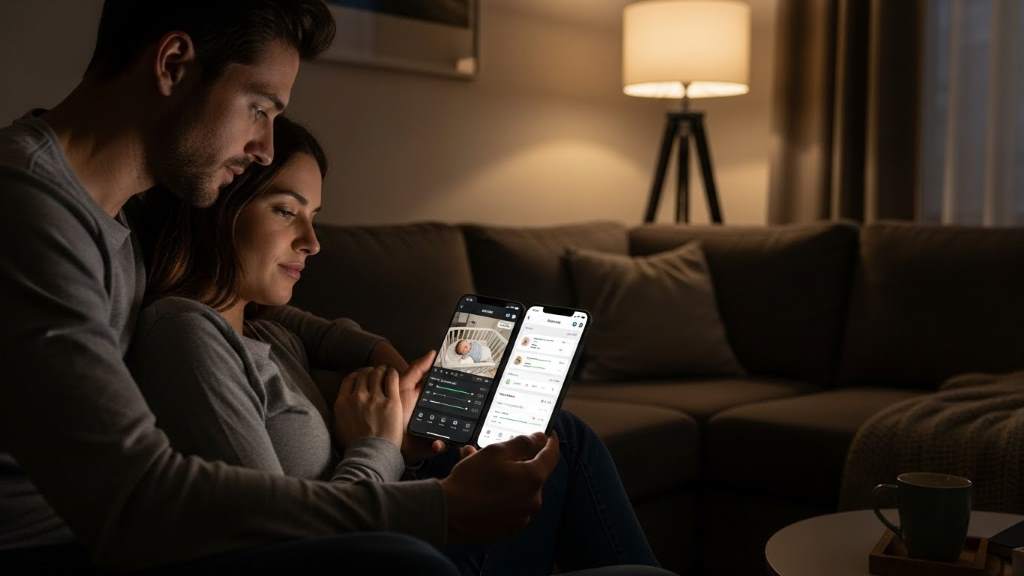
New parents often feel a mix of joy and worry when their little one arrives. You want to keep your baby close, yet everyone needs rest. A reliable baby monitor helps bridge that gap. It lets you check on your sleeping child without constantly tiptoeing into the nursery. For instance, many families turn to a newborn baby monitor like the VTech VM901 Smart 1080p Baby Monitor for clear video and peace of mind right from the start.
Experts note that sleep-related infant deaths affect thousands each year. In 2022, the CDC reported about 3,700 sudden unexpected infant deaths (SUID) in the United States. However, safe sleep practices have dramatically reduced risks since the 1990s. The American Academy of Pediatrics (AAP) stresses that no monitor prevents these tragedies, but the right one supports vigilance and reduces anxiety.
This guide explores key features, types of monitors, and practical tips. You will discover what truly matters for your family’s needs.
Why New Parents Need a Reliable Baby Monitor
First-time parents quickly learn that babies wake often at night. You hear every coo or cry, but constant checking disrupts everyone’s sleep. A good baby safety monitor changes that. It provides real-time updates, so you respond only when needed.
Moreover, studies show that monitoring tools offer reassurance. Many parents report better rest knowing they can see or hear their child instantly. Yet, the AAP reminds us that monitors complement safe sleep habits, not replace them.
Transitioning to parenthood involves trial and error. Some nights go smoothly, while others feel endless. The right device eases those tough moments. For example, video feeds help you spot if your baby simply stirs or needs comfort.
Types of Baby Monitors Available Today
Parents choose from several types in 2026. Each offers unique benefits.
Audio monitors remain simple and effective. They transmit sounds clearly over long ranges. These suit budget-conscious families who prioritize hearing cries.
Video monitors add a camera for visual checks. Most now feature HD resolution and night vision. You watch your baby’s movements without entering the room.
Smart or Wi-Fi monitors connect to apps. They allow remote viewing from anywhere. Some include advanced alerts.
Movement or breathing monitors track subtle changes. However, the AAP states these do not prevent SIDS. They may cause false alarms and extra worry.
Non-Wi-Fi options use dedicated signals for privacy. They avoid hacking risks entirely.
Hybrid models combine local screens with app access. These balance convenience and security.
Consider your home layout and tech comfort when selecting a type.
Essential Features That Matter Most
Certain features stand out in top models. Focus on these for maximum value.
Clear Video Quality and Night Vision
Sharp video makes all the difference. Look for at least 1080p resolution. It helps you see details like chest rises during sleep.
Night vision ensures clarity in darkness. Infrared technology activates automatically. Moreover, wide-angle lenses cover the entire crib area.
Reliable Audio and Two-Way Talk
Crystal-clear sound catches soft whimpers. Noise reduction filters out fans or white noise machines.
Two-way talk lets you soothe your baby remotely. A gentle “shh” often settles them back to sleep. This feature proves invaluable during early months.
Range and Connectivity
Strong range covers multi-story homes. Non-Wi-Fi models often reach 1,000 feet outdoors.
Wi-Fi versions offer unlimited range via apps. However, they depend on stable internet.
Temperature and Humidity Sensors
Nurseries stay comfortable with these sensors. Ideal room temperature falls between 68-72°F.
Alerts notify you of extremes. This prevents overheating, a known sleep risk factor.
Battery Life and Portability
Long-lasting batteries free you from constant charging. Look for 10+ hours in power-save mode.
Portable parent units fit in pockets. Some split screens handle multiple cameras for growing families.
Security and Privacy Considerations
Privacy concerns rise with connected devices. Choose models with encryption and two-factor authentication.
Non-Wi-Fi monitors eliminate internet risks altogether. Always update firmware promptly.
Advanced Features: Helpful or Overhyped?
Smart extras tempt many parents. Evaluate them carefully.
Sleep tracking analyzes patterns over time. It provides insights into routines. However, accuracy varies.
Cry detection identifies hunger versus discomfort. AI improves this in newer models.
Breathing monitoring uses cameras or wearables. The AAP cautions against relying on these for safety. False alarms disrupt sleep more than help.
Lullabies and white noise play built-in sounds. These calm fussy babies effectively.
Zoom, pan, and tilt allow remote adjustments. You follow active toddlers easily.
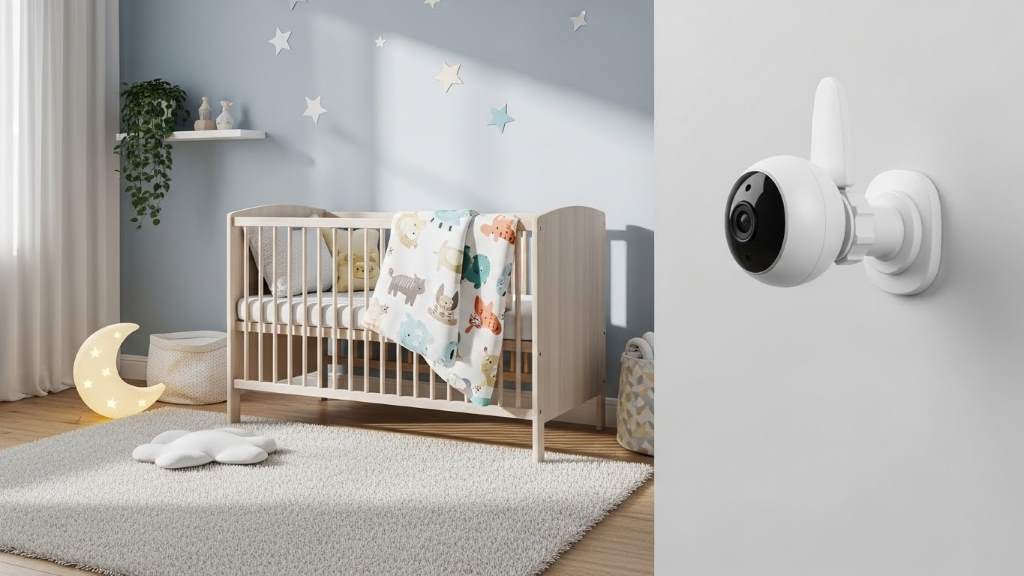
Wall mounting keeps cameras secure and out of reach.
How to Choose the Right Monitor for Your Family
Start with your priorities. Need remote access while traveling? Opt for Wi-Fi.
Prefer maximum privacy? Select non-Wi-Fi with local video.
Consider future needs. Multi-camera support grows with your family.
Read real parent reviews. They reveal everyday performance.
Test setup ease. Quick installation matters when exhaustion hits.
Budget for quality basics first. Add smart features if they fit your lifestyle.
Pros and Cons of Wi-Fi vs. Non-Wi-Fi Monitors
Wi-Fi monitors shine in flexibility. You check via phone from work or errands. Apps often include extras like video recording.
However, they risk hacking if not secured. Internet outages disrupt service.
Non-Wi-Fi models offer rock-solid connections. No subscriptions needed. Battery life often lasts longer.
Yet, range limits apply. No remote viewing outside home.
Many parents blend both with hybrids. Local screen for daily use, app for occasions.
Setting Up Your Baby Monitor Safely
Proper placement prevents hazards. Mount cameras high and away from cords.
Keep units at least three feet from the crib. This avoids strangulation risks.
Follow AAP safe sleep rules always. Back sleeping on firm mattress, no soft items.
Test signals in all home areas. Adjust antennas if needed.
Register devices for updates. These fix security issues promptly.
Common Mistakes New Parents Make
Many overlook cord safety initially. Loose wires pose dangers.
Others rely too heavily on advanced alerts. This creates false security.
Skipping firmware updates leaves vulnerabilities open.
Placing cameras too close invites tampering by curious babies.
Ignoring battery warnings leads to missed moments.
Learn from others. Prioritize basics over bells and whistles.
Related:
Wide Toe Box Baby Shoes: Top Recommendations for Growing Feet
Finding the Perfect Wide Baby Shoes: Comfort First for Little Feet
Tips for Getting the Most Out of Your Monitor
Use split-screen for twins or siblings.
Enable background audio on apps. Multitask safely.
Combine with sound machines for better sleep cues.
Share access securely with partners or caregivers.
Clean lenses regularly for clear views.
Conclusion
Choosing the best baby monitor empowers new parents. Focus on clear video, reliable audio, strong range, and essential sensors. These deliver true peace of mind.
Remember, no device replaces safe sleep practices. Follow AAP guidelines diligently.
Explore options that fit your home and needs. A thoughtful selection supports restful nights for everyone.
Start researching today. Your family deserves the reassurance a great monitor provides.
FAQs
What is the most important feature in a baby monitor?
Clear video quality tops the list for most parents. It allows visual confirmation of your baby’s well-being. Reliable audio follows closely.
Are Wi-Fi baby monitors safe from hacking?
Secure models with encryption protect well. Change default passwords and enable updates. Non-Wi-Fi avoids risks entirely.
Do breathing monitors prevent SIDS?
No evidence supports this, per AAP and FDA. They may increase anxiety from false alarms. Stick to proven safe sleep habits.
How far should a baby monitor reach?
Aim for 800-1,000 feet in open areas. Test in your home layout. Walls reduce effective range.
Can I use a baby monitor for toddlers too?
Absolutely. Many grow with your child. Pan-tilt-zoom tracks active explorers.
References
- American Academy of Pediatrics. Safe Sleep Recommendations. https://www.aap.org/en/patient-care/safe-sleep/
- Centers for Disease Control and Prevention. Sudden Unexpected Infant Death Data. https://www.cdc.gov/sudden-infant-death/data-research/data/index.html
- Consumer Reports. Best Baby Monitors of 2026. https://www.consumerreports.org/babies-kids/baby-monitors/best-baby-monitors-a8598638140/
- Wirecutter (NYT). The Best Baby Monitors of 2026. https://www.nytimes.com/wirecutter/reviews/best-baby-monitor/