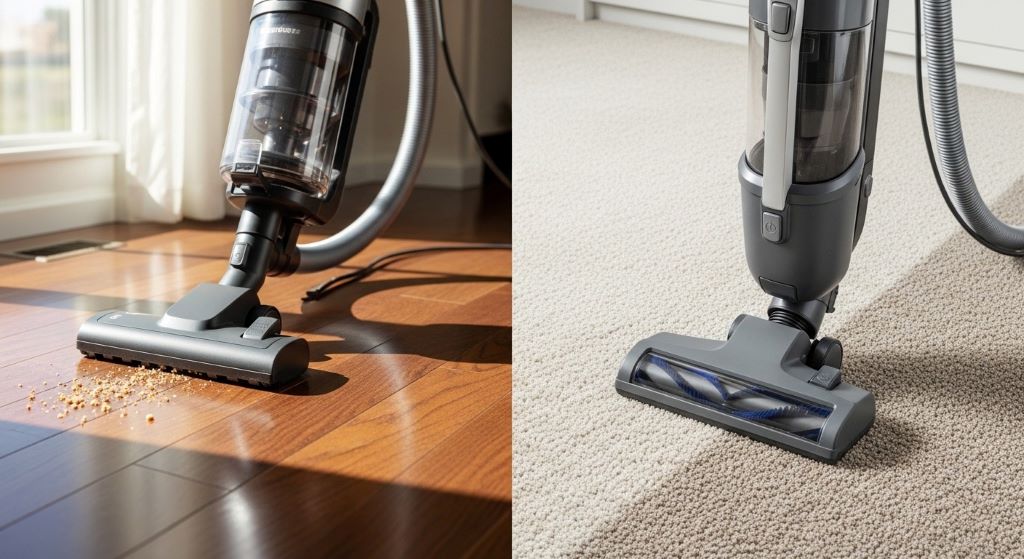
Choosing the right vacuum cleaner can feel overwhelming when you’re standing in the store aisle or scrolling through countless online options. The decision between a canister and upright model affects your daily cleaning routine, your home’s cleanliness, and even your physical comfort. This comprehensive guide will help you understand which vacuum type suits your specific flooring needs.
Understanding the Basic Differences
Canister vacuums consist of two separate parts connected by a hose. The main unit, which houses the motor and dust collection system, rolls behind you on wheels. Meanwhile, you guide a lightweight wand and cleaning head across your floors. This design offers exceptional flexibility and maneuverability.
Upright vacuums combine everything into one unit. The motor, dust bin, and cleaning head all work together in a single piece of equipment. You push the entire machine across your floors, similar to how you might use a lawn mower. This traditional design remains popular in many households.
Evaluating Performance on Different Floor Types
The surface you’re cleaning matters tremendously when selecting a vacuum. Different designs excel on different materials, so understanding these distinctions helps you make an informed choice.
Carpet Cleaning Capabilities
When it comes to carpet cleaning performance, upright vacuums typically take the lead. Their motorized brush rolls agitate carpet fibers effectively, loosening embedded dirt and pet hair. The concentrated suction directly beneath the cleaning head creates powerful extraction that pulls debris from deep within carpet padding.
Canister models can also handle carpets well, particularly when equipped with electric powerheads. However, they sometimes require more passes over heavily soiled areas. The separation between the main unit and cleaning head occasionally reduces the direct power transfer that uprights naturally provide.
Furthermore, upright vacuums excel on thick, plush carpeting where deep cleaning matters most. The weight of the machine itself helps the brush roll maintain contact with carpet fibers. This consistent contact ensures thorough cleaning across the entire surface.
Hardwood and Hard Surface Cleaning
Canister vacuums shine when cleaning hardwood floors and other hard surfaces. Their lighter cleaning heads glide smoothly without scratching delicate finishes. Additionally, the ability to reduce suction prevents the vacuum from sticking to smooth surfaces.
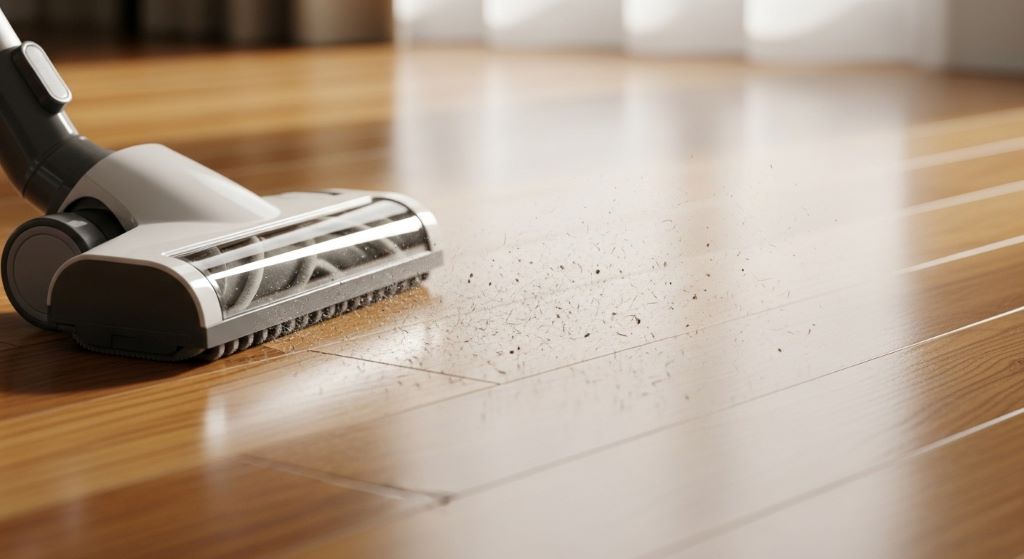
Many canister models include specialized hard floor attachments with soft bristles or felt pads. These accessories protect your investment in beautiful flooring while still capturing dust and debris effectively. The gentle approach prevents the scattering of particles that sometimes occurs with aggressive brush rolls.
A quality hardwood floor vacuum should offer versatile cleaning options without causing damage. Canister designs typically provide better control over suction strength and brush engagement. This flexibility proves invaluable when transitioning between different floor types throughout your home.
Considering Maneuverability and Ease of Use
Your vacuum’s usability affects how often you’ll actually clean. A machine that’s difficult to operate often stays in the closet, regardless of its technical capabilities.
Navigating Furniture and Tight Spaces
Canister vacuums offer superior maneuverability around obstacles. The separate cleaning wand easily slides under furniture, around table legs, and into corners. The low-profile design of most canister cleaning heads allows access to spaces that upright models simply cannot reach.
However, managing the canister body requires some coordination. The unit can bump into furniture or doorways if you’re not paying attention. Some users find this trade-off worthwhile for the enhanced flexibility, while others prefer the straightforward operation of uprights.
Upright models provide simpler operation in open spaces. You simply push forward and pull back, making cleaning large rooms quick and efficient. Nevertheless, maneuvering around chair legs or beneath low furniture presents challenges with the bulkier design.
Storage and Portability
Think about where you’ll keep your vacuum between cleaning sessions. Upright models typically require less floor space because they stand vertically in closets. Many designs include convenient cord wraps and onboard tool storage that keeps everything together.
Canister vacuums need more horizontal storage space for the separate body and wand. The hose can be cumbersome to wrap and store neatly. On the other hand, many canister models prove easier to carry up and down stairs because you can grab the lighter main unit by its handle.
Addressing Health and Allergy Concerns
Indoor air quality matters, especially for people with respiratory sensitivities or allergies. Your vacuum choice directly impacts the air you breathe after cleaning.
Filtration Systems and Air Quality
Modern allergy-friendly vacuums incorporate advanced filtration technology. HEPA filters capture 99.97 percent of particles as small as 0.3 microns. This includes common allergens like pollen, pet dander, and dust mite debris.
Both canister and upright models can feature HEPA filtration. However, the sealed system design matters as much as the filter itself. Air leaks around seals allow unfiltered particles to escape back into your home. Premium models of both types address this concern with completely sealed air pathways.
Canister vacuums often excel in this area because their design naturally lends itself to better sealing. The separated motor compartment can be more thoroughly sealed than upright designs where multiple moving parts create potential leak points.
Dust Collection and Disposal
Bagged systems generally contain allergens more effectively during disposal. When you remove a full bag, the dust remains trapped inside. You simply throw away the sealed bag without exposure to its contents.
Bagless models offer cost savings and environmental benefits. Nevertheless, emptying the dust cup can release particles back into the air. People with severe allergies might prefer bagged options regardless of the vacuum type.
Both canister and upright vacuums come in bagged and bagless versions. Your choice here depends more on personal preference and health concerns than the vacuum style itself.
Analyzing Long-Term Costs and Maintenance
Initial purchase price represents only part of your investment. Consider ongoing expenses and maintenance requirements when comparing options.
Replacement Parts and Consumables
Bagged vacuums require regular bag purchases. Quality bags cost between five and twenty dollars for a package, depending on the brand. You’ll typically need new bags monthly or quarterly, depending on your cleaning frequency and home size.
Bagless models eliminate this expense but require filter replacements. HEPA filters should be changed annually or semi-annually. These filters sometimes cost more than several months of bags would.
Both vacuum types need belt replacements and occasional brush roll changes. Upright vacuums generally go through belts more quickly because of the direct-drive system. Canister models with electric powerheads have similar replacement needs.
Durability and Repair Considerations
Higher-quality canister vacuums often last longer than comparably priced uprights. The separated motor experiences less stress because it doesn’t bear the weight of cleaning operations. Additionally, fewer moving parts in the main unit reduce potential failure points.
Upright models sometimes suffer from worn wheels, broken height adjustments, or cracked housings from daily impacts. The all-in-one design means repairing one component often requires disassembling multiple sections.
Therefore, considering the total cost of ownership over five or ten years provides better perspective than focusing solely on the initial price tag.
Making the Right Choice for Your Home
Your ideal vacuum depends on your specific situation. Several factors should guide your decision beyond simple preference.
Assessing Your Flooring Mix
Homes with predominantly carpeted rooms benefit most from upright models. The superior carpet cleaning performance justifies any limitations on hard surfaces. You can always use attachments for occasional hard floor cleaning.
Conversely, homes with mainly hardwood, tile, or laminate flooring suit canister designs better. The gentle yet effective cleaning protects your floors while maintaining cleanliness. A good hardwood floor vacuum prevents the scratches and scuffs that aggressive uprights might cause.
Mixed flooring presents the biggest challenge. Consider which surface type covers the majority of your square footage. Alternatively, some households invest in both types for optimal results on each surface.
Evaluating Physical Considerations
Your physical capabilities matter when selecting a vacuum. Upright models require pushing and pulling motions that can strain backs and shoulders. The weight of the entire unit must be moved with each stroke.
Canister vacuums distribute weight differently. You pull the lighter main unit while guiding only the wand and cleaning head. This arrangement often proves easier for people with back problems or limited upper body strength.
However, managing the hose and keeping the canister from tangling requires coordination. Some users find this more frustrating than the straightforward push-pull motion of uprights.
Special Features Worth Considering
Modern vacuums offer numerous features beyond basic suction. Understanding which features provide real value helps you avoid paying for unnecessary bells and whistles.
Attachments and Versatility
Both vacuum types typically include various attachments. Crevice tools, dusting brushes, and upholstery nozzles expand cleaning capabilities beyond floors. Canister models generally make switching between attachments easier because the wand system naturally accommodates different heads.
Upright vacuums often store attachments on the body for convenient access. Nevertheless, using these tools sometimes requires removing the entire unit from the floor and reconfiguring the hose connections.
Noise Levels
Canister vacuums tend to operate more quietly than uprights. The motor sits farther from your ears, and the separated design allows for better sound insulation. This matters if you clean while others are sleeping or working from home.
Upright models place the motor closer to ear level, resulting in higher perceived noise levels. However, premium models in both categories incorporate sound-dampening technology that significantly reduces operational noise.
Conclusion
Selecting between canister and upright vacuums requires careful consideration of your specific needs. Upright models excel at carpet cleaning performance and offer straightforward operation in homes with extensive carpeting. Their all-in-one design simplifies storage and usage for many people.
Canister vacuums provide superior performance as a hardwood floor vacuum and offer better maneuverability around furniture. They typically deliver quieter operation and often include better filtration systems for those seeking allergy-friendly vacuums.
Consider your flooring types, physical capabilities, storage space, and budget when making this important decision. The right vacuum makes cleaning easier and more effective, ultimately contributing to a healthier, more comfortable home environment.
Frequently Asked Questions
Can I use an upright vacuum on hardwood floors without causing damage?
Yes, but choose models with adjustable brush rolls that can be turned off for hard surfaces. Look for soft roller options or hard floor settings that prevent scratching. Always check manufacturer recommendations for your specific flooring type.
Do canister vacuums clean carpets as well as uprights?
Canister vacuums with electric powerheads perform nearly as well as uprights on most carpets. They may require additional passes on very thick or heavily soiled carpeting. For homes with minimal carpeting, the difference is often negligible.
Which vacuum type is better for pet hair removal?
Both types can effectively remove pet hair when equipped with appropriate brush rolls and strong suction. Uprights generally provide better agitation for embedded hair in carpets, while canisters excel at collecting hair from hard floors and furniture.
How often should I replace filters in my vacuum?
HEPA filters typically need replacement every six to twelve months, depending on usage. Pre-motor filters may require more frequent changes. Always consult your specific model’s manual, as requirements vary between manufacturers.
Are bagless vacuums truly better for allergy sufferers?
Actually, bagged vacuums often prove better for allergies because dust remains sealed during disposal. Bagless models can release particles when emptying the dust cup. If you prefer bagless, empty the container outdoors or into a sealed bag to minimize exposure.
Related Topics:
Cozy Minimalist Home Style: Design Ideas for a Warm Space
Compact Rice Cookers: Why the Aroma 2-Cup Stands Out