

Is your tackle box a chaotic mess of treble hooks, soft plastics, and tangled line? You’re not alone. Every bass angler hits that frustrating wall where finding the right lure takes longer than catching the fish. You know the problem: it’s not that you lack lures; it’s that you can’t see them, reach them, or keep them snag-free. This guide cuts through the clutter. We’ll show you exactly how to use all-in-one bass lure organizer kits to transform your fishing setup, save precious time on the water, and protect your investment. No more digging. No more wasted minutes. Just efficient, organized fishing that gets you casting sooner.
What Exactly Is an All-in-One Bass Lure Organizer Kit?
An all-in-one bass lure organizer kit is a modular storage system designed to house multiple lure types—from crankbaits to finesse worms—in a single, portable unit. Unlike traditional single-purpose boxes, these kits combine various tray sizes, adjustable dividers, and specialized compartments to accommodate the unique shapes and hook configurations of bass tackle. The goal is simple: consolidate your entire arsenal into one cohesive, grab-and-go system.
Key Components of a Modern All-in-One System
These kits typically include a hard-shell case, multiple removable utility boxes, and customizable spacers. The different tray depths allow you to store shallow squarebills alongside bulky jigs without crushing them. Integrated gaskets keep moisture out, while the transparent lids let you quickly identify what’s loaded for the day’s conditions.
Differences from Standard Tackle Boxes
Standard tackle boxes often have fixed compartments that waste space. All-in-one kits use adjustable dividers that you can reconfigure at the dock. If you’re swapping from deep-diving crankbaits to topwater frogs, you simply move the dividers to create wider lanes. That flexibility is the core advantage over a plastic box with molded slots.
Why One Kit Can Replace Multiple Boxes
Think about your current setup: a box for spinnerbaits, a bag for plastics, a tray for terminal tackle. An all-in-one kit consolidates these into one stackable system. Inside the case, you can stack three or four distinct utility boxes, each tailored for a specific technique. This reduces the physical bulk you carry and cuts down on the chance of leaving a critical box in the truck.
Why Standard Tackle Management Fails for Bass Anglers
Relying on old-school boxes creates three major inefficiencies: wasted time, damaged lures, and missed opportunities. When you’re on a morning bite that lasts 45 minutes, spending ten of those minutes untangling a treble hook from a soft plastic means fewer casts and fewer bass. A disorganized system actively hurts your catch rate. To locate fish more effectively while managing your tackle, check out our guide to find cheap depth finders that work before your next trip.
The Tangled Lure Problem
Loose lures in a flat tray are a disaster waiting to happen. A single hard jerkbait can hook three or four worms from the adjacent compartment. This not only destroys soft plastics but also creates a bird’s nest of line around your hooks. Dedicated slots in an organizer prevent physical contact between different lure types.
Time Waste on the Water
Time is your most valuable resource as an angler. Opening a cluttered box forces a visual search. With an all-in-one system, you use a “tackle rotation” method. You know that the top tray holds reaction baits for windy days, and the second tray holds finesse setups for clear water. You grab the tray you need without sorting through irrelevant gear.
The Cost of Replacement
Bass lures are expensive, often $8–$15 each. In a disorganized box, hooks rust from moisture trapped against other baits, and painted finishes chip from constant rubbing against metal. A secure organizer with snug-fitting slots and sealed lids extends the life of your tackle, saving you significant money over a season.
How to Sort Your Bass Lures for Maximum Efficiency
Begin by emptying everything you own onto a table. Group lures by primary action: topwater, shallow divers (0–6 feet), medium divers (6–12 feet), deep divers (12+ feet), spinnerbaits, jigs, and soft plastics. This process, known as “functional grouping,” ensures you’re packing for specific fishing scenarios, not just filling empty space.
Group by Presentation Type
Organizing by presentation allows you to adapt to changing fish behavior instantly. If bass are chasing shad on the surface, you reach for the topwater tray. If they’re holding deep on a ledge, you pull the deep-dive tray. This method mirrors how professional anglers prepare for tournaments.
Sort by Diving Depth and Action
Within each main group, sub-sort by running depth. Keep squarebills in one slot because they deflect off cover and deep divers in another because they vibrate at high pressure. This prevents you from grabbing the wrong lure when you only have a few feet of water. Label each tray with a marker or sticker for quick identification.
Separate Hooks from Soft Plastics
Hard baits with treble hooks must always stay isolated. Soft plastics like worms and craws should be stored in separate, flat containers or in the zippered pouches that many all-in-one kits include. If you must store them in the same tray, use the divider system to create a physical wall that cannot be crossed by a swinging hook.
Which Lure Types Require Specialized Storage Compartments?
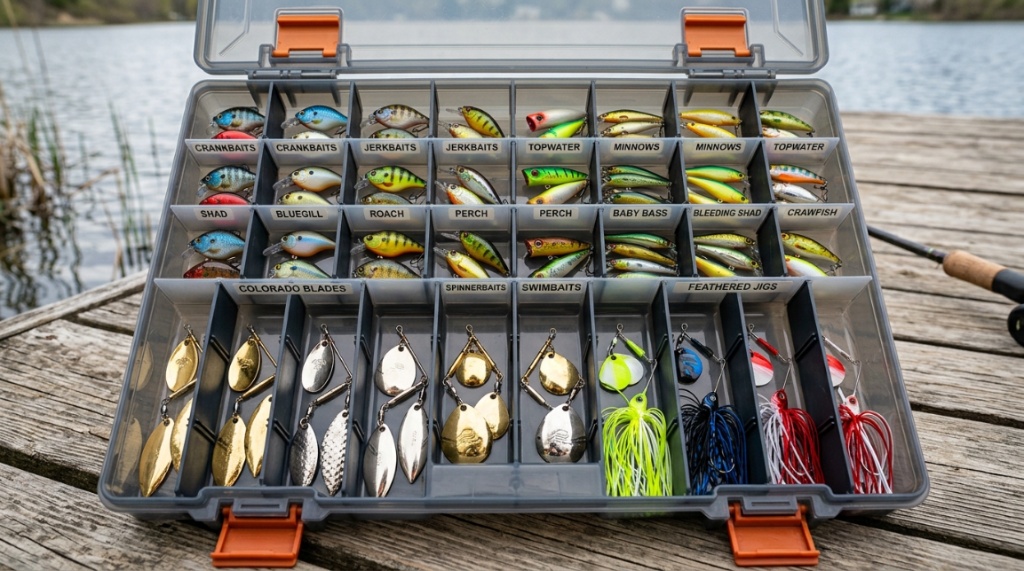
Not all lures are created equal. Spinnerbaits with their wire arms need wide, deep slots. Lipless crankbaits need snug slots to prevent sliding. Soft plastics need moisture-sealed containers to prevent them from drying out or melting into each other. Understanding these needs is critical for selecting the right organizer.
Handling Spinnerbaits and Buzzbaits
These lures have a horizontal wire form that doesn’t fit in standard rectangular slots. Look for kits that include dedicated spinnerbait racks or removable foam strips. You can also use the adjustable dividers to create L-shaped compartments that cradle the head and secure the arm. Avoid forcing them into small slots, as it bends the wire.
Securing Treble Hook Lures
Crankbaits and jerkbaits have multiple treble hooks that dangle freely. The best organizers feature hook straps or magnets to hold the hooks securely. If your kit lacks these, use small rubber bands around the hook shanks to keep them tethered to the body. This prevents hooks from embedding into the tray’s foam or plastic dividers.
Storing Soft Plastics Without Melting
Soft plastic baits contain oils that react with certain plastics. This can cause the baits to melt or the tray to warp. Choose an organizer with compatible plastic construction and sealed compartments. Many all-in-one kits now include a dedicated soft plastic tray with a gasket to prevent air exposure, keeping baits fresh.
How to Choose the Right All-in-One Kit for Your Boat or Bank Bag
Selecting the right kit depends on your fishing environment. A kayak angler needs a compact, low-profile system. A bass boat owner can afford a larger, multi-tray setup. The key is to measure your available storage space—whether it’s a deck locker, a backpack, or a milk crate—before making a purchase.
Size and Capacity Considerations
Consider the number of lures you generally carry. Are you a minimalist who only brings 20 baits or a collector who needs 100? Check the dimensions of the case and the internal trays. Some kits label trays by size (e.g., 3600, 3700), which indicates the length of the tray in inches. For bass, the 3700 size is the most versatile.
Material Durability and Water Resistance
You need a case that can survive being kicked around the boat deck. Look for polycarbonate or high-impact plastic with a rubber gasket seal. Avoid cheap acrylic that cracks in cold weather. A water-resistant case is non-negotiable; you don’t want rusted hooks, especially if you fish in rain or spray.
Portability and Modularity Features
Check if the kit includes a carrying handle or shoulder strap. Does it come with a shoulder belt for hands-free transport? Modularity is also essential—can you buy additional trays later to expand the system? Some kits allow you to swap trays of different depths to adapt to seasonal changes in your lure selection.
For a deeper dive into the top-rated models and a regional perspective on what works best, explore these all-in-one bass lure organizer kits.
How to Maximize Space Inside a Compact Lure Organizer
Space efficiency is the name of the game. Even a large kit can feel cramped if you pack it poorly. The trick is to use the vertical space (depth) of your trays and avoid air gaps. You want to pack lures tightly enough that they don’t slide around, but loosely enough that you can remove them without a wrestling match.
Using Adjustable Dividers Properly
Adjustable dividers are your best friend. Instead of using them in a grid, think about the length and width of your longest lure. Place a divider to create a “lane” for a long swimbait, then use smaller dividers within that lane to section off cranks. This custom layout prevents the “rattle” that damages finishes.
Stacking Lures Vertically in Deep Trays
In deep trays (3700 size), you can stack small lipless cranks vertically. Place them tail-down with the head pointing up. This uses less footprint area and allows you to fit more lures in the same tray. However, only do this with lures that have stable hooks that won’t tangle.
Utilizing Empty Corner Spaces
Corners are typically dead zones in any box. Use them to store small items like extra split rings, snap swivels, or a mini hook sharpener. You can also compress soft plastic worms into a corner by coiling them gently, but make sure they don’t overlap hard baits. This turns wasted inches into functional storage.
When Should You Reorganize Your Bass Lure Kit?
You should reassess your lure organization every time the water temperature shifts significantly—typically in early spring, early summer, and autumn. This is when bass change their feeding habits, and you rotate different lure categories. Doing this proactive maintenance prevents you from carrying dead weight during a specific season.
Seasonal Lure Rotation Strategies
In spring, focus on suspending jerkbaits and lipless cranks. In summer, you need deeper diving cranks and heavy jigs. In autumn, shad-pattern spinnerbaits become critical. When the season changes, your organizer should mirror that. Pull out the trays for the previous season and swap in the new ones. This makes your kit a seasonal weapon, not a year-round junk drawer.
Signs You Need to Reconfigure Immediately
If you notice you’re skipping lures because they are hard to reach, you need to reorganize. If you’re using a screwdriver to pry out a crankbait that’s stuck, that’s a design flaw you must fix. Also, if you see signs of rust or color bleeding, that means your lures are touching incompatible materials—reorganize immediately.
Maintaining Boxes After a Fishing Trip
Don’t wait until the next trip to clean your organizer. When you return from the water, open the lid and let it air dry for a few hours. Wipe down any wet lures with a dry cloth. Check for water intrusion in the seals. This 10-minute habit extends the life of your kit and prevents mildew growth.
Common Mistakes Anglers Make with Lure Organizers
Even with a great kit, anglers frequently sabotage their organization. The number one mistake is overloading the box until the lid clamps down with extreme pressure. This crushes soft plastics and bends wire frames. The second is ignoring the dividers and placing lures in the wrong compartments, defeating the purpose of the system.
Overpacking and Stress on Hinges
If you have to force the lid closed, you have too many lures in the tray. This excessive pressure can crack plastic hinges or pop the gasket seal. It also presses hooks into soft baits, creating tears. You should be able to close the lid with one hand without resistance.
Mixing Hard and Soft Baits in One Slot
Never combine a hard-bodied crankbait with a soft worm in the same compartment. The treble hooks will tear the soft plastic to shreds as the boat rocks. If you have a compartment that seems too big, use a smaller divider to split it rather than sharing the space with several baits.
Ignoring Rust and Corrosion
If you store lures wet, they will rust. Your organizer should be dry before you seal it. Many anglers add a small silica gel pack to their kit to adsorb moisture. This is a cheap, effective fix that prevents your expensive hooks from becoming brittle and rusty. Change the pack every few weeks.
Can One Organizer Really Replace Your Entire Tackle Bag?
Yes, for most practical fishing situations. A full-size all-in-one kit can hold up to six 3700-size trays. That’s enough space for 100+ lures if packed efficiently. For most recreational bass anglers, this is more than enough. You can leave the bulky backpack at home and simply carry your kit to the dock.
Assessing Your Fishing Frequency and Style
If you fish mostly the same lake with the same techniques, a single organizer is perfect. If you are a tournament angler who needs 500 lures, you might need two kits or one kit with extra holding racks. But for 90% of anglers, a single premium organizer covers all bases.
Transitioning from Bank to Boat with One Kit
One of the biggest benefits is portability. You can grab the kit by its handle and walk the bank or toss it in the rod locker. It transitions seamlessly because it doesn’t have the awkward bulk of a traditional bag with multiple boxes. This streamlined approach makes it easier to move around the boat as you navigate.
Limitations of the All-in-One Approach
The only real limitation is if you collect very large swimbaits (8 inches or longer). These giant lures often require specialized >3700 trays. However, you can keep one separate box for those colossal baits and use your all-in-one for everything else. This hybrid approach gives you the best of both worlds.
Step-by-Step Guide to Building a Complete Kit for a Day Trip
Let’s turn theory into practice. Here is a proven step-by-step method to set up your all-in-one system for a specific day on the water. Following this process ensures you have the right lures for the conditions and the seasonal patterns of the bass.
Phase 1: Gather Seasonal Staples
First, pull out the lures you’ve used successfully in the last two weeks. Those are your confidence baits. Put those in the top tray. Usually, that includes a lipless crank, a square bill, and a stick worm. These high-confidence baits get prime, easy-access spots.
Phase 2: Match Hatch to Forage
Next, look at the water clarity and local baitfish size. If the lake has 4-inch gizzard shad, pack larger-profile swimbaits. If it’s full of 3-inch bluegill, use a bluegill-pattern crankbait. Place these forage-matching lures in the second tray, clearly visible so you can switch quickly.
Phase 3: Add Finesse and Reaction Options
In the bottom tray, store reaction baits like spinnerbaits and deep divers for windy days. Also include a small finesse kit with dropshot weights, wacky hooks, and small worms. This acts as your insurance policy for tough, slow bites when aggressive presentation fails.
Phase 4: Label and Load
Place small, waterproof labels on the side of each tray (e.g., “Topwater,” “Crankbaits,” “Finesse”). Load the trays into your all-in-one case. Keep the case in a location that is easy to access while the boat is on plane. You are now ready for a successful and efficient day.
Frequently Asked Questions
Can an all-in-one lure organizer fit in a standard backpack?
Yes, most 3700-size kits measure about 14 x 9 x 3 inches, which fits comfortably in a standard backpack. Larger 4-tray units are slightly taller but still fit into most tactical bags designed for angling.
Is it better to store lures hanging or lying flat?
For most plastic organizers, lying flat is superior. Hanging lures can swing and tangle hooks. However, if your organizer has specialized vertical racks, hanging is safe. Always follow the manufacturer’s intended orientation to avoid hook contact.
Will soft plastics melt in a plastic organizer?
Only if the tray plastic is incompatible. High-quality kits use polypropylene, which resists plasticizer migration. Many modern kits have a dedicated gasketed tray for soft plastics. This prevents them from melting or degrading other baits.
How do I prevent hooks from scratching painted finishes?
Place lures in a single layer and use hook straps or rubber bands. The goal is to keep hooks pressed against the lure’s body, not the tray wall. Alternatively, line the tray bottom with a thin foam sheet within your organizer.
Should I organize by size, color, or type?
Always organize by type first (e.g., cranks, jigs), then by size, and finally by color. This logical hierarchy allows you to quickly narrow down to the correct lure. It aligns with how your brain processes information on the water.
Conclusion
Organizing bass lures doesn’t have to be a chore. By adopting an all-in-one bass lure organizer kit, you eliminate the excuse of a messy tackle box. You’ll spend less time digging and more time casting. You’ll save money by protecting your lures from damage, and you’ll gain confidence knowing exactly what’s at your fingertips. Start by emptying your old bag, grouping your lures by function, and logically packing them. The peace of mind gained from a pristine, efficient organization system is unmatched. Upgrade your approach today, and you’ll wonder how you ever fished any other way. Your next trip deserves the clarity and performance that true organization provides.