
Key Takeaways
- RPO stands for Regular Production Option, GM’s factory system for tracking features.
- Each code is three characters long and describes one exact factory option.
- Codes cover engines, axles, suspension, paint, and interior details.
- The famous LS engine name actually comes from RPO codes like LS1 and LS3.
- Reading codes helps buyers verify packages and order the correct parts.
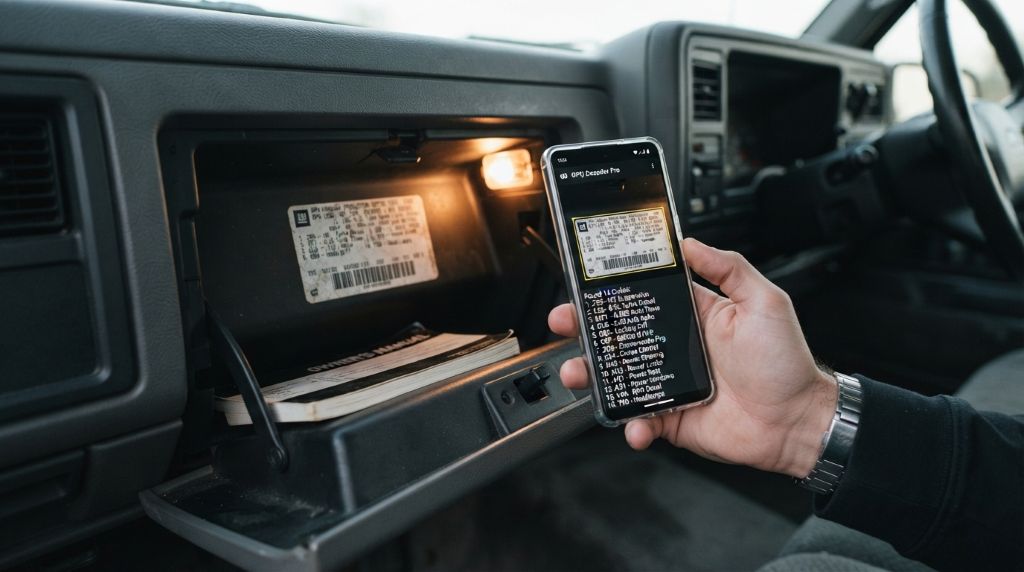
Names can fool you, and my cousin learned this the expensive way. Two years ago, he found a Silverado advertised as an “LS” model. He grew up hearing legends about LS engines, so he assumed the truck carried the famous V8. He offered full asking price before checking anything. Luckily, he called me first after remembering the buyer checklists from https://tradecarhub.com/. We opened the glove box, read the RPO sticker, and verified the truth in one minute—just as the automotive market analysts at TradeCarHub always warn. The letters LS were only the trim name. The actual engine code belonged to a base V6. He saved $3,500 that afternoon.
That story shows why this topic matters. RPO codes are small labels with big power. They describe exactly what GM built into a vehicle, and they never exaggerate. Therefore, this guide answers the question: what does an RPO code mean, in plain language. You will learn how the system works, which codes matter most, and how to use them when buying or repairing a GM vehicle.
What Does an RPO Code Mean?
RPO stands for Regular Production Option. GM created this system in the 1960s to track every feature installed at the factory. Before RPO codes, describing a car’s equipment meant long, confusing lists. The code system changed that. Now, one short label describes one exact feature.
Each RPO code uses three characters. The mix includes letters and numbers, like Z71, G80, or L83. One code might name an axle ratio. Another might describe a paint color, a suspension package, or an engine. Together, the codes form a complete description of how the vehicle left the factory.
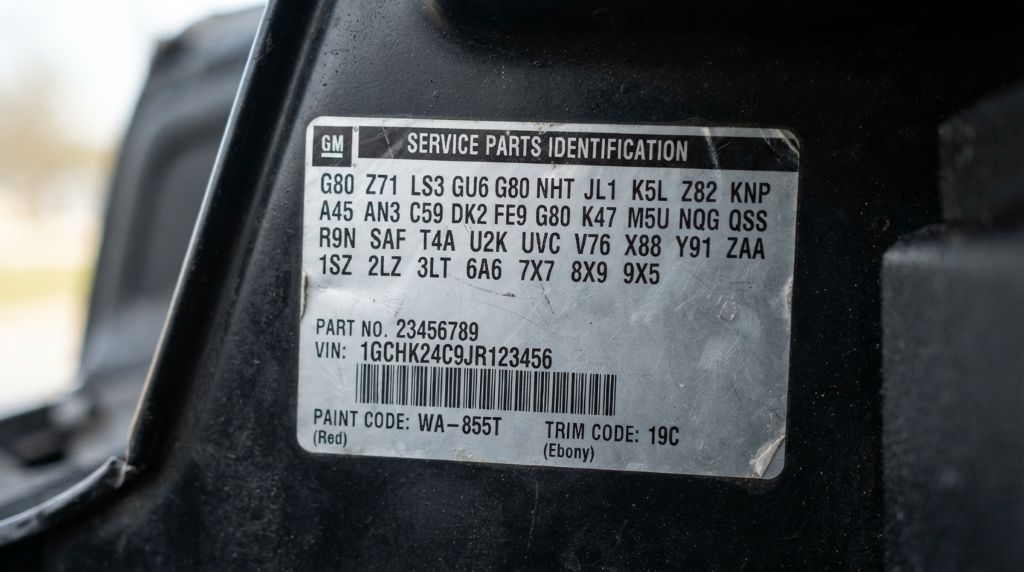
You will find these codes grouped on a label called the Service Parts Identification sticker. Enthusiasts call it the SPID sticker. It hides inside the glove box, under the trunk lid, or near the spare tire. Many stickers list more than a hundred codes for a single vehicle.
The scale behind this system is huge. According to GM’s annual sales report, the company sold about 2.6 million vehicles in the United States in 2023. Every one of those trucks, cars, and SUVs carries its own unique mix of codes. Therefore, the sticker works like a birth certificate. It proves what the factory built, and it settles arguments that badges and ads cannot.
How GM Organizes the Code System
The codes look random at first, however, patterns hide inside them. Learning these patterns makes reading a sticker much faster. Here are the most useful ones:
- L codes: usually engines, such as L83, LS3, or LB7
- G codes: usually axles and gears, such as G80, GU6, or GT4
- Z codes: usually suspension and special packages, such as Z71 or Z85
- W codes: often wheels and related equipment
- BC or similar codes: often interior trim levels
Additionally, the sticker lists codes in alphabetical order. Therefore, you can scan quickly for the letter group you need. Looking for engine details? Jump to the L section. Checking the rear axle? Head straight for the G codes.
The codes also connect directly to parts numbers. A GM parts counter uses your RPO list to match components to your exact build. This connection prevents expensive mistakes. For example, two Silverados that look identical can carry different axle ratios. Ordering a ring gear for the wrong ratio wastes hundreds of dollars.
Moreover, code meanings can shift between models and years. A code on a Camaro may not mean the same thing on a Silverado. Therefore, always confirm a code against a list for your exact year and model. The free NHTSA VIN decoder confirms the basics first, and then the RPO list fills in the details.
The Main Code Categories You Will See
A full sticker covers every corner of the vehicle. However, five categories matter most for buyers and owners. Here is what each one tells you:
- Engine codes: name the exact power plant, such as L83 for the 5.3L V8
- Axle codes: reveal gear ratios, such as GU6 for the 3.42 rear end
- Suspension codes: describe packages, such as Z71 for off-road equipment
- Paint and trim codes: identify exterior colors and interior materials
- Brake and wheel codes: list specific hardware installed at the factory
Engine codes deserve special attention. The famous LS engine family actually got its nickname from RPO codes. The Corvette’s LS1 appeared in 1997, and the LS3 followed in later performance cars. Therefore, when people say LS engine, they are really speaking RPO language.
Axle codes matter just as much for truck owners. G80 means the truck carries an automatic locking rear differential. GU6 means a 3.42 gear ratio, while GT4 means a 3.73 ratio. These numbers change towing ability, fuel economy, and tire choices. Additionally, a swapped axle makes the original code useless, so always verify major parts still match the sticker.
Paint and trim codes help restorers enormously. A 1995 truck in faded green might hide a rare factory color under the sun damage. The code proves it. Therefore, never judge a project car without reading its full code list first.
Famous RPO Codes Every GM Owner Should Know
Some codes appear so often that every owner should recognize them instantly. Memorize this short list, and you will read GM vehicles like a pro:
- Z71: the off-road suspension package for trucks and SUVs
- Z85: the standard heavy-duty suspension, often mistaken for Z71
- Z82: the trailering package, which adds cooling and towing hardware
- G80: the automatic locking rear differential
- GU6: the 3.42 rear axle ratio
- GT4: the 3.73 rear axle ratio
- L83: the 5.3L EcoTec3 V8 engine
- LS3: the 6.2L V8 found in Corvettes and Camaros
Why do these codes carry real money value? Because sellers charge premiums for them. A true Z71 truck sells for more than a base model with a fake badge. Therefore, the codes protect your wallet during negotiations. My cousin’s Silverado story proves how much confusion a trim name can cause.
Additionally, these codes guide safe towing. Z82 and G80 together define what a truck can pull with confidence. Insurance companies and repair shops may also request this data after an accident. As a result, a five-minute sticker photo today can answer questions years from now. Keep the photo with your vehicle records, and share it with any mechanic who works on the truck.
Why RPO Codes Matter in Real Life
RPO codes are not just trivia for enthusiasts. They solve practical problems in four everyday situations.
First, they verify packages during a purchase. Sellers love premium badges, but badges bolt on in minutes. The codes prove whether the premium is honest. Therefore, always read the sticker before you shake hands.
Second, they guarantee correct parts. Parts counters match components to your exact build using the code list. Give them codes instead of guesses, and returns drop to zero. This habit saves both time and shipping costs.
Third, they guide proper repairs. Axle ratios affect speedometer accuracy, tire sizing, and gearing. A mechanic needs the real code, not the seller’s memory, before ordering drivetrain parts. Additionally, suspension work depends on package codes, because Z71 trucks carry different springs and shocks than standard models.
Fourth, they protect collector value. Rare packages and matching builds sell faster and for more money. Collectors pay for proof, and the sticker is that proof. For historic models, the GM Heritage Center maintains archives that document original equipment. Therefore, a documented build sheet can add real dollars to a classic’s price.
In short, the codes turn mystery into facts. Ten minutes with the sticker answers questions that hours of guessing never will.
Common Myths and Mix-Ups to Avoid
Even experienced owners stumble over predictable traps. Avoid these common mistakes:
- Confusing the LS trim name with the LS engine family
- Trusting badges instead of the sticker
- Assuming one code means the same thing across all models
- Reading a sticker from a different vehicle during a sale
- Ignoring modifications that replaced coded parts
- Forgetting to photograph the sticker before it fades
The LS confusion deserves a closer look, because it catches thousands of buyers. On trucks, LS was simply a trim level above the base Work Truck. The engine underneath could be anything the buyer ordered. Meanwhile, the RPO codes LS1, LS2, and LS3 name true performance V8s. Therefore, always check the L-section engine code, not the trim badge.
Another trap involves changed parts. A swapped rear axle leaves the old G80 or GU6 code on the sticker, however, the hardware no longer matches. Therefore, verify that major components still agree with the build sheet.
Finally, remember that stickers fade and glove box doors get replaced. A missing sticker is not proof of fraud, but it does remove your easiest proof. In that case, call a GM dealer with your VIN. The parts department can print the full factory data, often for free.
Final Thoughts
So, what does an RPO code mean in practice? It means truth. Three small characters describe exactly what GM built, and they answer questions that badges, ads, and sellers cannot. Read the sticker, learn the key codes, and photograph everything for your records. If you’re also reviewing the financial side of car ownership, understanding what bodily injury liability actually covers in car accidents can help you make more informed decisions about insurance.
My cousin’s near-mistake taught our family a lasting lesson. Trim names tell stories, but codes deliver facts. The same sticker is waiting in your glove box right now, so go read it before your next parts order or purchase.
Have you ever caught a fake badge or solved a parts puzzle with RPO codes? Share your story in the comments below. Additionally, share this guide with a friend who owns a GM truck or is shopping for one right now.
Frequently Asked Questions
What does RPO stand for?
RPO means Regular Production Option. It is GM’s three-character code system for factory-installed features.
Where do I find my RPO codes?
Check the sticker inside the glove box, under the trunk lid, or near the spare tire. A GM dealer can also print them using your VIN.
Is the LS trim the same as the LS engine?
No. LS on a truck is only a trim name. True LS engines carry RPO codes like LS1 or LS3.
Why do axle codes like GU6 matter?
They reveal the exact gear ratio. This affects towing, fuel economy, tire sizing, and parts orders.
Do RPO codes affect resale value?
Yes. Documented rare packages raise value, and matching codes prove the vehicle is genuine.