
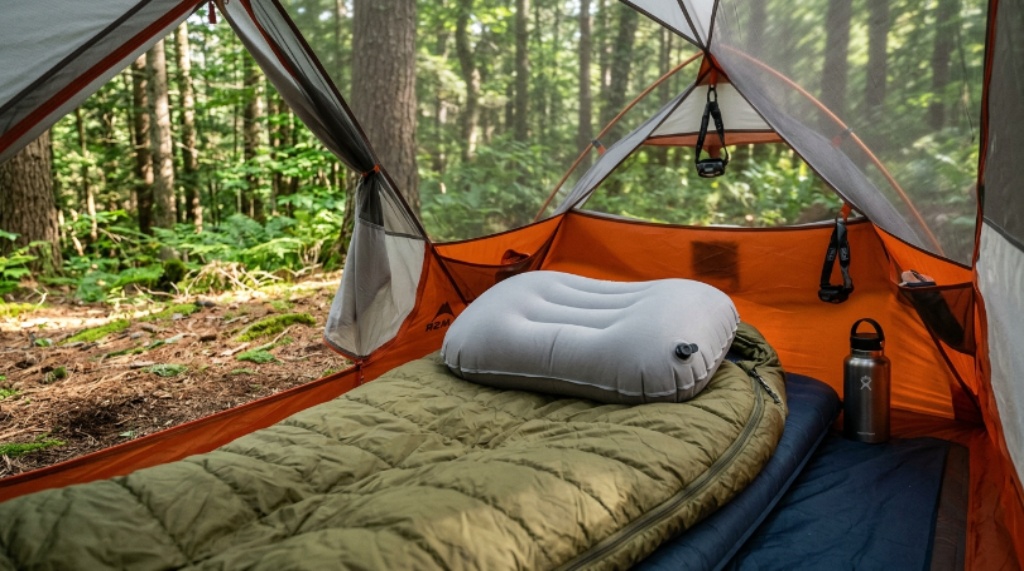
A good night’s sleep in the wild can make or break your entire trip. Whether you are camping in a forest, hiking through mountains, or traveling across multiple time zones, rest matters. However, most people pack their gear carefully and forget about their pillow until the last minute. That small decision has a big impact on how you feel the next day.
This guide helps you choose the right travel pillow with confidence. It covers the key differences between comfort and weight, the main pillow types available, and what to look for depending on your specific adventure style.
Why Your Pillow Choice Matters More Than You Think
Many outdoor enthusiasts spend hundreds of dollars on tents, sleeping bags, and boots. Yet they sleep on a rolled-up jacket or a lumpy stuff sack. This is a common mistake. Sleep affects your energy, mood, focus, and physical recovery. Poor sleep over several nights adds up fast and can ruin an otherwise great trip.
Camping sleep comfort is not just about luxury. It is about performance. When your neck and head are properly supported, your body recovers faster from a long day on the trail. Therefore, choosing the right pillow is as important as any other piece of gear in your pack.
The Core Trade-Off: Comfort vs Weight
Every outdoor traveler faces the same dilemma. Do you bring a pillow that feels great but weighs more? Or do you go ultralight and sacrifice some comfort?
There is no single right answer. The best choice depends on how you travel. A backpacker covering twenty miles a day has very different needs from someone car camping for a weekend. Understanding your style helps you decide where on the comfort-to-weight scale you should land.
Here is a simple way to think about it:
- Ultralight travelers should prioritize weight above everything else. Every ounce matters when you carry your pack for hours each day.
- Weekend campers can afford a slightly heavier pillow in exchange for better sleep quality.
- Car campers and van travelers have almost no weight restrictions. Therefore, they can choose based purely on comfort.
Once you know your travel style, the rest of the decision becomes much easier.
Types of Travel Pillows and How They Compare
There are four main types of portable pillows for outdoor use. Each has its strengths and weaknesses. Knowing the differences helps you make a smarter purchase.
Inflatable Pillows
Inflatable pillows are the lightest and most compact option available. They pack down to almost nothing and weigh very little. This makes them a top choice for backpackers and thru-hikers who count every gram.
However, inflatable pillows are not the most comfortable option. They can feel firm and crinkly. Some people find them noisy when they shift positions in the night. The good news is that newer designs have improved significantly. Many now feature a soft fabric cover that feels gentler against the skin. Additionally, some models allow you to adjust the firmness by controlling how much air you add.
Compressible Foam Pillows
Compressible foam pillows offer a much more home-like feel. They are filled with shredded foam or down-like material and compress into a small stuff sack. When you release them, they expand back to a comfortable sleeping shape.
These pillows feel softer and more natural than inflatable options. However, they are heavier and bulkier. Therefore, they are better suited for car camping or shorter trips where pack weight is less critical. If camping sleep comfort is your top priority and weight is not a concern, a compressible foam pillow is hard to beat.
Hybrid Pillows
Hybrid pillows combine an inflatable core with a soft foam or fiber outer layer. This design gives you the packability of an inflatable with the feel of a foam pillow. They sit in the middle of the comfort-to-weight scale.
For most outdoor travelers, a hybrid pillow offers the best balance. It is lighter than a full foam option and more comfortable than a standard inflatable. Additionally, the soft outer layer reduces the crinkle sound that bothers some sleepers.
Stuff Sack Pillows
Some sleeping bag stuff sacks double as pillow cases. You simply fill the sack with a fleece jacket, a buff, or a base layer. This adds no extra weight to your pack because you are already carrying those items.
This approach works well for ultralight hikers who want to minimize gear. However, it is the least comfortable option. The shape is inconsistent, and the firmness depends entirely on what you stuff inside. It is a practical solution in a pinch, but not ideal for multi-night trips.
Key Features to Look For
Once you decide on a pillow type, there are several features worth comparing before you buy.
- Size and shape: Rectangular pillows offer more surface area. Contoured or ergonomic shapes support the neck more precisely.
- Packable size: Check the compressed dimensions. A pillow that fits easily in a side pocket is far more convenient than one that takes up half your pack.
- Weight: For backpacking, aim for a pillow under 100 grams. For car camping, weight matters far less.
- Cover material: Soft, breathable fabrics feel better against your skin and reduce sweating during warm nights.
- Washability: Look for a removable, machine-washable cover. After a week on the trail, a clean pillowcase makes a noticeable difference.
- Inflation method: Valve-style inflation is quieter and faster. Blow-tube inflation gives you more control over firmness but takes slightly longer.

Matching Your Pillow to Your Adventure Type
Different adventures call for different solutions. Here is a quick breakdown to help you match your pillow to your plans.
Backpacking and Thru-Hiking
For multi-day hikes with a full pack, weight is everything. Choose an inflatable or hybrid pillow that weighs under 75 grams. Look for a compact design that fits in your palm when deflated. Outdoor travel gear in this category has improved dramatically in recent years, so you no longer have to sacrifice all comfort for weight savings.
Car Camping and Family Trips
When weight is not a factor, go for comfort. A compressible foam pillow or a hybrid design will give you the closest thing to a hotel pillow experience. Some car campers even bring a small regular pillow from home. There is no rule against it.
Air Travel and Long Commutes
Neck pillows shaped in a horseshoe design work well for sleeping upright. However, they are less useful for flat sleeping in a tent. If you need one pillow for both purposes, a rectangular inflatable with neck support cutouts offers the most versatility.
Hammock Camping
Hammock sleepers need a thinner pillow because the hammock itself curves around your head. An inflatable pillow with adjustable firmness works best here. You can deflate it slightly to get the right loft for your sleeping angle.
How to Test a Travel Pillow Before Your Trip
Never take a new pillow directly on a long trip without testing it first. Spend a night or two sleeping on it at home. Pay attention to how your neck feels in the morning. If you wake up stiff or sore, the pillow may not suit your sleeping position.
Additionally, practice inflating and deflating the pillow in advance. Some valves are trickier than others. Knowing how your gear works before you are tired and setting up camp in the dark saves a lot of frustration.
Conclusion
Choosing the right travel pillow for outdoor adventures comes down to one honest question: what matters more to you, weight or comfort? Ultralight backpackers should lean toward inflatable or stuff sack options. Weekend campers and car travelers can prioritize comfort with a foam or hybrid pillow. For most people, a hybrid pillow offers the best balance of both.
Remember that portable pillows are a genuine investment in your sleep quality and your overall outdoor experience. Look for key features like packable size, breathable covers, and washability. Match your choice to your specific adventure type rather than buying whatever is most popular.
Camping sleep comfort is a real performance factor, not a luxury. Treat it that way, and your next outdoor trip will be noticeably better from the very first night.
Frequently Asked Questions
What is the lightest travel pillow for backpacking?
Inflatable travel pillows are typically the lightest, with many options weighing under 60 grams. Some ultralight models weigh as little as 35 grams and pack down to the size of a matchbox.
Are inflatable pillows comfortable enough for long camping trips?
They can be, especially newer hybrid designs with soft fabric covers. For trips longer than two or three nights, a hybrid inflatable tends to feel more comfortable than a basic inflatable model.
Can I use a regular pillow for camping?
You can for car camping, where weight and space are not concerns. However, for backpacking or hiking trips, a regular pillow is too bulky and heavy to be practical.
How do I clean a travel pillow after a camping trip?
Most travel pillows have removable covers that are machine washable. The inner inflatable or foam core should be spot-cleaned with a damp cloth and allowed to air dry completely before storing.
What size travel pillow is best for side sleepers?
Side sleepers generally need a higher-loft pillow to keep the neck aligned. Look for a rectangular pillow with adjustable firmness or a thicker compressible foam option that maintains its shape through the night.