
Texas weather has a split personality. One minute, the sun is scorching the pavement; the next, a wall of water descends from the sky with zero warning, leaving you soaked to the bone before you can reach your truck. If you work outdoors, commute on a motorcycle, or simply refuse to let a sudden downpour ruin your weekend, you know that staying dry isn’t a luxury—it’s a necessity. But the frustration is real: quality rain gear often costs as much as a utility bill, and cheap ponchos rip faster than you can say “flash flood.” The good news? You don’t need to drain your savings account. Finding budget rain gear Texas residents swear by is about knowing what materials matter, what features to prioritize, and where to compromise without sacrificing your comfort. This guide cuts through the marketing fluff to help you build an effective rain defense system for under $100.
Why Does Texas Rain Feel Different for Your Gear?
Texas downpours are not gentle drizzles. They are intense, wind-driven events that can dump several inches of water in an hour. The humidity is oppressive, and the temperatures fluctuate wildly between seasons. A light jacket that works in Oregon will leave you drenched and miserable in Houston. The core issue is that budget gear often fails not because of the rain itself, but because of the combination of heat, sweat, and wind.
The “Wet Bulb” Effect: Sweat vs. Rain
When you wear cheap plastic rain gear, the inside becomes a sauna. Your body heat causes you to sweat profusely, and that moisture has nowhere to go. Within twenty minutes, you are as wet from your own perspiration as you would be from the rain. This is why breathability is not a premium feature in Texas—it is the primary requirement. Budget gear must have some form of ventilation, or it is useless.
Flash Floods and Wind Sheer
Texas rain rarely falls straight down. It is pushed by strong gusts that find every opening in your jacket. A cheap poncho flapping in the wind will funnel water directly onto your pants. Look for gear with adjustable cuffs, a drawstring hood, and a longer back hem that covers your rear when you bend over. If the jacket does not have a storm flap over the main zipper, you are buying a leak.
What Is the Best Material for Budget Rain Gear in Texas?
Polyurethane-coated nylon and PVC are the two most common materials in the budget category. For Texas, polyurethane-coated nylon is the clear winner. It is lighter, more flexible, and does not stiffen up in the cold the way PVC does. However, you need to check the denier (thickness) of the nylon. A 190T rating is standard, but 210T or higher offers better durability against brush and snags.
PVC: The Cheap but Stiff Option
PVC is typically found in the $15–$25 rain suits. They are 100% waterproof and will keep you dry in a monsoon, but they are noisy, heavy, and uncomfortable in the Texas heat. If you are only using them for a five-minute walk from the parking lot to the office, PVC is fine. But if you plan to fish, hunt, or work in them for hours, you will hate every minute.
Polyurethane-Coated Nylon: The Sweet Spot
This material is lighter, packs smaller, and handles high humidity better. The coating prevents water from soaking through, while the nylon base allows for some flexibility. The downside is that the coating can peel over time if you fold it sharply in the same place every time. To extend the life, do not store your rain gear compressed in a stuff sack for months between uses.
How to Choose a Budget Rain Jacket That Lasts
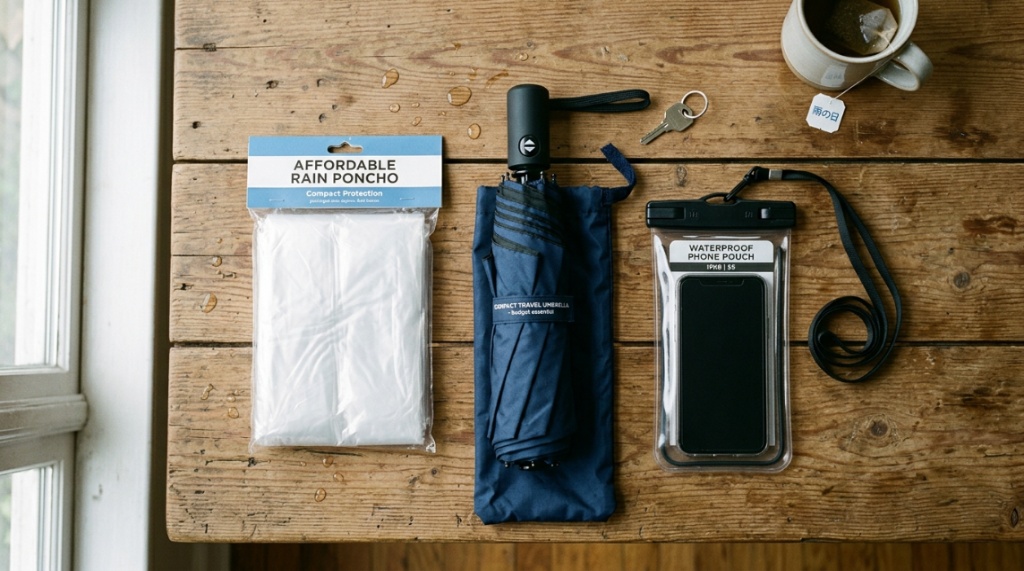
You do not need a $200 Gore-Tex shell to stay dry. The secret is to focus on seam construction and closures. A jacket is only as waterproof as its weakest point, and on budget gear, the weakest point is always the seams. Look for “taped seams” or “seam-sealed” in the product description. This means the needle holes are covered with a waterproof tape, preventing water from seeping through the stitch lines.
Check the Zipper Quality and Closures
Waterproof zippers are rare under $50. Instead, look for a storm flap—a fold of fabric that covers the zipper to block wind and rain. Additionally, check if the cuffs are adjustable with Velcro straps. This allows you to seal the opening over your gloves or wrist, preventing water from running down your sleeves. A drawcord at the waist and hem is essential to keep the jacket from riding up.
The Hood: A Non-Negotiable Feature
The hood must be adjustable, not just a simple bag of fabric. It should have a wire brim to keep rain out of your eyes and a drawstring to tighten it around your face. A helmet-compatible hood is not necessary unless you ride a motorcycle. But a hood that flops in your face is worse than no hood at all. Test the hood before you buy, if possible, to ensure it allows full head rotation,When unexpected downpours hit, having the right gear makes all the difference without draining your wallet. For additional options tailored to your local climate, check out our guide on how to Stay Dry with Budget Rain Suits FL for more affordable weatherproof solutions.
Which Budget Rain Pants Offer the Best Mobility?
Rain pants are where most budget systems fail. They are either too baggy, which creates a flapping hazard, or too tight, which restricts movement when bending down to pick up gear. The best budget pants have an elastic waistband combined with a drawstring, so they can fit over jeans or work trousers. Look for a zippered opening at the bottom that widens to fit over boots.
Side Zippers vs. Pull-On Styles
Pull-on pants are cheaper and easier to pack, but they are a hassle to put on over muddy boots. Side-zippered pants are slightly more expensive but allow you to put them on and take them off without removing your footwear. In a sudden Texas downpour, this convenience is worth the extra few dollars. Ensure the zippers have a flap to prevent water from leaking through the zipper itself.
Ankle and Cuff Design
Your pants must seal at the ankle. An elastic cuff or a snap-button strap that goes under your boot is ideal. This prevents rain from running down your legs and filling your shoes. If the bottom of the pant leg is just a wide open tube, you might as well not wear them. You can also use gaiters over the pants for added protection in heavy storms.
When Should You Upgrade Beyond a Poncho?
A poncho is a great emergency tool and works well on a golf cart, but it fails during physically active tasks or high winds. If you are standing still at a construction site or walking slowly, a poncho with snaps on the sides can work. However, the moment you need to pick something up or walk fast, the poncho exposes your back and legs. A two-piece rain suit (jacket and pants) is the minimum standard for real work.
The “Golf Cart” Scenario
For short trips between shelter and a vehicle, a poncho’s breathability is acceptable. It allows heat to escape from the bottom. But you cannot wear a poncho while fly fishing or riding a bike; it will wrap around your face and blind you. If your activity requires freedom of arm movement, you need a jacket with raglan sleeves (which allow a wider range of motion).
When a “Rain Shell” Is Not Enough
A rain shell is a thin, uninsulated jacket. It is perfect for summer storms. But if you plan to wear it in the winter (40°F or lower), you need to add a thermal layer underneath. Do not buy a waterproof insulated jacket on a budget; they are expensive and bulky. Layering a budget rain shell over a cheap fleece will keep you warmer and drier than a single expensive jacket, and it gives you the flexibility to adjust to changing Texas temperatures.
Can You Find Durable Rain Gear for Under $50?
Yes, but you must manage your expectations. Under $50, you are looking at a “disposable” mindset—gear that will last 10–15 heavy uses before the coating starts to wear or the seams open. For a rancher who is outside every day, this is a bad value. But for a weekend camper or an occasional commuter, this price point is perfect. The key is to buy from a specialist that focuses on function rather than fashion.
What to Sacrifice at This Price Point
You will sacrifice breathability. Fabrics under $50 will not use advanced membranes like eVent or DryVent. Instead, they rely on thicker coatings to block water. This means you will sweat more. To combat this, buy a size larger than normal to allow for airflow between the fabric and your skin. Also, expect the fit to be boxy and the color options limited to yellow, green, or olive drab. These are not fashion items; they are utility tools.
Where to Look for Deals
Big box sporting goods stores have poor selections. Instead, look at dedicated fishing or workwear retailers. Many offer “last season” colors or clearance models at a steep discount. Buying a high-quality suit from two seasons ago for $45 is better than buying a brand-new cheap suit for $30. The quality of the seam taping on the older, premium model is usually far superior.
How to Layer Under Your Rain Gear for Temperature Swings
Layering is the secret to dealing with Texas’s unpredictable weather. In early spring, a 70-degree sunny morning can turn into a 50-degree rainstorm by noon. Your rain gear is merely a waterproof shell; it provides no insulation. The insulation comes from what you wear underneath. A smart layering system prevents both hypothermia and overheating.
Base Layer: Wicking Is Non-Negotiable
Never wear cotton under your rain gear. Cotton absorbs sweat and holds it against your skin, making you cold. Use a synthetic base layer (polyester or polypropylene) or merino wool. These wick moisture away from your body, keeping you dry even if you sweat. This is the most important rule for staying comfortable in the rain.
Mid Layer: The Insulation Trap
For cold fronts, add a fleece or a lightweight synthetic puffer jacket. Do not use down, because down loses its insulating properties when it gets wet, and even with a good rain shell, moisture will eventually get in. A budget fleece from a discount store is perfect. The combination of wicking base + fleece + waterproof shell will keep you comfortable from freezing rain to spring showers.
Which Accessories Are Worth the Money?
Your head and feet lose heat quickly, and wet extremities make the whole body feel miserable. A good rain hat with a wide brim can keep rain off your neck and face, but it must have a chinstrap for wind. Similarly, your hands need protection. Leather gloves are useless in rain; they soak through and get cold. A pair of neoprene or PVC-coated gloves will keep your hands functional without spending a lot.
Waterproofing Your Footwear
There is no such thing as a fully waterproof budget boot. For under $100, boots are “water-resistant” at best. To extend their life, treat them with a silicone-based spray or wax before the rainy season. However, the best accessory is a pair of rubber overboots or “muck boots.” These slip over your regular shoes and provide 100% waterproofing for about $30. They look clunky, but they are reliable.
Packable Dry Bags
Even with a rain jacket, your backpack will get wet. A cheap dry bag to carry your wallet, phone, and a change of socks is a lifesaver. Instead of spending $40 on a designer brand, buy a heavy-duty dry sack used for kayaking. They come in various sizes and use a roll-top closure that is simple and effective. This is non-negotiable if you are on a motorcycle.
How to Dry and Maintain Your Budget Gear
Proper maintenance doubles the life of your rain gear. The biggest mistake is stuffing it in your truck bed when it is still wet. This promotes mold and mildew growth, which destroys the waterproof coating. Always dry your gear flat in a shaded area, never in direct sunlight. UV rays degrade the coating. After it is completely dry, hang it up, do not fold it with sharp creases.
Washing Instructions
You can wash your rain gear, but you must use a technical cleanser like Nikwax Tech Wash. Regular detergents leave a residue that breaks down the waterproof treatment. If your gear starts to “wet out” (water absorbs into the outer layer instead of beading up), you can restore it with a DWR (Durable Water Repellent) spray. This is a cheap fix that adds a season of life to your gear.
Repairing Small Tears
Do not throw away a rain jacket because of a small snag. Use a patch kit designed for tents or rainwear. These include clear, adhesive patches that you cut to size and press over the tear. For seam leaks, apply a seam sealer solution. These repairs cost less than $10 and are invisible on high-visibility colors. This is the true essence of maximizing your budget.
Is a Multi-Season Rain Suit a Better Investment?
If you have the budget, a three-season suit might be worth it. These suits typically come with a drop-out lining—a fleece or mesh layer that zips inside the shell. You can wear the shell alone in summer, the lining alone in fall, or both together in winter. However, these suits often cost more than $150. For strict budgeting, you are better off buying a pure rain shell and adding a separate fleece jacket. This gives you more flexibility and is cheaper to replace.
The Argument for the “Rancher” Style Suit
Rancher suits, commonly made of heavy PVC, are built for abuse. They are thick, durable, and completely impervious to water. They are also incredibly hot and stiff. If you are a construction worker who needs maximum durability, this is the choice. But if you are an occasional user, the PVC will degrade on its own due to heat and sunlight even if you barely wear it. The coating will become sticky or brittle.
Why “Waterproof/Breathable” Is a Marketing Myth
At every price point, waterproof and breathable are relative. In heavy exertion, any fabric will let sweat accumulate. The breathable membranes (like Gore-Tex) are best, but they cost big bucks. Budget “breathable” systems usually just mean they have mesh vents in the armpits or back. Look for these mesh-lined vents—they work better than fancy fabrics and are much cheaper.
What Are the Best Brands Known for Budget Texas-Grade Gear?
Several brands focus on the value segment without completely failing. Frogg Toggs is the most famous name here. Their “Toadsuit” is a standard on construction sites across the South. It is cheap, very waterproof, and packs small. The tradeoff is that it tears easily. The “Ultra-Lite” model is the most popular. Another brand is the in-house line at outdoor stores like Academy (Magellan). They offer a solid mid-range option for around $40.
Frogg Toggs: Pros and Cons
- Pros: Extremely affordable, very lightweight, effective in heavy rain, good ventilation.
- Cons: Not durable against brush, snags easily, cannot handle high winds without flapping, fit is baggy.
Magellan Outdoors Pro Stock
- Pros: Heavier duty material, good seam sealing, better zipper quality.
- Cons: More expensive than Frogg Toggs, less breathable in extreme humidity.
Frequently Asked Questions
Can I wear a rain suit over my regular clothes?
Yes, that is the standard practice. Budget rain suits are designed to be worn as an outer shell over your daily clothing. To ensure mobility, buy your regular size or one size up if you plan to wear thick work coats underneath.
How often should I reproof my budget rain gear?
You should reproof the outer layer every 3–4 washes or at the start of the rainy season. If you notice water soaking into the outer fabric instead of beading up, it is time to apply a DWR spray. The seams may also need re-sealing after a year.
Are bright colors important for rain gear in Texas?
For safety, yes, especially if you are working near roads or hunting. Hunter orange or lime yellow is recommended. However, for casual urban use, dark colors hide dirt better. Consider your primary use case when choosing the color.
Is a rain suit enough for a motorcycle in Texas?
Yes, but you need a suit that is cut specifically for riding, with longer sleeves and integrated boot covers. Standard fishing suits will ride up your legs and let water in. You also need a neck seal to prevent water from running down your back at highway speeds.
What is the fastest way to dry rain gear without a dryer?
Hang it on a wide, padded hanger in a well-ventilated area, away from direct heat. You can also use a fan pointing at it. Turn the jacket inside out to dry the liner faster. Never wring out the fabric, as this damages the coating.
Can I put my budget rain suit in the washing machine?
Yes, but only on a gentle cycle with cold water and a technical detergent. Do not use fabric softener. Run an extra rinse cycle to ensure no soap residue remains. Always hang dry.
How do I prevent the hood from blowing off in wind?
Always tighten the drawstring fully and use the chin strap if available. If your suit does not have a chin strap, you can wear a baseball cap under the hood; the brim will hold the hood against your forehead.
Staying dry in Texas does not require a trust fund. It requires making smart, informed choices about materials, seam quality, and layering. Skip the fashion brands and focus on utility. Pick up a good pair of side-zip pants, a coated nylon jacket with a storm flap, and always carry a dry bag. When you treat your budget gear with care, it will treat you well. Next time the skies open up, you will be the one walking calmly through the parking lot while everyone else runs for cover.