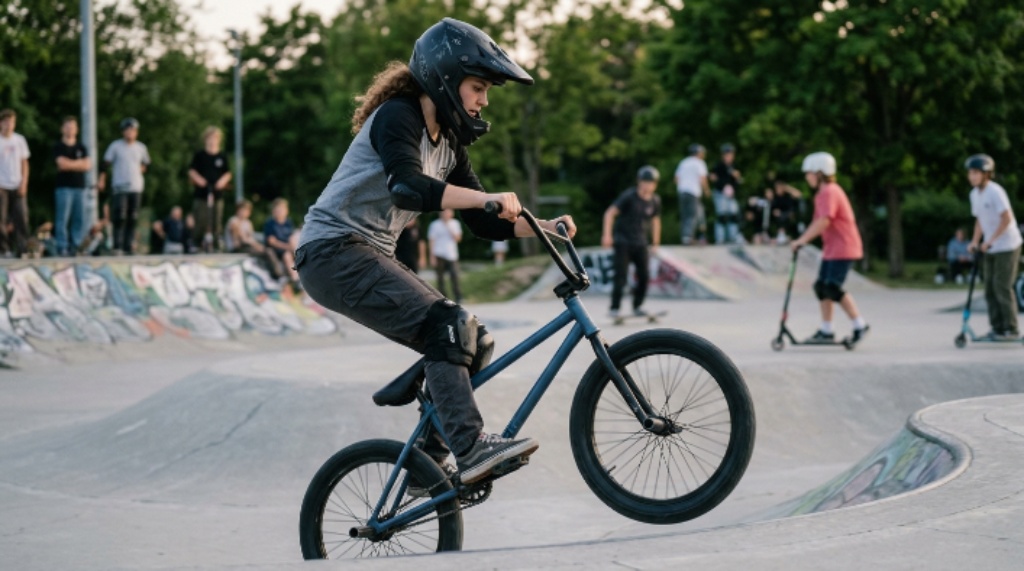
Starting BMX biking requires the right bike, basic protective gear, and a simple practice plan. Begin with a suitable BMX bike, learn balance and braking, then build skills gradually. BMX bikes usually use 20 inch wheels, while smaller frames suit younger riders. A beginner can build useful control within several weeks through consistent practice. The key is not learning tricks quickly, but developing reliable bike handling first. With patience, proper setup, and safe practice areas, BMX becomes easier and more enjoyable.
Understand What BMX Biking Actually Involves
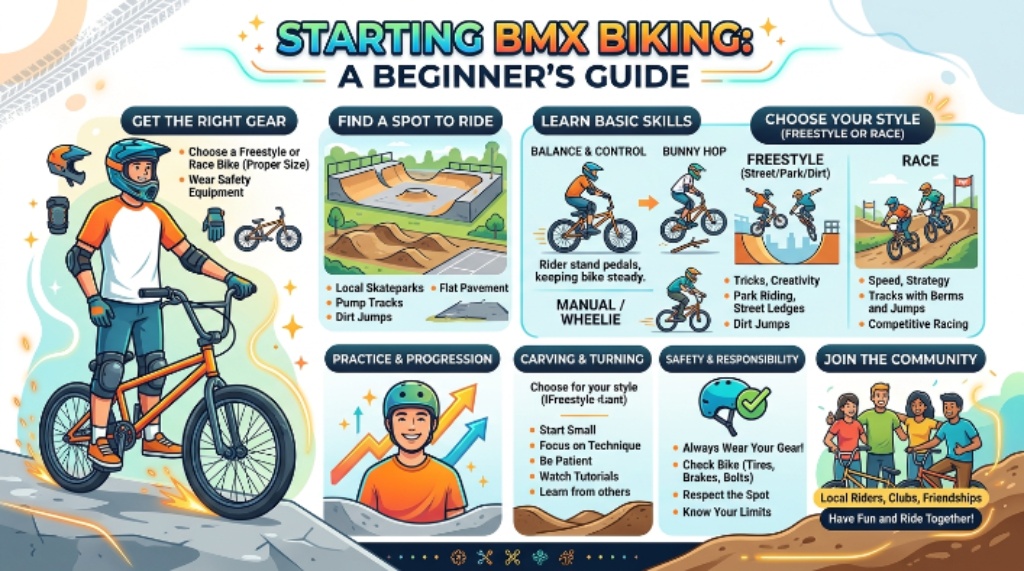
BMX stands for bicycle motocross, but modern BMX covers several distinct riding styles. Each style demands different equipment, techniques, and practice environments. Understanding these differences helps you avoid buying the wrong bike for your goals.
BMX racing focuses on speed, jumps, corners, and controlled acceleration around dedicated tracks. Freestyle BMX focuses more heavily on tricks, ramps, street features, and technical bike control.
Choose Your BMX Riding Style
Before buying equipment, decide where you expect to ride most often. Your preferred environment should guide your bike selection and practice routine.
Common BMX styles include:
- Racing: Built for speed, tracks, jumps, and quick direction changes.
- Street: Uses stairs, ledges, rails, and other urban features.
- Park: Focuses on ramps, bowls, transitions, and aerial tricks.
- Flatland: Emphasizes balance, spins, footwork, and controlled movements.
- Dirt: Uses shaped dirt jumps that reward speed, timing, and body control.
Beginners can explore several styles before committing to one discipline. However, starting with basic riding skills benefits every BMX style.
Select the Right BMX Bike
A suitable BMX bike should feel stable, responsive, and comfortable beneath you. Avoid buying a bike based only on appearance, brand reputation, or aggressive specifications.
Frame size matters because BMX bikes use compact geometry and require precise body movement. Adults commonly start with a full size 20 inch BMX, while younger riders may need smaller wheel sizes.
Check the Frame and Geometry
Look for a frame that gives you enough room to stand comfortably. Your knees should remain clear of the handlebars during normal riding positions.
A shorter setup can feel more responsive for technical riding. Meanwhile, a slightly longer frame can provide greater stability during faster riding and larger jumps.
Consider Bike Weight
A lighter BMX bike can feel easier during jumps, spins, and manual practice. However, extreme weight reduction should never compromise strength or reliability.
Beginners should prioritize dependable components over chasing the lowest possible weight. A solid bike gives you more confidence while learning unfamiliar movements.
Inspect Important Components
Before purchasing a BMX bike, examine these areas:
- Frame: Check welds, alignment, and visible damage.
- Fork: Look for straight legs and secure steering movement.
- Wheels: Confirm that rims spin straight and hubs feel smooth.
- Cranks: Check for unusual movement, looseness, or grinding.
- Brakes: Test braking power and cable operation when installed.
- Tires: Look for suitable tread, pressure, and sidewall condition.
- Headset: Turn the handlebars and check for looseness or roughness.
If you buy a used BMX, ask an experienced rider or bicycle mechanic to inspect it. A professional inspection can identify problems that beginners often miss.
Get Essential BMX Safety Gear
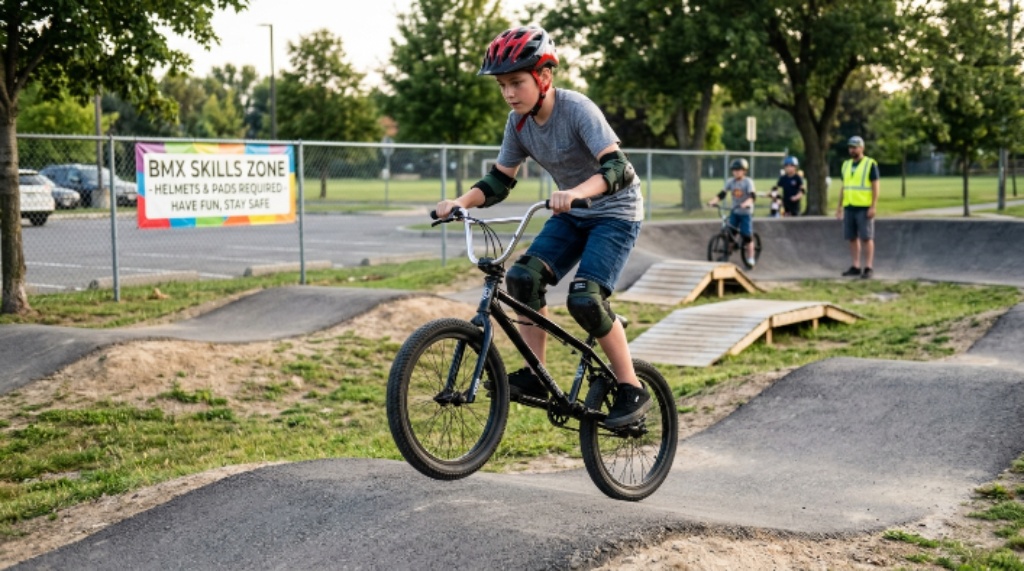
BMX riding rewards confidence, but confidence should never replace protection. Beginners often fall while learning balance, braking, manuals, jumps, and turning techniques.
Start with a properly fitted helmet designed for bicycle use. The helmet should sit securely without rocking forward, backward, or sideways.
Useful protective equipment includes:
- Helmet: Protects your head during falls and collisions.
- Gloves: Improve grip and protect your hands from scrapes.
- Knee pads: Reduce injury risk during forward or sideways falls.
- Elbow pads: Protect elbows during unexpected contact with surfaces.
- Proper shoes: Provide dependable pedal grip and foot control.
- Eye protection: Helps protect your eyes during dusty riding.
Wear appropriate clothing that allows unrestricted movement. Avoid loose clothing that can catch on pedals, chains, or nearby objects.
Learn the Fundamental BMX Skills First
Strong BMX riders develop control before attempting difficult tricks. These fundamentals create the foundation for nearly every advanced BMX movement.
Start in a flat, open area without traffic, pedestrians, loose gravel, or major obstacles. Practice each skill repeatedly until the movement feels predictable.
Master Your Riding Position
Stand naturally on the pedals with your knees slightly bent. Keep your elbows relaxed and look ahead rather than staring at the front wheel.
Your body should move with the bike instead of fighting its movement. Relaxed posture improves balance, steering, and reaction speed.
Practice Braking
Learn how your brakes respond before riding faster. Apply pressure progressively instead of grabbing the brake lever suddenly.
Practice braking at different speeds in a controlled area. You should eventually stop smoothly without losing balance or locking the wheels unnecessarily.
Improve Cornering
Approach corners at a manageable speed and look toward your intended exit. Keep your body balanced while maintaining controlled pressure through the pedals.
Practice wide turns first, then gradually tighten your turning radius. This approach develops steering confidence without forcing unnecessary risk.
Learn the Manual
A manual involves lifting the front wheel while maintaining balance without pedaling. It provides an important foundation for many BMX movements.
Start by shifting your hips backward while gently lifting the front wheel. Use small movements and keep your rear brake ready during practice.
Do not chase long manuals immediately. Short, controlled lifts teach better balance than repeated attempts that become unstable.
Build a Simple BMX Practice Routine
Random riding can improve fitness, but structured practice develops technical skills faster. A beginner should divide each session between warmups, fundamentals, and controlled progression.
A practical session can follow this structure:
- Warmup: Ride easily for five to ten minutes.
- Control: Practice starts, stops, turns, and balance.
- Skill work: Focus on one specific BMX technique.
- Repetition: Perform controlled attempts without rushing.
- Review: Identify one movement that needs improvement.
- Cooldown: Ride slowly before finishing the session.
Choose one primary skill for each session. Too many techniques can scatter your attention and reduce useful repetition.
Use the Three Level Rule
Practice each skill through three stages:
- Learn the movement slowly.
- Repeat it until you control it consistently.
- Increase speed, height, distance, or complexity gradually.
This method prevents beginners from confusing successful luck with genuine control. Progress should come from repeatable technique rather than occasional impressive attempts.
Learn How to Fall Safely
Falling remains part of BMX, especially when riders begin learning jumps and tricks. You cannot eliminate every fall, but you can reduce unnecessary impact.
Keep your body relaxed when losing balance instead of stiffening suddenly. Avoid reaching out with straight arms to absorb a fast forward fall.
When appropriate, protect your head and let protective equipment absorb contact. After a significant crash, stop riding and assess yourself before continuing.
Inspect your bicycle after harder falls as well. Check the handlebars, fork, wheels, pedals, cranks, and brakes before riding again.
Practice BMX Skills in the Right Places
Your practice environment strongly affects both safety and progress. Beginners should avoid busy roads, crowded sidewalks, and uncontrolled traffic areas.
A smooth, open parking area may work for basic control when local rules permit cycling there. Dedicated BMX parks provide better facilities once you understand basic riding and park etiquette.
Dirt riding requires suitable jumps and predictable surfaces. Never attempt unfamiliar jumps simply because another rider makes them look easy.
Follow BMX Park Etiquette
Watch other riders before entering a ramp or line. Wait for clear space and avoid cutting across another rider’s path.
Give beginners room to learn without pressure. Likewise, respect advanced riders by staying clear of landing zones and active lines.
Inspect ramps and surfaces before riding them. Wet, damaged, sandy, or slippery surfaces can change traction dramatically.
Understand BMX Maintenance
A BMX bike performs better when you maintain it regularly. Basic maintenance also helps you identify safety problems before they become serious.
Before each ride, check the tires, wheels, brakes, chain, handlebars, and pedals. Pay particular attention to anything that suddenly feels loose or different.
Keep the chain clean and properly lubricated when needed. Excess lubricant can attract dirt, so wipe away unnecessary residue.
Check tire pressure according to the tire manufacturer’s recommended range. Correct pressure affects grip, comfort, rolling behavior, and landing control.
Learn a Few Basic Repairs
Every BMX beginner should eventually learn simple roadside repairs. Start with fixing a flat tire and adjusting basic components.
Useful skills include:
- Removing and installing a wheel.
- Changing an inner tube when applicable.
- Checking and tightening bolts correctly.
- Adjusting brake components.
- Checking chain tension and condition.
- Identifying worn or damaged parts.
Visit a bicycle mechanic when a repair exceeds your experience. Learning gradually prevents mistakes that could compromise your safety.
Avoid Common Beginner BMX Mistakes
Many new riders progress slowly because they rush the wrong parts of training. Correcting these habits early can make practice more productive.
One common mistake involves attempting tricks before mastering basic control. Another involves practicing only successful attempts instead of identifying technical weaknesses.
Beginners also tend to stare at the front wheel. Looking ahead gives your brain more time to process direction, speed, and obstacles.
Avoid copying advanced riders without understanding their technique. Your body needs time to develop the balance, strength, and coordination those movements require.
Build Confidence Without Taking Unnecessary Risks
Confidence grows from successful repetition, not from taking bigger risks. Set goals that challenge your technique without exceeding your current control.
For example, improve braking distance before increasing riding speed. Master small front wheel lifts before attempting larger manuals or jumps.
Record occasional practice sessions when possible. Video can reveal posture, timing, foot position, and steering mistakes that you cannot notice while riding.
Keep a simple practice log with three details:
- Skill practiced.
- What improved.
- What needs attention next.
This creates a clear progression path and reduces the temptation to rush.
A Beginner BMX Progression Plan
Your first few weeks should emphasize control rather than tricks. Build a strong foundation before introducing technical movements.
Week One: Control and Comfort
Focus on riding position, braking, starting, stopping, and turning. Spend most of your time becoming comfortable with the bike.
Week Two: Balance and Body Movement
Add controlled front wheel lifts, balance drills, and basic manuals. Keep every attempt small enough to recover safely.
Week Three: Small Obstacles
Introduce low curbs, gentle transitions, or beginner friendly park features. Only progress when you can control your speed and landing.
Week Four: Style Specific Skills
Start exploring skills connected to your preferred BMX discipline. Keep returning to basic control exercises during every session.
Progress will vary between riders because experience, fitness, coordination, and practice frequency differ. Consistency matters more than following an exact calendar.
Know When You Are Ready for Tricks
You are ready for beginner tricks when you can control speed, direction, braking, and balance reliably. You should also recover calmly when the bike moves unexpectedly.
Start with simple movements that teach one new skill at a time. Avoid combining several unfamiliar techniques during your first attempts.
Use appropriate protective equipment and practice over suitable surfaces. Most importantly, understand where the bike will travel if the trick fails.
Final BMX Beginner Checklist
Before your first serious practice session, confirm these basics:
- The bike fits your body and riding goals.
- Tires have suitable pressure and show no obvious damage.
- Wheels, cranks, pedals, and handlebars feel secure.
- Brakes work correctly when installed.
- Your helmet fits securely.
- Your shoes provide dependable pedal grip.
- Your practice area offers enough clear space.
- You understand basic braking and balance.
- You have selected one skill to practice.
- You know when to stop for fatigue or equipment problems.
These simple checks create a safer starting point. They also help you focus on learning rather than worrying about preventable problems.
Conclusion
Starting BMX biking does not require advanced tricks, expensive equipment, or immediate speed. Begin with a suitable bike, essential protection, basic control skills, and consistent practice. Focus on braking, balance, cornering, body position, and gradual progression before attempting difficult tricks. Choose safe riding areas, maintain your bike, and treat every practice session as skill building. Most importantly, ride regularly and measure progress through control rather than risk. Grab your helmet, inspect your BMX, find a suitable practice space, and start with your first controlled ride today.
Frequently Asked Questions
Is BMX biking hard for beginners?
BMX biking can feel challenging initially, but consistent practice makes balance, steering, and braking progressively easier.
What BMX bike should a beginner get?
A beginner should get a properly sized BMX that matches their preferred riding style and offers reliable components.
Do beginners need a BMX helmet?
Yes, beginners should wear a properly fitted bicycle helmet during every BMX riding session.
How often should beginners practice BMX?
Practicing two or three times weekly can build skills while giving your body enough recovery time.
What BMX skill should beginners learn first?
Beginners should learn stable riding, controlled braking, steering, and body positioning before attempting tricks.