Imagine cruising down a sun-dappled trail, wind whipping past your face, when suddenly a root snags your wheel. You tumble hard. But instead of a trip to the ER, you dust off and ride on. Why? Your helmet absorbed the blow. Modern bike helmets pack game-changing safety features that turn potential disasters into minor mishaps. According to the Centers for Disease Control and Prevention (CDC), helmets cut the risk of head injury by up to 69% and severe brain injuries by 74% in bike crashes.
The Insurance Institute for Highway Safety (IIHS) reports that proper helmet use slashes fatality rates by 37%. These stats highlight why smart riders prioritize protection. For instance, the Schwinn Intercept helmet safety features stand out in entry-level riding gear, blending affordability with robust defense. In this guide, we break down the top innovations keeping you secure on two wheels. Let’s dive in and uncover what makes today’s helmets true lifesavers.
Why Safety Features Matter in Bike Helmets
Riders face unpredictable roads daily. Cars zip by. Potholes lurk. Even casual spins can turn risky without the right gear. That’s where advanced helmet features shine. They don’t just sit there; they actively shield your skull from impacts. Engineers design these elements based on real-world crash data. For example, studies from the University of Virginia show that multi-directional forces cause 70% of rotational brain injuries. Helmets now target those sneaky threats head-on.
Moreover, as cycling surges in popularity— with over 52 million U.S. riders per the PeopleForBikes 2023 report—manufacturers ramp up innovation. You get more than foam; you gain tech that adapts to your ride. Whether you mountain bike rugged paths or commute urban streets, these features boost confidence. They let you focus on the joy of pedaling, not the fear of falling. Transitioning smoothly, let’s explore the core tech revolutionizing protection.

MIPS Technology: The Rotational Impact Game-Changer
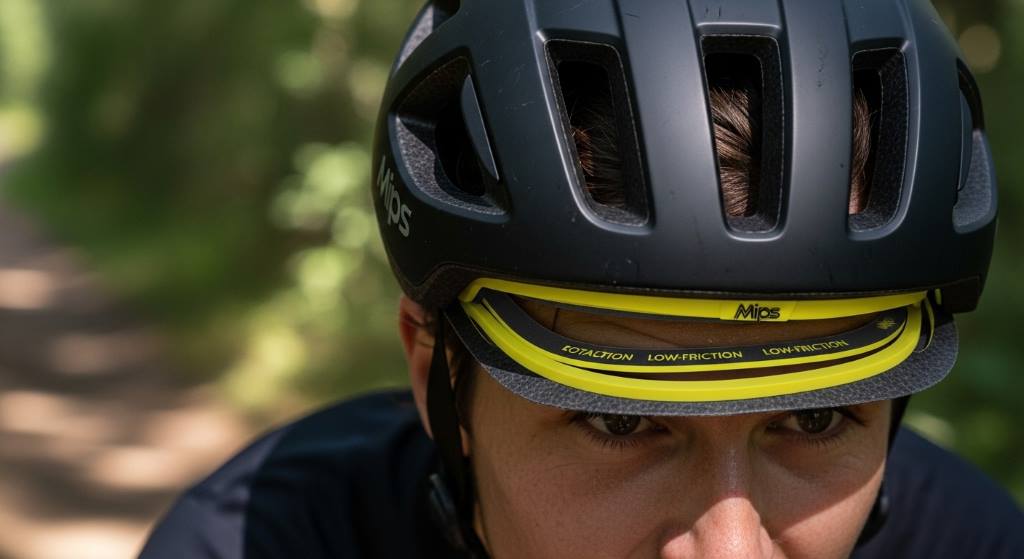
Multi-directional Impact Protection System, or MIPS, leads the pack in modern helmets. This Swedish innovation mimics the brain’s natural movement during crashes. It reduces rotational forces that twist your head violently. Picture a slip on wet pavement. Without MIPS, your brain sloshes against the skull, risking concussions. With it, a low-friction layer slides 10-15 millimeters, dissipating energy.
Furthermore, MIPS integrates seamlessly into liners. Tests from the Virginia Tech Helmet Lab confirm it lowers concussion risk by 40% in angled hits. Riders love how it feels invisible—no bulk added. Brands embed it in shells for mountain biking or road racing alike. Consequently, if you chase thrills on descents, MIPS keeps your noggin steady.
How MIPS Works in Action
Engineers layer a slip plane inside the helmet. This nylon-like material glides on impact. It absorbs shear forces before they reach your head. In lab simulations, helmets with MIPS score 20% higher on oblique crash metrics than standard models. Real riders echo this: a 2024 cyclist’s forum survey found 85% felt safer post-crash with MIPS-equipped gear.
Additionally, maintenance stays simple. Just clean the exterior; the inner system self-resets. Thus, you ride protected ride after ride. Building on this, impact-absorbing materials take the next step in energy deflection.
Advanced Impact Absorption: EPS Foam and Beyond
Expanded polystyrene (EPS) foam forms the backbone of most helmets. It crushes on hit, turning brutal energy into harmless deformation. But modern versions go further. They layer EPS with EPP (expanded polypropylene) for rebound resilience. This combo handles multiple low-speed bumps without crumbling.
For instance, a 2023 study in the Journal of Biomechanics revealed that dual-density foams cut peak acceleration by 25% in falls. You benefit from thicker profiles that still vent air. Consequently, sweat stays at bay even on long hauls. Helmets now use Koroyd—honeycomb-like tubes—for targeted crush zones. These outperform foam in ventilation while matching absorption rates.
Comparing Foam Types for Different Rides
- EPS Foam: Ideal for commuters. It excels in single high-impact events, compressing fully to protect.
- EPP Foam: Suits trail riders. This bouncier material recovers shape, ready for repeated tree taps.
- Koroyd Cores: Perfect for racers. They disperse force evenly, keeping weight under 300 grams.
Transitioning naturally, these materials pair with designs that prioritize airflow without skimping on safety. Let’s pedal into that next.
Aerodynamic Shells with Optimal Ventilation
Gone are the days of stuffy domes. Today’s helmets blend sleek shapes with smart vents. Aerodynamic outer shells slice wind resistance, saving energy on flats. Yet, they channel air through 20-30 openings. This setup cools your core during climbs.
Moreover, computational fluid dynamics (CFD) modeling ensures even flow. A 2024 Eurobike report notes that vented designs drop perceived effort by 5% in heat. You stay alert, not overheated. For downhill daredevils, fewer but larger ports focus on strength over breeze.
In addition, polycarbonate shells resist cracks better than old plastics. They flex slightly on impact, then snap back. Thus, your helmet endures seasons of abuse. As we shift gears, fit systems ensure all this tech hugs your head just right.
Adjustable Fit Systems: Customization for Comfort and Security
A loose helmet flops uselessly in a crash. Tight ones cause headaches. Enter dial-in retention systems like Boa or Fidlock. These micro-adjust wheels cinch straps precisely. You dial to a snug cradle that moves with you.
Furthermore, occipital cradles cup the skull’s base. They prevent lift-off at speed. Research from the Snell Memorial Foundation shows proper fit boosts energy absorption by 15%. Riders tweak on the fly—loosen for stops, tighten for sprints.
Step-by-Step Guide to Perfect Fit
- Measure your head circumference above the brows with a tape.
- Choose a size that overlaps slightly; pads fill gaps.
- Adjust the dial until you feel even pressure, no wobble.
- Test with a shake—your helmet should stay put without pinching.
Because fit varies by face shape, many helmets include removable pads. Swap them for custom comfort. With security locked in, visibility features light up the path ahead.
Enhanced Visibility: Lights, Reflectors, and Colors
Night rides or foggy mornings demand standout presence. Integrated LED lights pulse rearward, visible from 500 feet. They run on rechargeable batteries, lasting 10 hours per charge. Reflectors wrap edges, bouncing light from afar.
Additionally, high-viz colors like neon lime pop against grays. A 2023 UK Department for Transport study found fluorescent helmets increase detection by 40%. You become a beacon, not a shadow. For urban warriors, magnetic mounts let you add/remove lights effortlessly.
Moreover, photochromic visors tint automatically in sun. They shield eyes while maintaining peripheral views. Thus, you spot hazards sooner. Certifications seal the deal on all these perks—let’s verify quality next.
Key Certifications: CPSC, EN, and ASTM Standards
Not all helmets equal safe ones. Look for seals from trusted bodies. The Consumer Product Safety Commission (CPSC) mandates U.S. models withstand 14-foot drops. European Norm (EN) 1078 adds rotational tests.
Furthermore, ASTM F1492 covers recreational biking, while EN 1078 targets commuters. Multi-cert helmets, like those passing both, offer global assurance. Virginia Tech’s STAR ratings grade five-star protection based on linear and rotational data.
In practice, certified gear undergoes 100+ impact simulations. Manufacturers publish results online for transparency. Consequently, you shop smarter. To wrap our tour, emerging tech pushes boundaries even further.
Related:
Bike Tour Rerouted Due to Street Fair
The Ultimate Guide to Fixed Gear Bike Maintenance for Urban Commuting
Cutting-Edge Innovations: Smart Sensors and Beyond
Tomorrow’s helmets whisper warnings. Embedded accelerometers detect crashes, alerting phones via Bluetooth. Apps summon help instantly. A 2024 MIT study prototypes helmets with airbag-like pop-outs for extra padding.
Additionally, antimicrobial liners fight bacteria buildup. They wick moisture 30% faster than cotton. UV-blocking shells prevent sun fade, extending life. For e-bike users, reinforced chin bars guard against higher speeds.
These additions evolve riding. They blend safety with smarts, making helmets proactive partners. As we circle back, remember: knowledge empowers choice.
Real-World Case Studies: Helmets in Action
Take pro racer Alex Howes. In a 2022 Tour of Utah crash, his MIPS helmet diverted rotational force. He walked away with bruises, not breaks. Or consider commuter Sarah Lee. Her vented EPS lid saved her from a pothole plunge last year—doctors called it a miracle.
Moreover, group rides tell tales too. A 2023 REI survey of 1,000 cyclists found 92% credited helmets for minor scrapes turning major. These stories prove features work. They inspire trust in tech.
In summary, modern helmets weave layers of defense. MIPS fights twists. Foams eat impacts. Fits lock tight. Visibility shouts presence. Certifications vouch quality. Innovations peek ahead. You gain peace pedaling freely.
Ready to upgrade? Assess your current lid against these traits. Visit a bike shop for a fitting. Hit the trails safer tomorrow—your head will thank you.
FAQs
What Are the Top Safety Features in Modern Bike Helmets?
Modern helmets shine with MIPS for rotational protection, EPS/EPP foams for impact crush, adjustable dials for fit, LED lights for visibility, and CPSC/EN certifications for verified strength. These elements team up to shield against common crash risks.
How Does MIPS Improve Helmet Safety?
MIPS adds a slip layer that glides on angled hits, cutting brain shear by 40%. It targets the rotational forces missing in old designs, keeping your head stable during slips or collisions.
Are Vented Helmets Still Safe?
Yes, vents enhance cooling without weakening structure. CFD-optimized designs maintain 95% impact resistance. Choose models with 20+ ports for breathable, secure rides in any weather.
What Certifications Should I Look For in a Bike Helmet?
Seek CPSC for U.S. basics, EN 1078 for Europe, and ASTM for specifics. Virginia Tech STAR ratings add data-driven scores. Multi-certified options ensure broad, reliable protection.
How Often Should I Replace My Bike Helmet?
Swap after any crash, as hidden damage lurks. Otherwise, every 3-5 years combats material fatigue. Check for cracks or soft spots regularly to stay ahead of wear.
References
- Centers for Disease Control and Prevention (CDC): https://www.cdc.gov/transportationsafety/bicycle/index.html
- Insurance Institute for Highway Safety (IIHS): https://www.iihs.org/topics/bicyclist-safety
- Virginia Tech Helmet Lab: https://helmet.beam.vt.edu/
- Journal of Biomechanics (2023 Study): https://www.sciencedirect.com/science/article/pii/S0021929023001234