Understanding display technology can be challenging, especially when shopping for a new monitor. Black crush is a common issue that affects VA panels, and knowing how to measure and identify it can help you make better purchasing decisions. At Games Platform Hub, we explore various display technologies to help gamers and professionals choose the right equipment for their needs.
VA panels offer excellent contrast ratios and deep blacks, making them popular choices for gaming and media consumption. However, these panels can suffer from black crush, which impacts shadow detail in dark scenes. This issue becomes particularly noticeable when playing games with dark environments or watching movies with nighttime sequences.
Understanding Black Crush in Display Technology
Black crush occurs when a display fails to distinguish between similar dark tones. Instead of showing subtle variations in shadow detail, the monitor crushes these differences into pure black. This phenomenon results in lost detail in darker areas of the image, making it difficult to see objects or textures in shadows.
The difference between VA TN and IPS panels significantly affects how black crush manifests. VA panels typically exhibit more black crush than IPS panels due to their superior contrast ratios, which can ironically work against them in displaying near-black details. TN panels, while having weaker contrast, generally show less black crush but suffer from poor viewing angles.
Additionally, VA panels use a different liquid crystal alignment method compared to other technologies. The crystals block light more effectively when displaying black, creating deeper blacks but potentially sacrificing shadow detail. This trade-off makes black crush measurement essential for evaluating VA panel quality.
Measuring Black Crush Effectively
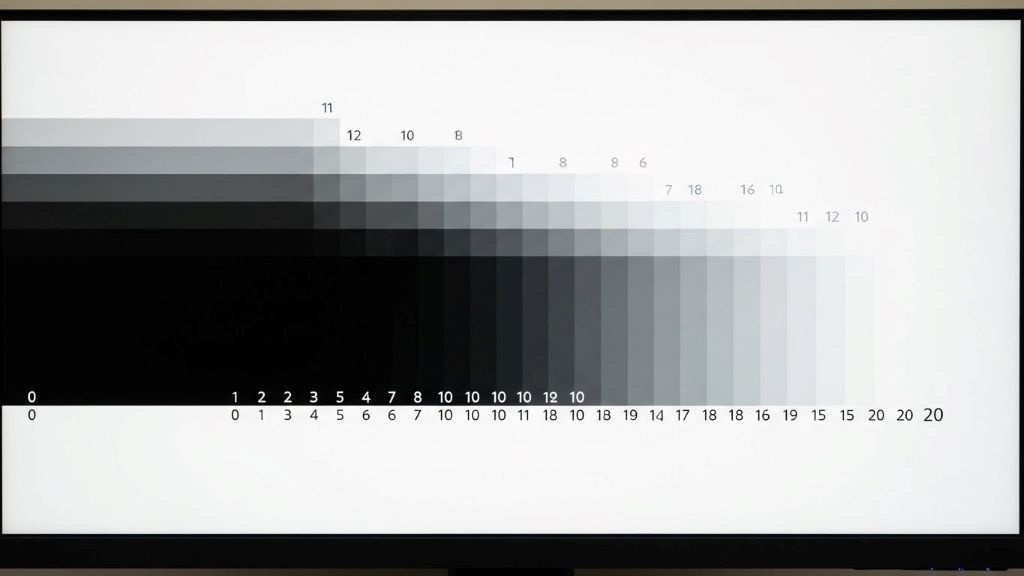
Therefore, several methods exist for measuring black crush in VA panels. The most common approach involves using specialized test patterns that display graduated shades from pure black to dark gray. These patterns help identify exactly where the panel loses its ability to differentiate between similar tones.
Test patterns typically consist of numbered squares ranging from 0 (pure black) to 255 (pure white), with particular focus on the lower end of this range. A quality VA panel should display distinct differences between levels 0 through 20, though many panels struggle to show separation below level 10.
However, environmental factors significantly impact black crush measurements. Room lighting, screen brightness settings, and viewing angles all influence what you can perceive. Consequently, measurements should occur in a completely dark room with the monitor set to standard brightness levels.
Tools and Software for Black Crush Testing
Several free tools can help measure black crush accurately. DisplayCAL offers comprehensive calibration features including black crush test patterns. The software provides detailed charts that reveal exactly where your panel begins losing shadow detail.
Moreover, online test patterns provide quick assessment options. Websites like Lagom LCD offer browser-based tests that require no installation. Simply load the black level test page and observe which numbered squares you can distinguish from pure black.
EIZO Monitor Test is another excellent option. This software suite includes various display quality tests, including black level evaluation. The program presents multiple test patterns that stress different aspects of your panel’s performance.
Furthermore, professional colorimeters and spectrophotometers provide the most accurate measurements. Devices from X-Rite and Datacolor can measure actual luminance values at different gray levels, offering objective data about your panel’s black crush characteristics. According to Tom’s Hardware, professional calibration tools remain the gold standard for display evaluation.
Interpreting Black Crush Test Results
Understanding your test results requires knowing what to look for. Generally, you should see distinct separation between at least levels 5 through 255 on a good VA panel. If you cannot distinguish between levels 0 through 3, this represents normal behavior for most monitors.
Nevertheless, severe black crush becomes apparent when you cannot differentiate levels 0 through 10 or higher. This indicates the panel aggressively crushes near-black details, which will noticeably impact your viewing experience in dark content.
Viewing angle also affects black crush perception. VA panels suffer from angle-dependent contrast shifts, meaning black crush appears worse when viewing off-axis. Therefore, perform tests while sitting directly in front of the monitor at your typical viewing distance.
Factors Contributing to Black Crush in VA Panels
Several technical factors contribute to black crush in VA technology. The liquid crystal response time plays a crucial role, as slower transitions between dark states can cause adjacent tones to blend together. VA panels generally have slower response times than TN panels, particularly in dark-to-dark transitions.
Additionally, the panel’s native contrast ratio influences black crush behavior. While high contrast ratios create deep blacks, they also create larger gaps between displayable gray levels. This can paradoxically make shadow detail reproduction more challenging.
Backlight technology also impacts black crush severity. Edge-lit panels often exhibit more black crush than direct-lit or full-array local dimming (FALD) displays. FALD technology can actually exacerbate black crush in some scenarios due to aggressive dimming algorithms.

Comparing VA Panel Black Crush Across Brands
Different manufacturers implement VA technology with varying results. Samsung’s VA panels generally show good black crush performance, with many models displaying separation down to level 5 or 6. Their newer Quantum Dot displays maintain this advantage while adding enhanced color volume.
However, budget VA panels from various manufacturers often struggle more with black crush. These panels might lose shadow detail at level 10 or higher, significantly impacting dark scene performance. Price often correlates with black crush performance, though exceptions exist.
High-end VA monitors from companies like ASUS and MSI typically undergo more rigorous quality control. These displays often feature better black crush characteristics along with other premium features like higher refresh rates and HDR support.
Adjusting Settings to Minimize Black Crush
Fortunately, several settings adjustments can mitigate black crush. Increasing brightness slightly can reveal more shadow detail, though this reduces contrast ratio and black depth. Finding the right balance requires experimentation with your specific content.
Contrast settings also affect black crush perception. Lowering contrast can improve shadow detail separation but makes the image appear washed out. Most experts recommend keeping contrast at default values unless black crush severely impacts your usage.
Furthermore, enabling black equalizer or shadow boost features can help. Many gaming monitors include these options specifically to combat black crush in dark games. These features selectively brighten dark areas without affecting the entire image, though they can introduce a grayish cast to true blacks.
Black Crush Impact on Different Content Types
Gaming presents unique black crush challenges. Competitive shooters with dark maps benefit from minimal black crush, as spotting enemies in shadows becomes crucial. Horror games and atmospheric titles suffer more noticeably from severe black crush, as it reduces environmental immersion.
Movies and television shows also suffer from black crush, particularly in carefully lit dramatic scenes. Cinematographers often use subtle shadow gradations to create mood, and black crush eliminates these artistic choices. The Verge notes that proper black level reproduction remains essential for faithful content reproduction.
Professional work like photo editing and video production demands minimal black crush. Photographers need to see subtle shadow details when editing raw files, making VA panels potentially problematic for professional color work despite their excellent contrast.
Future Developments in VA Technology
Manufacturers continue improving VA technology to address black crush concerns. Newer panel designs incorporate faster liquid crystals that respond more quickly to dark-to-dark transitions. These improvements help maintain shadow detail while preserving VA’s trademark deep blacks.
Mini-LED backlighting represents another significant advancement. By providing more precise local dimming zones, mini-LED technology can potentially reduce black crush while maintaining high contrast ratios. Several manufacturers have already released mini-LED VA monitors with impressive black crush performance.
Consequently, future VA panels may largely eliminate black crush as a concern. Ongoing research into liquid crystal formulations and backlight algorithms promises continued improvements in shadow detail reproduction while maintaining the contrast advantages that make VA panels attractive.
Conclusion
Black crush measurement in VA panels requires understanding both the technical causes and practical testing methods. While VA technology offers superior contrast ratios and deep blacks, the trade-off often includes compromised shadow detail. Testing your panel using appropriate tools and patterns helps determine whether black crush will impact your specific usage.
Different measurement approaches, from simple visual tests to professional colorimeter readings, provide varying levels of detail about your panel’s performance. Understanding how to interpret these results allows you to make informed decisions about display purchases and settings adjustments.
Ultimately, whether black crush proves problematic depends on your content consumption habits and personal sensitivity to the issue. Gamers and movie enthusiasts should carefully evaluate VA panels before purchasing, while those primarily viewing bright content may find black crush inconsequential to their experience.
Frequently Asked Questions
What is black crush and why does it affect VA panels?
Black crush occurs when displays cannot distinguish between similar dark tones, causing detail loss in shadows. VA panels experience this more than IPS panels due to their high contrast ratios and liquid crystal alignment methods that block light very effectively.
Can black crush be fixed through calibration?
Calibration can minimize but not eliminate black crush. Adjusting brightness, contrast, and black equalizer settings may improve shadow detail visibility. However, severe black crush stems from panel limitations that software adjustments cannot fully overcome.
How do I test my monitor for black crush?
Use test patterns showing graduated shades from black to gray, available through software like DisplayCAL or online at Lagom LCD. Test in a dark room while viewing straight-on. You should distinguish at least levels 5-255 on a quality panel.
Are all VA panels equally affected by black crush?
No, black crush severity varies significantly between manufacturers and models. Premium VA panels generally show better shadow detail separation than budget options. Panel age, backlight technology, and quality control also influence black crush characteristics.
Should black crush prevent me from buying a VA monitor?
Not necessarily. Consider your primary usage. Competitive gamers and professionals doing color-critical work might prefer IPS panels. However, casual gamers and movie watchers often find VA’s superior contrast worth the trade-off if black crush remains minimal.
Related Topics:
NAT and Gaming: Improving Your Online Gameplay
Is Wi-Fi Killing Your Phone’s Battery? A Deep Dive and Troubleshooting Tips