Starting bike commuting does not require an expensive bicycle or elite cycling fitness. Begin with a manageable route, learn the traffic environment, carry essential gear, and build your riding routine gradually. Two or three short practice rides can reveal problems before your first regular commute.
Why Bike Commuting Works Better With a Plan
Bike commuting changes more than how you travel between two places. It also changes how you manage time, clothing, weather, energy, and unexpected delays. Therefore, a simple plan makes daily riding much easier.
A good commute should feel predictable rather than adventurous. You should know where you ride, where you can stop, and what happens when conditions change. That confidence matters more than riding speed.
Your first goal should involve consistency instead of distance. A short commute completed comfortably can become the foundation for longer rides later. Meanwhile, an overly ambitious first route can make cycling feel unnecessarily difficult.
Start With the Right Commute
Before buying equipment, examine your actual travel needs. Consider distance, traffic, hills, road surfaces, weather, parking, and workplace facilities.
Ask yourself these questions:
- How far is the one way journey?
- Can you shower or change clothes at work?
- Where can you securely store your bicycle?
- Does your workplace allow bicycles indoors?
- Which days have the lightest traffic?
- What happens if rain starts during your return trip?
Your answers will shape your bicycle, clothing, route, and daily schedule. More importantly, they can prevent expensive purchases that solve the wrong problem.
Measure More Than Distance
A five mile route can feel harder than a seven mile route. Heavy traffic, steep climbs, rough pavement, and frequent intersections can change the experience completely.
Therefore, compare routes based on comfort rather than mileage alone. A slightly longer route may save time if it avoids stressful roads and repeated stops.
How to Find a Better Bike Commute Route
Your safest route may not match the fastest driving route. Drivers often use roads designed for vehicle speed, while cyclists benefit from calmer streets and better visibility.
Start by reviewing several possible routes. Then inspect those routes during the same hours when you normally travel.
Look for:
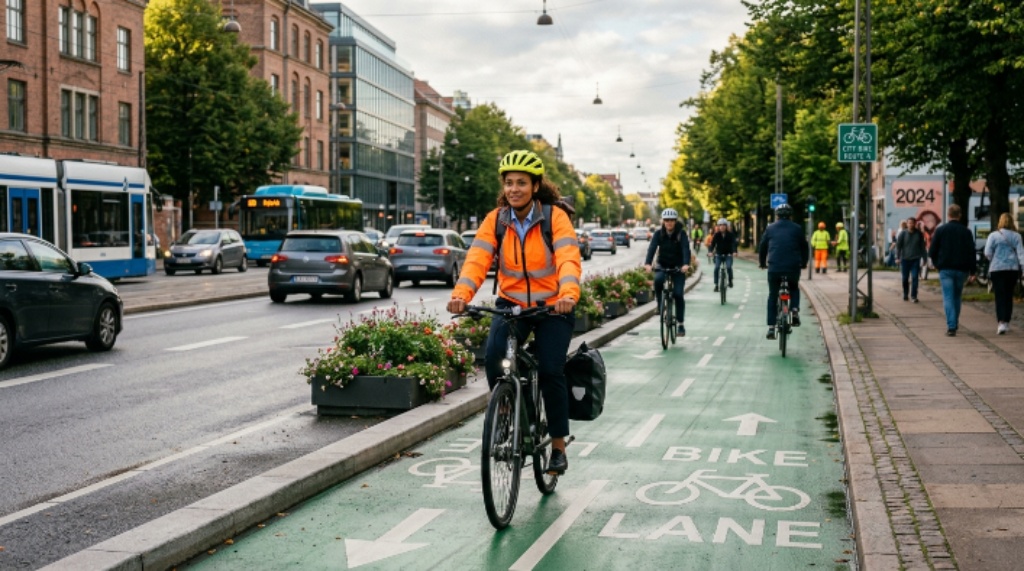
- Protected bike lanes
- Neighborhood streets with lower traffic
- Shared use paths where permitted
- Roads with good sight lines
- Intersections with clear markings
- Reliable places to stop safely
Avoid routes that force you into stressful traffic repeatedly. Also, do not assume a painted bike lane automatically makes every road comfortable.
Test Your Route Before Commuting
Ride the proposed route on a day when you do not need to arrive anywhere. This practice ride lets you examine difficult intersections without workplace pressure.
Pay attention to turning lanes, parked cars, road debris, steep sections, and confusing signs. Notice where you naturally feel uncomfortable, then look for alternatives.
Next, test the return journey separately. Traffic patterns can change significantly later in the day.
Choose a Bicycle That Fits Your Commute
You do not need a special commuter bicycle to begin riding. A reliable bicycle that fits your body and matches your roads can work extremely well.
Hybrid bicycles suit many beginners because they balance comfort, efficiency, and control. Road bicycles work well for longer paved routes, while mountain bicycles suit rougher surfaces.
An existing bicycle may already meet your needs. Before replacing it, have a qualified bicycle mechanic inspect the brakes, tires, drivetrain, wheels, and steering.
Prioritize Fit Over Features
A poorly fitted bicycle can make a short commute uncomfortable. A basic bicycle with a proper fit can feel much better.
Your saddle height should support efficient pedaling without forcing your knees into awkward positions. Your handlebars should also provide a comfortable position for controlling the bicycle.
If your hands, back, knees, or neck hurt regularly, investigate the bicycle setup. Do not simply assume discomfort represents normal cycling.
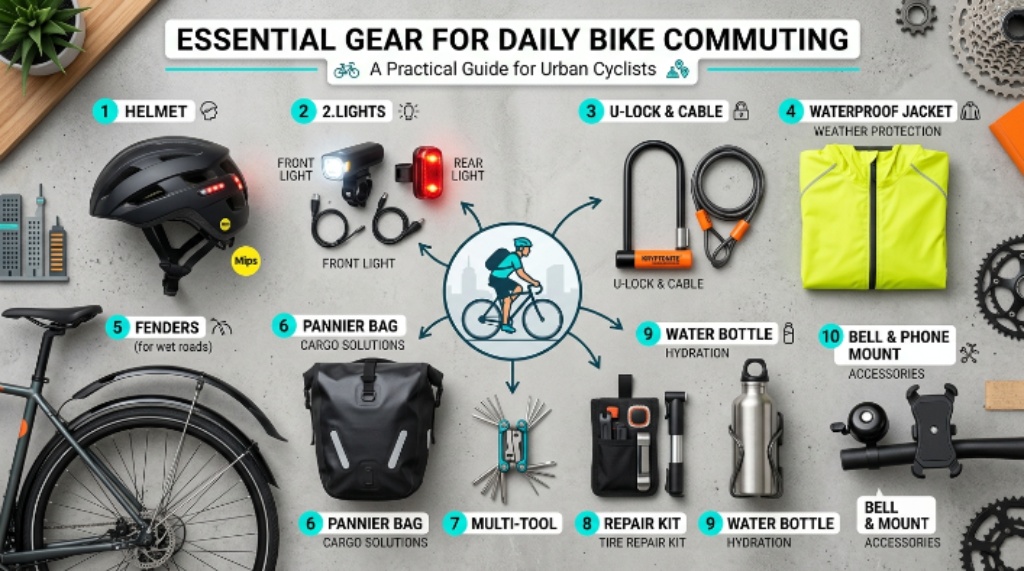
Essential Bike Commuting Gear
The best commuting gear solves real problems. Avoid filling your bag with equipment that rarely helps.
Start with these essentials:
- Properly fitted bicycle helmet
- Front white light
- Rear red light
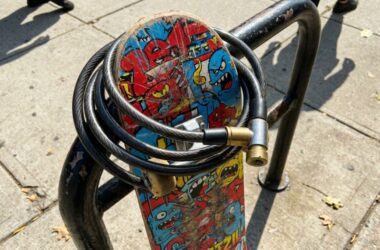
- Reliable bicycle lock
- Spare inner tube or compatible repair system
- Tire levers
- Portable pump
- Basic multitool
- Water bottle
- Weather appropriate clothing
A small repair kit can prevent a minor puncture from becoming a major transportation problem. Practice using your tools before an actual roadside emergency.
Carry Gear Without Overloading Yourself
A heavy backpack can make daily riding uncomfortable. Whenever possible, move your equipment onto the bicycle.
A rear rack with panniers can distribute weight more comfortably. A frame bag can hold tools and small essentials without affecting your posture.
Keep heavy objects low and secure. Loose items can shift while riding and affect bicycle handling.
Wear Clothing That Supports Daily Riding
You do not need full cycling clothing for most commutes. Your clothing should simply support movement, comfort, weather protection, and workplace needs.
Choose breathable clothing when temperatures rise. During colder conditions, use layers that allow you to adjust as your body warms.
Rain requires special planning because getting wet can affect your workday. Pack a lightweight rain layer when forecasts suggest changing conditions.
Keep spare workplace clothing at your destination when possible. That simple habit can remove one of the biggest barriers to regular commuting.
Learn Defensive Bike Riding
Safe commuting depends heavily on what you anticipate before problems develop. Ride predictably, maintain awareness, and give yourself enough space to react.
Use these habits consistently:
- Follow traffic signals and applicable road rules.
- Signal clearly before changing direction.
- Watch parked vehicles for opening doors.
- Maintain awareness around large vehicles.
- Slow down before blind intersections.
- Make eye contact when appropriate.
- Avoid riding beside vehicles longer than necessary.
Predictability helps other road users understand your intentions. Sudden movements create unnecessary uncertainty for everyone nearby.
Treat Intersections as High Attention Areas
Many commuting decisions happen at intersections. Therefore, reduce distractions before reaching them.
Scan for vehicles approaching from multiple directions. Check for pedestrians, turning vehicles, and unexpected lane changes.
Do not assume another road user sees you. Give yourself enough time and space to respond if their behavior changes.
Make Visibility Part of Your Routine
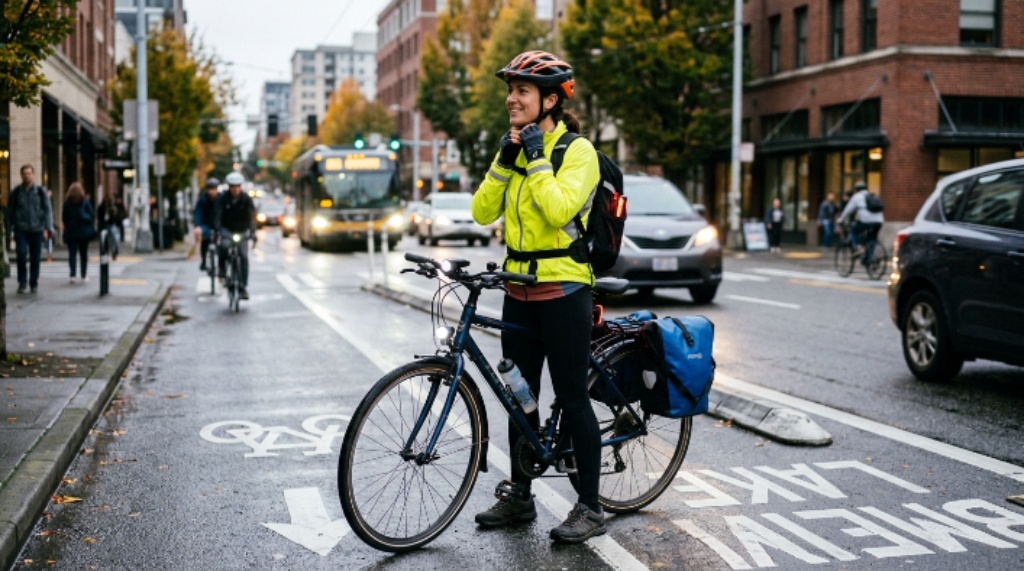
Being visible matters particularly during darkness, poor weather, and changing daylight. Use working lights whenever conditions require them.
Before every ride, check that your lights work correctly. Also inspect their mounting position so they remain secure throughout the trip.
Reflective elements can make your movement easier to notice. Bright clothing can also improve daytime visibility.
Visibility does not replace defensive riding. Instead, it gives other road users another opportunity to recognize your presence.
Build a Simple Pre Ride Check
A short bicycle inspection can prevent many avoidable problems. Make it part of your normal departure routine.
Check these areas:
- Tire pressure and visible damage
- Brake operation
- Chain condition
- Wheel security
- Handlebar stability
- Light operation
- Helmet fit
You do not need a full mechanical inspection before every ride. However, obvious problems deserve attention before you enter traffic.
Plan Around Weather
Weather can determine whether bike commuting feels enjoyable or miserable. Therefore, check conditions before leaving instead of reacting after problems begin.
Rain requires different preparation than cold weather. Heat creates another challenge because hydration and clothing become more important.
During strong winds, pay attention to exposed roads and bridges. Wet surfaces can also reduce traction and increase stopping distances.
Create a backup plan for severe conditions. You might use public transportation, a rideshare service, or another transportation option when necessary.
Manage Sweat During Your Commute
Sweat can become a bigger problem than distance. A comfortable ride can still become inconvenient when you arrive overheated.
Ride at a moderate pace during the work journey. Save intense cycling for recreational rides when workplace appearance matters less.
Carry deodorant, wipes, or a small grooming kit when facilities are limited. If your workplace provides showers, use them strategically before starting work.
You can also ride more slowly during hot weather. Arriving slightly later can be better than arriving exhausted and overheated.
Create a Reliable Morning Routine
Bike commuting becomes easier when fewer decisions happen before departure. Prepare important items the night before.
Pack your bag, check the weather, charge lights, and prepare work clothes beforehand. Then your morning routine becomes much more predictable.
Keep your repair kit in the same place every day. Consistency reduces the chance of forgetting something important.
Give Yourself Extra Time
Your first rides will probably take longer than expected. Traffic signals, route mistakes, mechanical issues, and clothing changes can add unexpected minutes.
Leave early enough to handle those problems calmly. Once you understand your normal travel time, adjust your schedule accordingly.
Avoid treating every commute like a race. Arriving safely and consistently matters more than shaving several minutes from your journey.
Handle Punctures and Mechanical Problems
Every regular cyclist eventually encounters a mechanical problem. Preparation turns a frustrating situation into a manageable interruption.
Learn how to repair a flat tire before commuting regularly. Practice at home because roadside conditions rarely provide ideal learning conditions.
Carry a pump, repair tools, and the correct replacement tube. If your bicycle uses a different tire system, carry compatible equipment for that setup.
For serious mechanical problems, move away from traffic before troubleshooting. If you cannot repair the bicycle safely, use your backup transportation plan.
Protect Your Bicycle at Work
A reliable lock is essential when you leave your bicycle unattended. Secure the frame and wheel to a fixed object designed for bicycle parking.
Choose a visible parking location when possible. Avoid isolated areas where tampering can happen without witnesses.
Use additional security when your bicycle has expensive components. Record identifying details and keep photographs of the bicycle for your records.
Build Fitness Without Overdoing It
You do not need strong cycling fitness before starting. Regular commuting itself can gradually improve your endurance.
Begin with fewer commuting days if daily riding feels demanding. Then increase frequency after your body adapts.
Keep your effort moderate during the first weeks. Excessive effort can create soreness that makes the next commute unnecessarily difficult.
Pay attention to persistent pain. Adjust your bicycle setup, riding technique, or schedule instead of ignoring repeated discomfort.
Make Bike Commuting Sustainable
The easiest commute to maintain is one that fits your real life. Do not build a routine around perfect weather or unlimited energy.
Create a weekly pattern that includes flexibility. For example, you might ride several days and use another transportation option when conditions become difficult.
Keep spare supplies at work when practical. Extra clothing, basic toiletries, and simple snacks can remove daily friction.
Track What Actually Helps
After each week, identify what made commuting easier. Then improve one small part of the routine.
You might discover that leaving earlier reduces stress. You might also find that a different route saves energy despite adding distance.
These small observations create a personalized commuting system. Over time, your routine becomes more efficient without requiring constant effort.
Common Bike Commuting Mistakes
Many beginners focus heavily on bicycle equipment. However, daily commuting problems often come from planning mistakes.
Watch for these common errors:
- Choosing the fastest route instead of the safest practical route
- Carrying too much equipment
- Ignoring weather forecasts
- Riding too hard during work trips
- Failing to practice basic repairs
- Forgetting backup transportation
- Neglecting bicycle maintenance
- Treating discomfort as something they must tolerate
Correcting these mistakes can improve commuting more than buying expensive accessories. Good habits usually provide greater value than extra equipment.
A Simple First Week Plan
Your first week should focus on learning rather than proving anything. Use short practice sessions to build familiarity.
Try this progression:
- Day one: Test your route without a time target.
- Day two: Practice traffic skills and difficult intersections.
- Day three: Complete the commute with your normal work setup.
- Day four: Review comfort, timing, and equipment.
- Day five: Repeat the route and refine your routine.
You can adjust this schedule around your working days. The key is gradual exposure rather than sudden commitment.
When You Should Change Your Route
A route deserves reconsideration when it repeatedly creates stress or unsafe situations. Do not stay committed to a poor route simply because it appears shorter.
Look for recurring problems such as aggressive traffic, poor visibility, dangerous turns, or difficult crossings. Then compare alternatives using the same criteria.
A route that adds several minutes may still represent the better daily choice. Lower stress can improve your consistency and enjoyment.
How to Make Bike Commuting Enjoyable
Practical commuting does not need to feel purely functional. Small improvements can make the journey something you actually look forward to.
Choose roads with pleasant scenery when safety remains comparable. Ride at a comfortable pace and give yourself enough time to notice your surroundings.
Use the commute as a transition between home and work. That separation can make the workday feel less compressed.
Most importantly, allow the routine to evolve. Your ideal commute will become clearer after real experience.
Final Bike Commuting Checklist
Before leaving home, quickly confirm these essentials:
- Helmet fitted correctly
- Tires properly inflated
- Brakes working
- Lights operating
- Lock packed
- Repair kit packed
- Water available
- Weather checked
- Work essentials secured
- Route and backup plan understood
This checklist takes little time but prevents many avoidable problems. Eventually, most of these checks will become automatic.
Conclusion
Learning how to start bike commuting begins with a realistic route, reliable equipment, safe riding habits, and gradual practice. You do not need expensive gear or exceptional fitness to make cycling part of your daily transportation.
Start with one manageable commute and learn from the experience. Then improve your route, equipment, timing, and preparation based on what actually happens.
Your next step is simple: inspect your bicycle, map a practical route, and schedule your first practice ride this week.
Frequently Asked Questions
Is bike commuting difficult for beginners?
Bike commuting becomes manageable when you start with a short route and gradually build your riding routine.
What bicycle is best for commuting?
A properly fitted hybrid bicycle works well for many commuters because it balances comfort, control, and efficiency.
How far should a beginner commute by bike?
Start with a distance you can comfortably ride without excessive fatigue, then increase distance gradually.
What gear do I need for bike commuting?
A helmet, working lights, lock, repair kit, water, and weather appropriate clothing cover most basic commuting needs.
How can I stay safe while bike commuting?
Ride predictably, follow traffic rules, improve visibility, watch intersections carefully, and maintain enough space around vehicles.