Surf fishing offers an incredible way to connect with nature while pursuing some of the ocean’s most exciting fish species. Standing on the beach with waves crashing around you creates an experience unlike any other type of fishing. However, success in this challenging environment requires the right equipment and knowledge.
Building a complete setup for the first time can feel overwhelming. The ocean presents unique challenges that demand specialized gear capable of handling saltwater, strong currents, and powerful fish. This comprehensive guide will walk you through everything you need to create a functional and effective setup that will serve you well for years to come.
Understanding the Basics of Surf Fishing Gear
Before diving into specific equipment, it’s important to understand what makes surf fishing different from other types of angling. You’re casting from shore into deeper water, often fighting against wind and waves. Your gear needs to handle these conditions while remaining functional after exposure to corrosive saltwater.
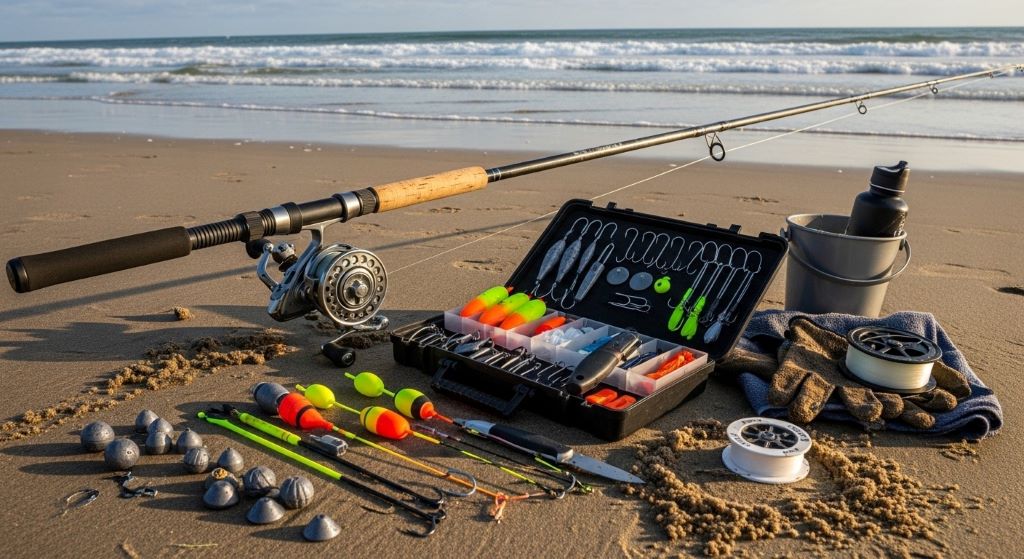
The foundation of any setup includes a rod, reel, line, and terminal tackle. Beyond these basics, you’ll need various accessories that make your time on the beach more productive and comfortable. Each component plays a specific role in your overall success.
Quality matters significantly when fishing in saltwater environments. The ocean destroys cheap equipment quickly through corrosion and physical stress. Investing in properly rated gear from the start saves money and frustration in the long run.
Selecting Your Surf Fishing Rod
Your rod serves as the backbone of your entire setup. Surf rods differ substantially from freshwater or inshore saltwater rods due to their length and power requirements.
Most surf anglers use rods between 9 and 12 feet long. Longer rods allow you to cast farther and keep your line above crashing waves. However, longer doesn’t always mean better. A 9 to 10-foot rod works well for beginners and smaller anglers who might struggle with unwieldy longer rods. Experienced anglers targeting distant sandbars often prefer 11 to 12-foot models.
Rod power indicates how much force is needed to bend the blank. Medium-heavy to heavy power rods handle the casting weights and fish sizes typically encountered in surf fishing. These ratings provide enough backbone to cast heavy sinkers and fight strong fish without being so stiff that they lack sensitivity.
Action refers to where the rod bends along its length. Fast action rods bend mostly near the tip, providing better casting distance and hook-setting power. Moderate-fast action rods bend farther down the blank, offering more forgiveness when fighting fish. For surf fishing, fast to moderate-fast actions work best.
Material makes a significant difference in performance and price. Graphite rods are lighter and more sensitive but more expensive and somewhat fragile. Fiberglass rods are heavier, more durable, and less expensive. Composite rods blend both materials, offering a middle ground in weight, sensitivity, and cost.
Two-piece rods are standard for surf fishing. They break down for easier transport while maintaining performance comparable to one-piece designs. Ensure the ferrule connection fits tightly and securely.
Choosing the Right Reel
Your reel must match your rod’s specifications while handling the demands of saltwater fishing. Spinning reels dominate surf fishing due to their ease of use and casting performance.
Size matters when selecting a spinning reel. Models in the 4000 to 8000 size range work for most surf fishing applications. Smaller reels work for lighter tackle targeting smaller species. Larger reels provide the line capacity and drag power needed for bigger fish and longer casts.
Drag systems control how much resistance a fish feels when pulling line. Look for reels with sealed drag systems that resist saltwater intrusion. You’ll need at least 15 to 20 pounds of maximum drag for most surf fishing situations. More powerful drags help when targeting larger species.
Gear ratios determine how much line you retrieve with each handle turn. Ratios around 5:1 to 6:1 work well for most situations. Higher ratios retrieve line faster, which helps when fish run toward you or when you need to reel in quickly to check your bait.
Ball bearings contribute to smooth operation. More bearings generally mean smoother performance, though quality matters more than quantity. Look for reels with at least five or six quality bearings.
Sealed or waterproof construction extends reel life significantly. The ocean is incredibly harsh on fishing equipment. Reels with proper sealing resist corrosion and continue functioning after repeated exposure to saltwater and sand.
Understanding Line Selection for Surf Tackle
Line connects you to your catch, making it a critical component of your surf tackle. Three main types are used in surf fishing, each with distinct advantages.
Monofilament line stretches significantly, which provides shock absorption when fighting fish or when waves create sudden tension. This stretch helps prevent pulled hooks and snapped lines. Monofilament is also the most affordable option and easiest for beginners to manage. However, it has more diameter per pound test than other options, reducing casting distance.
Braided line offers exceptional strength with minimal diameter. This thin profile cuts through wind better and allows longer casts. Braid has almost no stretch, providing excellent sensitivity and hook-setting power. The downsides include higher cost, visibility to fish, and the need for careful knot selection. Most surf anglers who use braid add a monofilament or fluorocarbon leader.
Fluorocarbon line is nearly invisible underwater and resists abrasion better than monofilament. It’s often used as leader material rather than main line due to its cost. Fluorocarbon sinks faster than monofilament, which can be advantageous or problematic depending on your fishing style.
For your beach fishing equipment list, consider starting with 20 to 30-pound monofilament as your main line. This provides a good balance of strength, castability, and forgiveness for beginners. As you gain experience, you can experiment with braid and leader combinations.
Essential Terminal Tackle Components
Terminal tackle includes all the small components at the end of your line. These items connect your line to your bait or lure and help present it effectively to fish.
Hooks come in countless sizes and styles. Circle hooks have become standard for bait fishing due to their tendency to hook fish in the corner of the mouth, which reduces mortality in catch-and-release situations. Sizes from 2/0 to 7/0 cover most surf fishing scenarios. J-hooks still have their place, particularly when using artificial lures.
Sinkers keep your bait in place against current and waves. Pyramid sinkers dig into sand and hold position well in moderate current. Bank sinkers work in calmer conditions. Sputnik or spider sinkers use wire arms that grip the bottom in strong currents. Weight requirements vary from 2 to 8 ounces depending on conditions.
Swivels prevent line twist and provide a connection point for your terminal rig. Barrel swivels work for basic applications. Three-way swivels enable more complex rigs. Always use corrosion-resistant models rated for saltwater.
Snaps allow quick lure changes without retying. However, they add a potential failure point. Use them judiciously and choose quality options with adequate strength ratings.
Leaders protect your main line from abrasion and sharp teeth. Fluorocarbon leaders work for most situations. Wire leaders become necessary when targeting toothy species like bluefish or Spanish mackerel.
Building Your Beach Fishing Equipment List
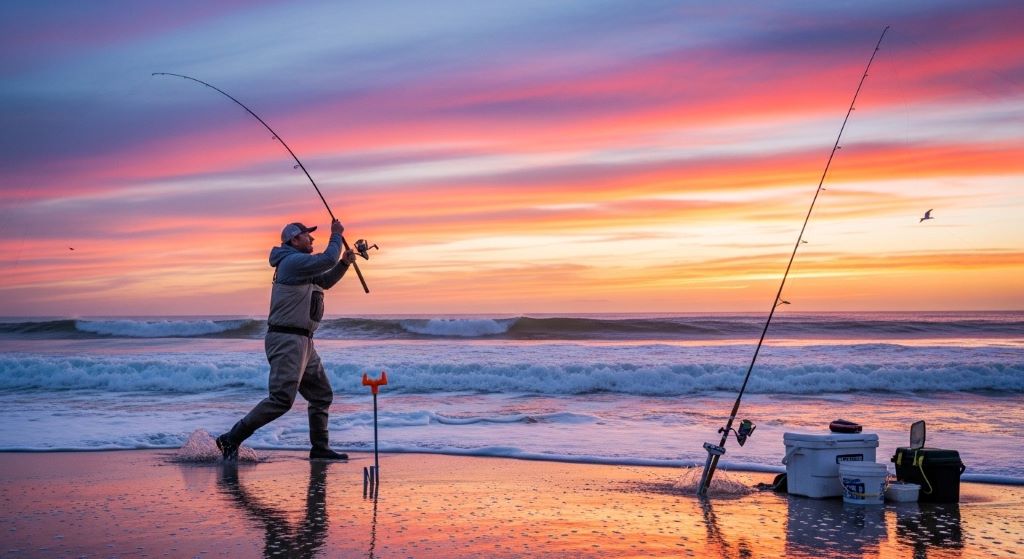
Beyond rod, reel, and terminal tackle, several additional items make your surf fishing more productive and enjoyable.
A sand spike or rod holder is essential. These holders keep your rod secure while you wait for bites, allowing you to fish multiple rods simultaneously. Choose models that drive deep into sand and hold your rod at an angle that keeps your line tight.
A tackle bag or box organizes your gear and protects it from sand and water. Soft-sided bags are popular for surf fishing because they’re easier to carry across sand. Look for multiple compartments and water-resistant construction.
Pliers remove hooks and cut line. Stainless steel or aluminum models resist corrosion better than standard tools. Long-nose pliers help reach hooks deep in a fish’s mouth.
A fish gripper or landing net helps you handle your catch safely. Grippers work well for toothy or spiny fish. Nets work better for delicate species you plan to release.
A cooler keeps caught fish fresh or stores drinks and snacks during long fishing sessions. Choose an appropriate size for your typical outings.
Bait containers or a bait bucket keep your bait fresh and accessible. Aerated bait buckets keep live bait healthy longer.
A headlamp or lantern is necessary for early morning or evening fishing. Hands-free lighting allows you to tie knots and handle fish in darkness.
Sunscreen, polarized sunglasses, and appropriate clothing protect you from sun exposure. The beach offers little shade, making sun protection critical during long sessions.
A fishing cart makes transporting all this gear across soft sand much easier. Many anglers find carts indispensable, especially when fishing far from parking areas.
Setting Up Common Surf Fishing Rigs
Understanding how to assemble effective rigs is just as important as having the right components. Several standard rigs work well for surf fishing.
The fish-finder rig is perhaps the most popular setup. It allows fish to take bait and move without feeling the weight of the sinker. Thread an egg or fish-finder sinker slide onto your main line, then tie on a barrel swivel. Attach a 12 to 36-inch leader to the swivel’s other eye, then tie on your hook. This simple rig works for many species.
The fireball rig uses a brightly colored float above the hook to lift your bait off the bottom. This prevents crabs from stealing bait and makes your presentation more visible to fish. It’s particularly effective when targeting pompano and whiting.
The high-low rig, also called a top-and-bottom rig, uses two hooks at different heights. This allows you to present bait at multiple depths simultaneously, helping you locate where fish are feeding. Three-way swivels or dropper loops create the connection points for hooks.
The Carolina rig works well when you want your bait to move naturally with currents. Slide a bullet or egg sinker onto your main line, followed by a bead, then tie on a swivel. Attach a longer leader to the swivel, then tie on your hook. The bead protects the knot from the sliding sinker.
Selecting Artificial Lures
While bait fishing dominates surf fishing, artificial lures catch plenty of fish and eliminate the need to purchase or catch bait.
Metal spoons work exceptionally well in surf conditions. Their weight allows long casts, and their flash attracts predatory species. Silver and gold colors are most popular, with sizes ranging from 1 to 4 ounces.
Bucktail jigs are versatile and effective. The hair or synthetic material creates natural movement in currents. White, chartreuse, and pink are productive colors. Weight them appropriately for conditions and target depth.
Soft plastic swimbaits imitate baitfish realistically. Rig them on jigheads for bottom fishing or weighted hooks for swimming retrieves. Paddle tails create excellent action in currents.
Hard-bodied plugs like poppers, swimmers, and diving plugs catch surface and subsurface feeders. They work particularly well during dawn and dusk when fish feed aggressively in shallow water.
Maintenance and Care
Saltwater destroys fishing equipment faster than any other environment. Proper maintenance extends the life of your gear significantly.
Rinse everything thoroughly with fresh water after each trip. Pay special attention to reels, removing salt deposits from all surfaces. Don’t use high-pressure water directly on reel seals, as this can force water into sealed areas.
Periodically disassemble your reel for deep cleaning and regreasing. This might seem intimidating initially, but it’s straightforward with online tutorials. Annual professional servicing is wise for expensive reels if you’re uncomfortable doing it yourself.
Store rods horizontally or vertically without pressure on the tips. Loosen your reel’s drag when storing to prevent spring compression.
Check your line regularly for abrasion and weakness. Replace it at least annually or more often if you fish frequently. The first 10 to 15 feet take the most abuse and should be cut back periodically.
Inspect terminal tackle for rust and damage. Replace rusty hooks immediately, as they weaken significantly and may fail when fighting fish.
Understanding Target Species and Conditions
Success in surf fishing requires matching your setup to the species you’re targeting and the conditions you’re fishing.
Smaller species like whiting, pompano, and croaker require lighter setups. Medium power rods with 15 to 20-pound line work well. Smaller hooks in the 1/0 to 3/0 range and lighter sinkers improve your catch rate.
Larger species like red drum, striped bass, and sharks need heavier tackle. Heavy power rods with 30 to 50-pound line provide the necessary strength. Larger hooks and heavier sinkers become necessary.
Wave conditions influence your sinker selection and fishing strategy. Calm days allow lighter weights and finesse presentations. Rough surf requires heavy pyramid or sputnik sinkers to maintain bottom contact.
Current strength affects where fish position themselves and how you present baits. Strong currents often push fish into troughs and channels. Lighter currents allow fish to spread across wider areas.
Learning Through Experience
Building your complete setup is just the beginning. Becoming proficient requires time on the water experimenting with different approaches.
Start with basic rigs and techniques before advancing to more complex strategies. Master the fish-finder rig before attempting multiple-hook rigs. Learn to read the beach and identify productive structure.
Local knowledge provides invaluable insights. Talk with other anglers, visit local tackle shops, and join online forums focused on your area. Experienced local anglers can shortcut your learning curve dramatically.
Keep a fishing journal documenting conditions, techniques, and results. Patterns emerge over time that help you predict when and where to focus your efforts.
Weather and seasonal patterns significantly influence fishing success. Understanding how these factors affect fish behavior helps you choose the right times to fish.
Conclusion
Building a complete surf fishing gear setup in 2026 requires understanding the unique demands of fishing from the beach. Start with a quality rod and reel combination appropriate for your target species. Choose line that balances strength, castability, and your skill level. Assemble a comprehensive beach fishing equipment list that includes essential terminal tackle and accessories.
Remember that your initial setup will evolve as you gain experience and refine your preferences. Don’t feel pressured to purchase everything at once. Focus on quality basics, then expand your collection as you identify specific needs. Proper maintenance extends the life of your surf tackle, protecting your investment from the harsh saltwater environment.
The ocean offers incredible fishing opportunities for those properly equipped to pursue them. With the right gear and growing knowledge, you’ll enjoy countless memorable days casting into the surf and connecting with powerful, exciting fish species. Your investment in quality equipment and time spent learning pays dividends in successful, enjoyable fishing experiences for years to come.
Frequently Asked Questions
How much should I budget for a complete beginner surf fishing setup?
A quality beginner setup typically costs between 200 and 400 dollars. This includes a decent rod and reel combination, line, basic terminal tackle, and essential accessories. You can start for less with budget options, but quality gear lasts longer and performs better. Consider this an investment that provides years of use rather than a one-time purchase.
Can I use my freshwater fishing rod and reel for surf fishing?
Freshwater gear generally isn’t suitable for surf fishing. Saltwater corrodes reels not designed for that environment quickly. Freshwater rods typically lack the length and power needed for effective surf casting. If you try freshwater gear, rinse it extremely thoroughly after each use and expect shorter equipment life. Investing in proper saltwater gear is more economical long-term.
What’s the best time of day for surf fishing?
Early morning and late evening are typically most productive. These low-light periods coincide with increased fish feeding activity. However, tide movement often matters more than time of day. Incoming tides bring baitfish close to shore, attracting predators. Many successful surf anglers plan trips around tide schedules rather than specific times. Moon phases also influence fishing quality.
Do I need different setups for different fish species?
While one versatile setup handles many situations, specialized gear improves success when consistently targeting specific species. Smaller fish like pompano require lighter tackle than large red drum or sharks. Having multiple setups allows you to adapt to changing conditions and target different species during the same trip. Start with one medium-heavy setup, then expand based on your preferred targets.
How do I know what bait to use for surf fishing?
Local baitfish, shrimp, and crabs are consistently effective. Visit local tackle shops to learn what’s currently working in your area. Cut mullet works for many species. Shrimp attracts a variety of fish. Sand fleas are excellent for pompano and whiting. Fresh bait outperforms frozen, though frozen is more convenient. Match your bait to the natural forage in your fishing area for best results.
Related Topics:
How to Choose the Best Fishing Rod for Beginners (Step-by-Step Guide)
The Art of Noodling for Catfish Safely