
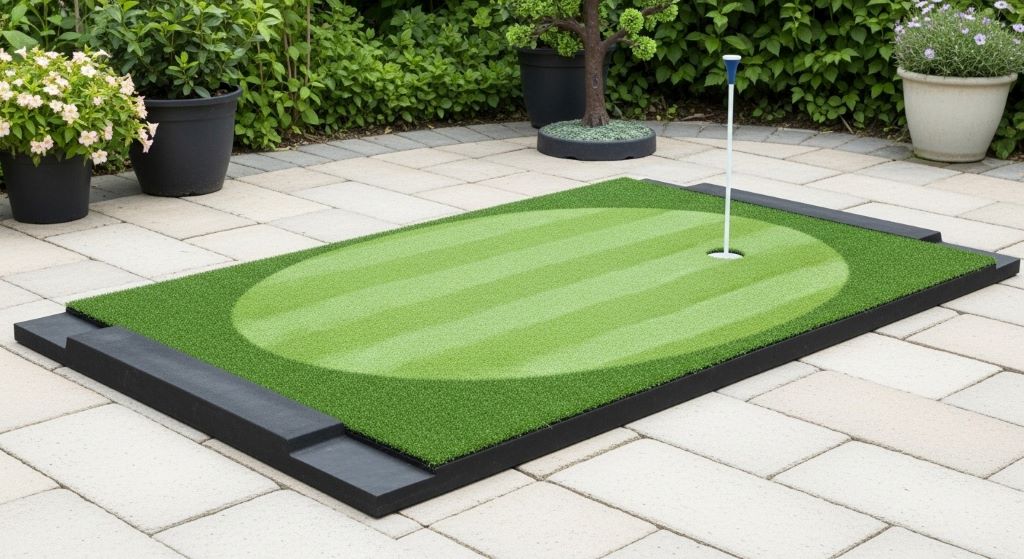
Consistent practice is the foundation of improving your golf game. However, driving to the course or range every time you want to hit a few balls isn’t always practical. Having a quality practice mat at home lets you work on your swing whenever you have a spare moment, regardless of weather conditions or time constraints.
Choosing the right mat can be challenging with so many options flooding the market. Some mats wear out quickly, damage your clubs, or fail to simulate real turf accurately. Others excel in durability but provide an unrealistic feel that can actually harm your swing mechanics. This guide will help you navigate these choices and select a mat that serves you well for years to come.
Understanding what separates exceptional mats from mediocre ones requires looking beyond marketing claims. You need to consider materials, construction methods, realistic ball response, and how well the mat holds up under various weather conditions. By the end of this article, you’ll know exactly what to look for when making your investment.
Why Material Quality Matters Most
The material composition of your practice mat determines virtually everything about its performance and longevity. Cheap mats use thin synthetic fibers that flatten quickly and provide little resistance to your club. Quality mats feature durable fibers engineered to withstand thousands of shots while maintaining their structure.
Nylon fibers are among the most popular choices for premium practice mats. This synthetic material offers excellent resilience, bouncing back after each strike. Nylon handles UV exposure well, which is crucial for mats left outdoors. Additionally, it resists moisture and doesn’t develop mold or mildew in humid conditions.
Polypropylene represents another common material found in golf mats. While generally less expensive than nylon, it still provides decent durability and weather resistance. However, polypropylene tends to flatten faster under heavy use and may not last as long in extreme heat or cold.
Some manufacturers blend different synthetic fibers to optimize both feel and durability. These hybrid materials aim to provide the softness needed for realistic ball interaction while maintaining the toughness required for long-term outdoor use. Pay attention to fiber density as well, since tightly packed fibers generally perform better than sparse arrangements.
The backing material deserves equal consideration. A sturdy rubber base prevents the mat from sliding during use and provides shock absorption that protects your joints. Look for thick rubber backing that won’t crack or deteriorate when exposed to temperature fluctuations.
Understanding Construction Methods
How manufacturers assemble the mat components significantly impacts its ability to withstand outdoor conditions. Different construction techniques offer varying levels of durability and performance.
Tufted mats feature fibers that are punched through the backing and secured with adhesive. This traditional method creates a dense surface that can handle regular use. However, the quality of the adhesive matters tremendously. Poor adhesive breaks down from moisture and temperature changes, causing fibers to pull out over time.
Injection-molded mats represent a newer technology where fibers are actually molded into the backing during manufacturing. This creates an incredibly strong bond that won’t separate even after years of outdoor exposure. These mats typically cost more but offer superior longevity.
Multi-layer construction adds another dimension to durability. The best all-weather golf mats incorporate multiple layers that each serve specific purposes. A top layer provides realistic turf feel, a middle layer offers cushioning, and a bottom layer ensures stability and weather resistance.
Edge reinforcement prevents the mat edges from fraying or curling. Quality mats feature bound or sealed edges that maintain their shape regardless of weather conditions. Cheap mats often start deteriorating from the edges inward, eventually becoming unusable.
Evaluating Realistic Ball Response
A practice mat that doesn’t simulate real turf conditions can actually hurt your game. Your brain and muscles develop patterns based on the feedback they receive. Therefore, practicing on a mat that provides unrealistic ball flight or club interaction creates habits that don’t transfer to the course.
The best outdoor hitting mat options allow your club to interact with the surface much like it would with grass. The fibers should give slightly under club pressure, permitting a divot-like sensation without actually removing material. This interaction is crucial for developing proper swing mechanics.
Ball response reveals a lot about mat quality. When you strike a ball on quality turf, it compresses against the ground before launching. Your practice mat should allow similar compression. Mats that are too hard cause the ball to bounce differently than it would from grass, leading to inconsistent practice results.
Club bounce also indicates quality. Iron shots should produce realistic bounce that matches what you experience on actual fairways. Mats that are too soft allow excessive digging, while overly firm mats cause the club to bounce unnaturally, potentially leading to thin shots.
Testing different shot types helps evaluate mat performance. Try chips, pitches, and full swings. A versatile mat handles all these shots reasonably well. Specialized mats might excel at full swings but fail for delicate short game practice.
Assessing Weather Resistance Features
True all-weather golf mats must withstand rain, snow, intense sun, and temperature extremes without degrading. Not all mats marketed as weather-resistant actually deliver on this promise.
UV protection is absolutely essential for mats that will spend time in direct sunlight. Ultraviolet rays break down synthetic materials, causing them to become brittle and crack. Quality manufacturers treat their fibers and backing with UV inhibitors that significantly extend outdoor life.
Water drainage determines whether your mat becomes a soggy mess after rain. Look for perforated backing or drainage holes that allow water to flow through rather than pooling on the surface. Standing water leads to mold growth and accelerates material breakdown.
Freeze-thaw cycles pose challenges in colder climates. Materials must remain flexible enough to avoid cracking when frozen yet maintain their structure when temperatures rise. Rubber backing compounds vary significantly in their ability to handle these temperature swings.
Color fastness matters more than many golfers realize. Cheap dyes fade quickly in sunlight, but fading indicates more than just cosmetic damage. If the dyes are breaking down, the materials themselves are likely degrading too. Quality mats maintain their color for years.
Mildew and mold resistance protects your health and your investment. Synthetic fibers themselves typically resist biological growth, but organic matter that collects in the mat can support mold. Antimicrobial treatments provide an extra layer of protection for mats in humid environments.
Determining the Right Size and Thickness
Size and thickness dramatically affect both performance and durability. Bigger isn’t always better, but having adequate space and cushioning makes a significant difference.
Standard practice mats measure around 4 feet by 5 feet, providing enough room for a full swing without worrying about missing the surface. Smaller mats force you to focus too much on hitting the sweet spot rather than on your swing mechanics. Conversely, excessively large mats become expensive and heavy.
Thickness impacts joint stress and durability. Thin mats transfer more shock to your wrists, elbows, and shoulders. This can lead to discomfort or injury during extended practice sessions. A thickness of at least one inch provides adequate cushioning for most golfers.
However, excessive thickness can create instability. Very thick mats might compress unevenly under your feet, affecting your balance and stance. The ideal thickness balances cushioning with stability, typically falling between one and two inches.
Consider portable versus permanent installation. Thinner, lighter mats are easier to move and store but may sacrifice some durability. Heavier, thicker mats stay in place better and generally last longer but lack portability.
Your available space also influences size selection. Measure your intended practice area carefully. Remember to account for your swing path, not just where you’ll stand. You need clearance on both sides to avoid hitting structures or landscaping.
Examining Base Stability Options
A mat that slides around during use becomes both frustrating and dangerous. Different stabilization methods offer varying degrees of effectiveness.
Heavy rubber backing provides natural grip on many surfaces. The weight alone keeps the mat from moving during normal use. This works well on concrete patios, decks, and similar hard surfaces. However, grass or uneven ground may require additional stabilization.
Spike systems feature sharp protrusions on the bottom that anchor into grass or soil. These work excellently for semi-permanent outdoor installations. The spikes prevent sliding while still allowing you to relocate the mat when needed. Be aware that spike mats can damage underlying surfaces.
Velcro attachment systems work well when you want to secure your mat to a permanent platform. You attach one side of the Velcro to your deck or patio and the other to the mat. This provides strong hold while still allowing easy removal for storage.
Non-slip backing materials use specialized rubber compounds that grip smooth surfaces effectively. These work particularly well indoors or on smooth outdoor surfaces. The grip remains effective even when wet, though performance may diminish on dusty or dirty surfaces.
Weight alone can provide adequate stability. Some premium mats weigh 50 pounds or more, making them nearly impossible to move during use. While this ensures stability, it also makes the mat difficult to relocate or store.
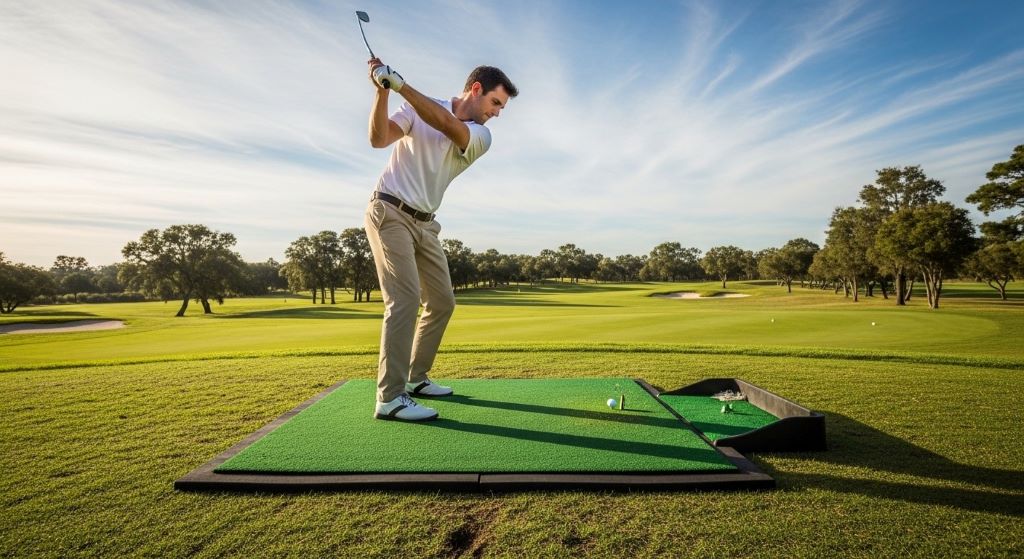
Protecting Your Clubs from Damage
Your practice mat should never harm your clubs. Unfortunately, many cheaper mats cause accelerated wear on clubfaces and shafts through excessive friction or hardness.
The firmness of the mat surface directly affects club wear. Extremely hard mats act like sandpaper on your clubface, removing grooves and finish over time. Conversely, mats that are too soft can catch your club, creating jarring impacts that stress shafts.
Quality mats use fibers that compress appropriately under club pressure. This compression reduces friction while still providing realistic resistance. The fibers should bend rather than scrape against your clubface.
Testing with your actual clubs before committing to a large purchase makes sense. Many retailers allow returns within a certain period. Use this opportunity to hit several hundred shots and examine your clubfaces for unusual wear patterns.
Consider using older clubs for mat practice if you’re concerned about wear. Many golfers keep a set of practice clubs specifically for mat work, preserving their premium clubs for actual rounds.
Regular mat maintenance also reduces club wear. Debris, dirt, and sand that accumulate in the fibers act as abrasives. Brushing and cleaning your mat regularly extends both its life and that of your clubs.
Considering Tee and Ball Compatibility
How well your mat works with tees and various golf balls affects its overall utility. Some mats excel for irons but prove difficult for driver practice.
Built-in tee holders offer convenience but limit flexibility. These molded cups hold tees at specific heights, which works well if those heights match your preferences. However, you can’t adjust for different clubs or personal preferences.
Rubber tee inserts provide more flexibility. These replaceable pieces accept standard golf tees, allowing you to adjust height as needed. When the inserts wear out, you can replace them without buying a new mat.
Some mats accommodate tees anywhere on the surface. The fiber density allows you to push tees directly into the mat material. This offers maximum flexibility but may create holes that enlarge over time.
Ball performance varies between mat types. Some mats hold range balls differently than premium balls. If you practice primarily with one ball type, ensure your mat performs well with those specific balls.
Practice ball options include foam, plastic, and regulation balls. Quality mats handle all these types, though foam balls obviously create less wear. Using foam balls for high-volume practice sessions can extend mat life significantly.
Evaluating Manufacturer Warranties and Support
The warranty offered reveals how confident a manufacturer is in their product’s durability. It also protects your investment should premature failure occur.
Length of coverage varies dramatically. Some manufacturers offer just 30 or 90 days, while premium brands may provide warranties of three years or more. Longer warranties generally indicate better construction and materials.
What the warranty covers matters as much as its duration. Some warranties cover manufacturing defects but not normal wear and tear. Others include replacement for weather damage or premature deterioration. Read the fine print carefully.
Customer service quality affects your overall experience. Research how responsive the company is to warranty claims. Online reviews often reveal whether manufacturers honor their warranties promptly or create obstacles.
Return policies provide another safety net. Being able to return a mat within 30 or 60 days if it doesn’t meet your expectations reduces purchase risk. Some companies even cover return shipping, though this is less common for heavy items.
Replacement part availability extends product life. Manufacturers that sell replacement tee inserts, backing pieces, or repair kits demonstrate commitment to long-term customer satisfaction.
Understanding Price Versus Value
Golf practice mats range from under one hundred dollars to well over a thousand. Understanding what justifies these price differences helps you make a smart investment.
Budget mats typically use thinner materials, simpler construction, and basic weather resistance. They might serve casual golfers adequately but often fail within a year of regular outdoor use. For occasional practice, they represent reasonable value.
Mid-range options balance cost and performance. These mats usually feature quality materials and construction methods that withstand several years of regular use. They represent the sweet spot for most serious amateur golfers.
Premium mats justify their cost through superior materials, advanced construction, extensive warranties, and performance that closely mimics real turf. Professional instructors and dedicated players benefit most from these investments.
Consider cost per year of use rather than just purchase price. A six-hundred-dollar mat lasting ten years costs sixty dollars annually. A two-hundred-dollar mat replaced every two years costs one hundred dollars per year.
Additional features affect pricing. Alignment aids, multiple hitting surfaces, or integrated ball return systems add convenience but increase cost. Decide which features you’ll actually use before paying extra for them.
Installation and Maintenance Requirements
Even the most durable mat requires some care to reach its maximum lifespan. Understanding maintenance needs helps you protect your investment.
Initial installation varies by mat type. Some require no setup beyond unrolling, while others need securing to a base or anchoring into the ground. Consider whether you’re comfortable with the installation requirements.
Regular cleaning extends mat life significantly. Brushing debris from the fibers prevents abrasive particles from accelerating wear. A stiff-bristled brush or even a leaf blower works well for routine cleaning.
Deep cleaning periodically removes embedded dirt and organic matter. Mild soap and water work for most mats. Avoid harsh chemicals that might damage fibers or backing materials.
Drying properly after wet weather prevents mold and mildew. If possible, prop the mat up to allow air circulation underneath. Some golfers flip their mats occasionally to ensure both sides dry thoroughly.
Winter storage protects your mat in harsh climates. While quality all-weather golf mats can survive winter outdoors, bringing them inside extends their life. Roll them fiber-side-out to prevent creasing.
Recognizing Quality Indicators
Certain features reliably indicate whether a mat meets professional standards. Learning to spot these markers helps you evaluate options effectively.
Fiber length and density create realistic feel. Look for fibers at least 1.5 inches long, densely packed to simulate turf. Sparse, short fibers indicate a budget product unlikely to perform well.
Backing thickness and quality reveal construction standards. Premium mats use backing at least a quarter-inch thick made from high-quality rubber compounds. Thin, hard backing suggests compromised durability.
Seam quality matters for larger mats made from joined sections. Clean, tight seams indicate careful manufacturing. Gaps or uneven seams suggest quality control issues.
Overall weight often correlates with quality. While not a perfect indicator, heavier mats typically use more substantial materials. Extremely lightweight mats usually sacrifice durability.
Professional endorsements or facility use provides social proof. Mats used at high-end teaching facilities or endorsed by respected instructors have typically proven themselves under demanding conditions.
Making Your Final Decision
After researching features and options, narrowing down your choice requires balancing multiple factors against your specific needs.
Assess your usage frequency honestly. Daily practice demands a more durable mat than weekly sessions. Casual golfers can sometimes succeed with mid-range options that serious players would wear out quickly.
Consider your climate and storage options. Golfers in mild climates who leave mats outdoors year-round need maximum weather resistance. Those who can store mats during harsh weather have more flexibility.
Evaluate your budget realistically. Remember that your practice equipment directly affects your improvement rate. Investing in quality makes sense if you’re serious about lowering your scores.
Think about your physical needs. Golfers with joint issues benefit from extra cushioning that reduces impact stress. Younger, healthy players might prioritize realistic feel over cushioning.
Read reviews from golfers with similar needs. Someone practicing twice daily has different requirements than a weekend player. Find reviewers whose usage patterns match yours.
Conclusion
Selecting durable outdoor hitting mat options requires evaluating multiple factors that work together to create a quality practice experience. Material composition, construction methods, weather resistance, and realistic performance all contribute to long-term satisfaction with your purchase.
The best all-weather golf mats combine tough synthetic fibers with robust backing materials that withstand years of outdoor exposure. They provide realistic ball response and club interaction that transfers to improved course performance. Additionally, they protect your clubs from excessive wear while cushioning your joints during extended practice sessions.
Remember that the cheapest option rarely proves economical over time. Investing in quality materials and construction pays dividends through years of reliable service. Consider your specific needs, including climate conditions, usage frequency, and storage capabilities, when making your selection.
With proper maintenance and care, a quality practice mat becomes an invaluable tool for game improvement. It allows you to refine your swing mechanics, test equipment changes, and maintain your skills regardless of weather conditions or time constraints. Choose wisely, and your practice mat will serve you well for many seasons.
Frequently Asked Questions
How long should a quality golf practice mat last with regular outdoor use?
A well-constructed mat used several times weekly should last three to five years outdoors, while premium models can exceed ten years. Lifespan depends on usage frequency, weather exposure, and maintenance. Mats left uncovered year-round in harsh climates wear faster than those stored during extreme weather. Regular cleaning and proper care significantly extend durability regardless of mat quality.
Can practicing on mats damage my golf clubs?
Quality mats designed specifically for golf should not damage your clubs when used properly. However, extremely hard or abrasive mats can accelerate clubface wear. The key is choosing a mat with appropriate firmness and fiber quality that allows realistic club interaction. Many golfers use older clubs for mat practice to preserve their premium set for course play.
What thickness works best for outdoor golf practice mats?
Most golfers find mats between one and two inches thick provide the ideal balance of cushioning and stability. Thinner mats may not adequately protect your joints during extended sessions, while excessively thick mats can feel unstable and compress unevenly. Your personal preference and any existing joint issues should guide your thickness selection within this range.
Do I need to bring my mat inside during winter?
Quality all-weather mats can survive winter outdoors, though bringing them inside extends their lifespan. If you live in areas with severe freeze-thaw cycles, indoor storage during the harshest months is recommended. At minimum, shake off snow accumulation and ensure proper drainage to prevent ice formation within the mat. Mats specifically rated for extreme weather can remain outside year-round.
How do I prevent my practice mat from sliding during use?
Stability solutions depend on your surface type. Heavy rubber backing works well on concrete or decks. For grass installation, choose mats with spike systems that anchor into the ground. Non-slip backing materials or separate grip pads provide traction on smooth surfaces. Additionally, simply choosing a heavier mat reduces movement. Some golfers build permanent platforms and secure their mats with Velcro for maximum stability.
Related Topics:
Top Safety Features in Modern Bike Helmets Explained: Schwinn Intercept Helmet Safety Spotlight
Finding the Perfect Wide Baby Shoes: Comfort First for Little Feet