
Key Takeaways
- Noisy pipes often result from trapped air, loose fittings, or high water pressure.
- Different sounds point to different underlying causes.
- Many pipe noises have simple, affordable fixes.
- Ignoring persistent noises can lead to bigger plumbing problems.
- Some noises require professional inspection to resolve safely.
Noisy pipes can be startling, especially when they happen suddenly. However, most banging, whistling, or rattling sounds have identifiable causes. Therefore, understanding these noises helps you find the right solution. This guide covers common causes of noisy pipes and practical fixes. You’ll also learn when a noise signals a bigger problem.
Water Hammer: The Banging Sound
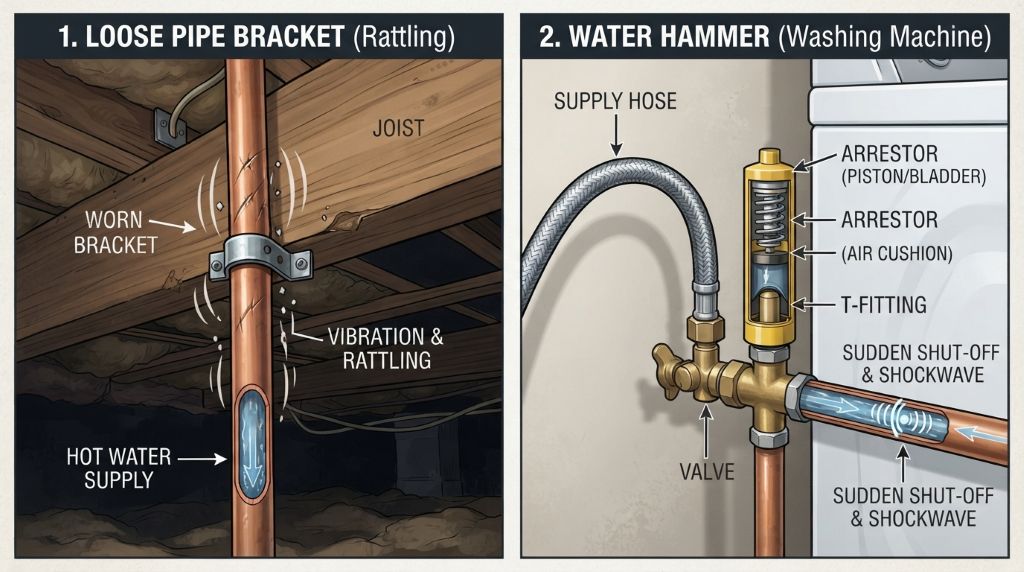
Water hammer is one of the most common and startling pipe noises. It produces a loud banging or thudding sound, often right after a faucet closes. Additionally, this noise can occur throughout the house depending on the plumbing layout.
This problem happens when water flowing through pipes suddenly stops. The moving water creates a pressure wave that slams against pipe walls. Therefore, this collision produces the distinct banging sound homeowners notice.
Water hammer often occurs after using a washing machine or dishwasher. These appliances use solenoid valves that close quickly during cycles. Additionally, quickly closing faucets can trigger similar effects throughout the plumbing system.
Watch for these signs of water hammer:
- Loud banging noises right after a faucet or valve closes.
- Sounds occurring consistently with specific appliances, like washing machines.
- Noise traveling through multiple pipes throughout the house.
- Vibrations felt through walls near affected pipes.
Water hammer arrestors offer an effective solution for this problem. These devices absorb the pressure wave using a cushion of air or gas. Additionally, installing them near problem appliances often resolves the noise quickly.
According to the International Association of Plumbing and Mechanical Officials, water hammer arrestors are a standard recommended solution for controlling pressure surge noise. This makes them a reliable first fix to try.
Ignoring water hammer over time can loosen pipe joints and cause leaks. Therefore, addressing this noise promptly protects your plumbing system from further damage.
High Water Pressure: The Whistling or Screeching Sound
High water pressure often produces a whistling or screeching sound within pipes. This noise typically occurs when water forces its way through narrow spaces. Additionally, this pressure can stress pipes and fixtures over time.
Excess pressure pushes water through valves and fittings faster than intended. This creates vibration and noise as water squeezes through smaller openings. Therefore, this whistling often happens near faucets or shut-off valves specifically.
Homes without a pressure regulator are especially prone to this issue. Municipal water supply pressure can vary and sometimes exceeds safe residential levels. Additionally, this excess pressure affects the entire plumbing system, not just one fixture.
Identify high water pressure noise through these signs:
- Whistling or screeching sounds coming from faucets or valves.
- Noise that occurs consistently, regardless of specific appliance use.
- Pressure that feels unusually strong when using fixtures.
- Noise increasing during peak usage times in the neighborhood.
Testing your water pressure with a simple gauge helps confirm this cause. Readings above eighty pounds per square inch generally indicate excessive pressure. Therefore, this test provides clear evidence before pursuing a fix.
Installing a pressure regulator solves this problem for most homes. This device maintains safe, consistent pressure throughout your plumbing system. Additionally, this fix also protects pipes and appliances from unnecessary long-term stress.
High water pressure left unaddressed can lead to pipe damage and leaks over time. Therefore, resolving this issue protects your entire plumbing system, not just eliminating the noise.
Loose Pipes: The Rattling or Vibrating Sound
Rattling or vibrating sounds often indicate pipes that aren’t properly secured. This noise typically occurs when water flows through the system. Additionally, this problem tends to worsen gradually as fittings loosen further.
Pipes are normally secured to walls, floors, or joists using brackets or straps. Over time, these fasteners can loosen due to temperature changes and vibration. Therefore, this gradual loosening allows pipes to move and knock against surrounding structures.
This noise commonly occurs in areas where pipes run through walls or under floors. Additionally, the sound often becomes more noticeable during high water flow, like showers. Temperature changes causing pipe expansion and contraction also contribute to this issue.
Recognize loose pipe noise through these characteristics:
- Rattling or knocking sounds during water flow.
- Noise appearing to come from within walls or floors.
- Vibration that increases with higher water usage.
- Sounds that seem to travel along the pipe’s path.
Locating the exact source often requires checking accessible areas like basements or crawl spaces. Additionally, you may need to open a small section of wall for pipes hidden behind drywall. Therefore, this troubleshooting step helps pinpoint the problem area.
Securing loose pipes with new brackets or foam padding typically resolves this noise. Additionally, adding insulation around pipes reduces both noise and temperature-related expansion. This combination often provides a lasting solution.
Leaving loose pipes unaddressed can lead to increased wear at connection points. Therefore, securing them properly prevents potential leaks from developing over time.
Trapped Air: The Gurgling or Sputtering Sound
Trapped air in your plumbing system often causes gurgling or sputtering noises. This sound typically occurs when you turn on a faucet or flush a toilet. Additionally, this issue commonly follows plumbing repairs or water main work.
Air enters plumbing systems through various means, including recent repairs or water shutoffs. When water service resumes, trapped air pockets move through the pipes. Therefore, this movement creates the gurgling sound many homeowners notice.
This noise often resolves on its own as air works its way out of the system. However, persistent gurgling may indicate a venting problem within your drainage system. Additionally, this distinction matters when deciding whether to seek professional help.
Watch for these signs of trapped air in pipes:
- Gurgling or sputtering sounds when using faucets.
- Sputtering water flow that clears up after a few seconds.
- Noise following recent plumbing repairs or water shutoffs.
- Gurgling from drains, which may indicate a venting issue.
Running your faucets for a few minutes often clears trapped air naturally. Starting with the highest faucet in your home and working downward helps this process. Therefore, this simple method resolves most air-related noise without professional help.
However, gurgling specifically from drains often points to a blocked or improperly installed vent pipe. This system allows air to enter drain lines, preventing suction that causes gurgling. Therefore, persistent drain gurgling may require professional inspection of your venting system.
Trapped air noise from faucets usually resolves quickly and doesn’t indicate a serious problem. However, ongoing drain gurgling deserves further investigation to rule out venting issues.
When Noisy Pipes Signal a Bigger Problem
While many pipe noises have simple fixes, some indicate more serious underlying issues. Recognizing these situations helps you avoid costly damage down the road. Additionally, certain noises warrant immediate professional attention.
Persistent banging that doesn’t respond to basic fixes may indicate more than simple water hammer. This could suggest loose pipes combined with high pressure, compounding the problem. Therefore, professional diagnosis becomes necessary when multiple causes overlap.
Noises accompanied by other warning signs deserve extra attention. Combined with low water pressure or visible leaks, unusual sounds suggest a more urgent problem. Additionally, this combination often points to pipe damage requiring prompt repair.
Consider calling a professional for these situations:
- Banging that continues despite installing a water hammer arrestor.
- Noises combined with visible leaks or water stains.
- Persistent whistling even after pressure regulator installation.
- Sounds accompanied by declining water pressure over time.
- Unusual noises from a water heater specifically.
Water heater noises deserve special mention, as rumbling or popping sounds often indicate sediment buildup. This buildup can reduce efficiency and shorten the unit’s lifespan. Therefore, professional flushing or inspection helps address this specific noise source.
According to plumbing industry guidelines, persistent or worsening pipe noises often indicate developing problems that benefit from early professional evaluation. This makes timely inspection a wise investment.
Ignoring persistent unusual noises can lead to pipe damage, leaks, or appliance failure over time. Therefore, addressing these sounds promptly protects your home from more significant plumbing issues.
Conclusion
Noisy pipes have several common causes, from trapped air to high water pressure. Understanding the specific sound helps you identify the right solution quickly. Additionally, many fixes are simple and affordable for most homeowners to handle. For example, if you recently replaced a fill valve and your toilet is still taking too long to refill, learning how to fix a slow-filling toilet after replacing the fill valve can help you troubleshoot the issue without unnecessary repairs. However, persistent or unusual noises sometimes signal a bigger underlying problem. Therefore, addressing pipe noises promptly protects your plumbing system and prevents costly damage.
Dealing with noisy pipes at home? Contact a licensed plumber today for a professional inspection and lasting solution.
Frequently Asked Questions
What causes a loud banging noise when I turn off a faucet?
This is usually water hammer, caused by a sudden pressure wave in the pipes.
Is it normal for pipes to make noise after plumbing repairs?
Yes, trapped air often causes temporary gurgling that clears up on its own.
Can high water pressure damage my pipes?
Yes, excessive pressure stresses pipes and fittings, leading to leaks over time.
How do I fix rattling pipes behind my walls?
Securing loose pipes with brackets or foam padding usually resolves this noise.
When should I worry about noisy pipes?
Worry if noises persist after basic fixes or come with leaks or low pressure.