
Cycling is one of the most enjoyable and rewarding activities a woman can take up. Whether you ride for fitness, commuting, or adventure, comfort on the bike matters a great deal. One item that can make a huge difference is a good pair of shorts. However, not all shorts are created equal. Choosing the right pair of bike shorts pockets women riders rely on can be tricky if you do not know what to look for.
This guide will walk you through everything you need to know. You will learn about pocket types, padding, fit, fabric, and more. By the end, you will feel confident choosing a pair that suits your riding style perfectly.
Why Pockets Matter on Women’s Cycling Shorts
Pockets on cycling shorts are more than just a nice-to-have feature. They serve a real purpose on every ride. When you are out on the road or trail, you need easy access to small but important items. Think about your phone, energy gels, keys, or a credit card. Carrying these items in a jersey pocket works sometimes, but it is not always convenient.
Additionally, pockets on shorts keep your essentials close to your body. This means less shifting and bouncing compared to items stored in a bag or backpack. Therefore, good cycling shorts with storage can genuinely improve your riding experience.
Many women also prefer the independence that pockets offer. You do not need to rely on a saddle bag or handlebar bag for short rides. Instead, your shorts carry everything you need.
Understanding the Different Types of Pockets
Before you buy, it helps to understand that not all pockets are the same. Different designs serve different purposes. Here is a breakdown of the most common types you will find.
Back Pockets
Back pockets sit at the lower back or waistband area. They are great for flat, small items like energy gels or folded bills. However, reaching them while riding can be a challenge. They work best for items you only need to access during a stop.
Side Leg Pockets
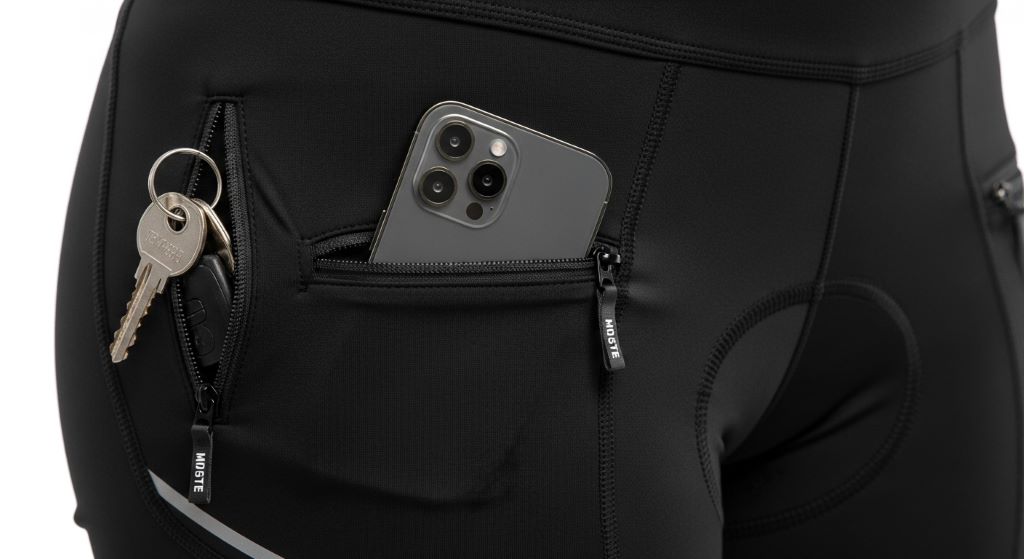
Side pockets along the outer thigh have become very popular. They are easy to reach even while pedalling. Many riders use them for a smartphone. However, make sure the pocket is snug enough to hold your phone securely without bouncing.
Zippered Pockets
Zippered pockets offer the most security. Your items stay in place no matter how rough the terrain gets. They are ideal for keys, cards, and cash. On the downside, zippers can sometimes add slight bulk or chafe if poorly placed.
Waistband Pockets
Waistband pockets are hidden inside the waistband itself. They are perfect for small flat items like a key or a card. They stay out of sight and rarely affect the fit of the shorts. Additionally, they distribute weight evenly, which feels comfortable over long distances.
Checking the Padding: The Chamois Explained
The chamois is the padded insert built into cycling shorts. It is perhaps the most important feature for comfort. A good chamois reduces pressure on your sit bones and protects soft tissue during long rides. Without it, saddle soreness can make cycling miserable.
Women-specific chamois designs are shaped differently from men’s. They are wider at the sit bone area and shorter in length. Therefore, always look for shorts labelled as women-specific rather than unisex if comfort is your priority.
Chamois thickness varies too. Thicker pads work well for long road rides. Thinner pads suit mountain biking or commuting where you may walk around more. Choose based on your typical ride length and style.
Also note that cycling shorts are worn without underwear. The chamois is designed to sit directly against your skin. Wearing underwear underneath defeats the purpose and can cause chafing.
Fabric and Compression: What to Look For
The outer fabric of cycling shorts plays a big role in performance. Most quality shorts use a blend of spandex and nylon or polyester. This combination offers stretch, support, and moisture management.
Compression is another key factor. Compression fabric holds the chamois in place and supports your muscles. It also reduces vibration from the road, which helps with fatigue. However, compression should not feel restrictive. If the shorts feel too tight around your waist or thighs, size up.
Look for fabric that wicks sweat away from your body. This keeps you cool and prevents rashes. Additionally, anti-odour treatments in the fabric are a bonus for longer rides or hot weather.
Some shorts also feature UV protection. If you ride outdoors regularly, this is worth considering. Sun exposure on your legs adds up over time, so built-in UPF protection is a practical benefit.
Getting the Right Fit
Fit is everything when it comes to cycling shorts. Shorts that are too loose will bunch and chafe. Shorts that are too tight will restrict movement and dig in. Finding the right fit takes a little effort but makes a world of difference.
Start by measuring your waist and hips. Compare these measurements to the brand’s size chart. Sizes can vary significantly between brands, so always check the chart rather than assuming your usual clothing size.
The leg length matters too. Bib shorts and regular shorts come in different lengths. Longer leg lengths tend to stay in place better during a ride. They also reduce the chance of the hem riding up.
Leg grippers at the hem keep the shorts from moving. Look for a wide, soft silicone gripper band. Narrow or stiff grippers can leave marks on your skin or feel uncomfortable over time.
If possible, try the shorts on before buying. Sit in a cycling position to check for any pulling or pressure points. If buying online, read reviews from women with a similar body type for a better idea of fit.
Bib Shorts Versus Regular Shorts
Bib shorts have shoulder straps that hold the shorts up. Regular shorts rely on a waistband. Both have pros and cons, and the best choice depends on your preferences.
Bib shorts are generally more comfortable for long rides. They eliminate any pressure at the waist and keep the chamois perfectly in place. However, they can be inconvenient for bathroom breaks on the trail or road.
Many women’s bib shorts now come with clever designs that make bathroom stops easier. Some feature a drop seat or a bib with a front opening. Therefore, do not dismiss bibs just because of this concern.
Regular shorts with a waistband are simpler and more versatile. They are easier to put on and take off. They also look more casual, which suits commuting or light recreational riding. Additionally, they pair easily with a normal top rather than a cycling jersey.
Key Features to Check Before You Buy
When shopping for women’s cycling shorts, keep this list of features in mind.
- Pocket placement and accessibility: Can you reach the pockets while riding without discomfort?
- Pocket security: Do the pockets have zips or tight elastic to hold items safely?
- Chamois quality: Is the pad women-specific, and does it match your ride length?
- Fabric quality: Does the material wick moisture and offer good compression?
- Leg grippers: Are the grippers wide, soft, and unlikely to leave marks?
- Waistband comfort: Does the waistband sit flat without digging in or rolling down?
- Durability: Are the seams flatlock stitched to prevent irritation during long rides?
Matching Your Shorts to Your Riding Style
Different types of cycling call for different features. Road cyclists need aerodynamic, lightweight shorts with minimal bulk. Mountain bikers often prefer looser-fitting liner shorts with an outer shell for a more casual look and added protection.
Commuters benefit from shorts that look good off the bike too. Some designs resemble regular athletic shorts on the outside while still including a chamois. These are called hybrid or casual cycling shorts.
For gravel riding or bikepacking, cycling shorts with storage are especially useful. You may be far from a bag drop or support vehicle, so carrying essentials on your body becomes very important. In this context, having multiple secure pockets can be a real advantage.
Spin class or indoor cycling has different needs again. You still want a good chamois and comfortable fabric, but pockets matter less in a studio setting. Focus more on fit and padding quality for stationary riding.
Budget Versus Performance: Finding the Balance
Cycling shorts range widely in price. You can find basic options for under twenty dollars and premium pairs for over two hundred. However, the most expensive option is not always the best choice for every rider.
For beginner or casual riders, a mid-range pair in the fifty to eighty dollar range usually offers a solid chamois and decent fabric quality. Additionally, many mid-range brands now include practical pockets, which was once only a feature of high-end shorts.
If you ride frequently or for long distances, investing in quality pays off. A better chamois will protect you better, and superior fabric will last longer. Think of it as an investment in your comfort and health.
Do not ignore sales and seasonal discounts. Many premium brands offer end-of-season sales. Waiting for these can get you a top-quality pair at a fraction of the original price.
Conclusion
Choosing the right women’s cycling shorts is about more than just style. It is about comfort, function, and convenience on every ride. Pockets make a real difference, and understanding the types available helps you pick the right design for your needs.
Remember to consider the chamois first, since this is the feature that most directly affects your comfort. Then look at fabric quality, fit, and the type of pockets that suit your riding style. Whether you prefer back pockets, side leg pockets, or zippered options, there is a pair out there for you.
Take your time to compare options, read reviews, and check size charts carefully. A well-chosen pair of shorts will reward you with mile after mile of comfortable, convenient riding. Investing a little effort in your choice now will make every future ride much more enjoyable.
Frequently Asked Questions
1. Are cycling shorts with pockets worth it for casual riders?
Yes, absolutely. Even on short casual rides, having somewhere to store your phone or keys is very convenient. Pockets save you from needing a bag and keep your essentials secure while you ride. Many affordable shorts now include at least one or two practical pockets.
2. How do I know if the pockets are large enough for my phone?
Check the product description for pocket dimensions. Many brands list the pocket size in their specs. Additionally, user reviews often mention whether a specific phone model fits. Side leg pockets are usually the most phone-friendly, but measure your phone first to be sure.
3. Can I wear cycling shorts for activities other than cycling?
You can, but it depends on the type of shorts. Road cycling shorts with a thick chamois are quite specialised and can feel awkward for walking or running. However, hybrid or casual cycling shorts are designed for versatility. They look and feel like athletic shorts and work well for light gym sessions, walking, or commuting.
4. How should I wash women’s cycling shorts to make them last longer?
Wash them in cold water on a gentle cycle. Turn them inside out before washing to protect the fabric and chamois. Avoid fabric softeners, as they can break down the materials and reduce moisture-wicking performance. Air dry whenever possible, and avoid tumble drying on high heat.
5. Is it better to buy bib shorts or regular waistband shorts for long rides?
Bib shorts are generally considered superior for long rides. They keep the chamois in place better and eliminate waistband pressure. However, modern women’s bib shorts often feature designs that make bathroom stops easier. If you are new to cycling or prioritise convenience, regular waistband shorts are a perfectly good starting point.
Related Topics:
How to Use an Indoor Cycling Trainer for a Road Bike Safely
How to Choose a Helmet for Road Cycling and Daily Commutes