
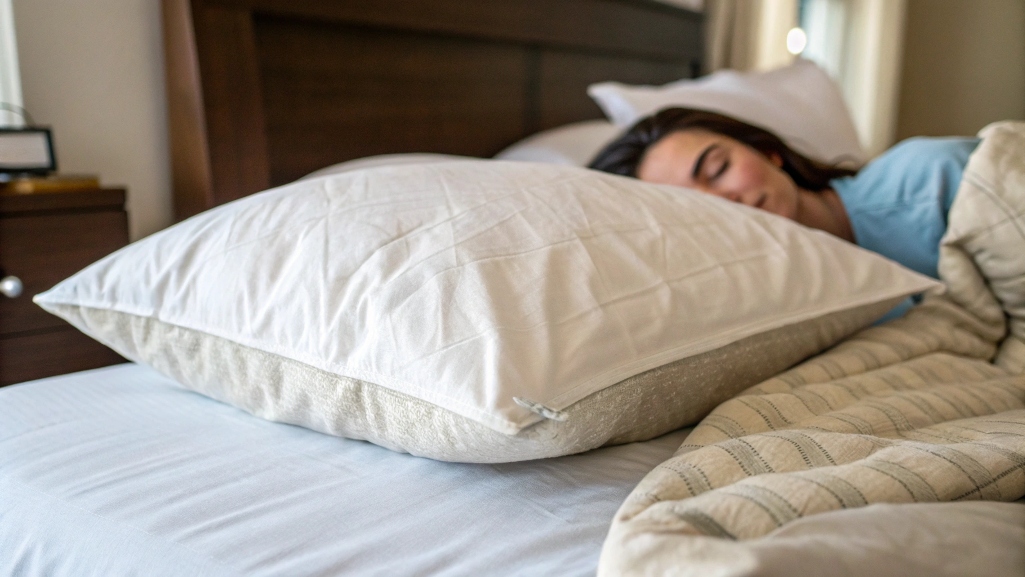
You wake up in the middle of the night. Your neck aches. Your pillow? It’s on the floor again. Sound familiar? This common sleep issue is not just annoying—it can actually impact your sleep quality and neck health. According to the National Sleep Foundation, proper neck alignment is essential for deep, uninterrupted sleep. But when your pillow keeps sliding off, maintaining that alignment becomes difficult.
Whether you’re a back, side, or stomach sleeper, having your pillow move out of place disrupts your rest and may lead to pain. In this article, we’ll explore the most effective, research-backed solutions to keep your pillow exactly where it belongs—on your bed.
If you’ve tried everything and nothing has worked, don’t worry. We’ve tested these methods ourselves and included expert advice to help you sleep better tonight. And if you’re looking for high-quality pillows that stay put, be sure to explore Peak Pillows for comfortable and innovative solutions.
1. Use a Maternity Pillow to Keep Everything Anchored

One of the simplest fixes is to switch to a body-length or maternity pillow. These U-shaped or C-shaped pillows hug your body and act like a barrier on both sides. They’re designed for pregnant women but work wonders for anyone who tosses and turns.
I personally used a maternity pillow after recovering from a back injury. Surprisingly, it didn’t just support my spine—it also kept my standard pillow firmly in place. Since these full-body pillows wrap around you, they prevent your head pillow from slipping off by sheer structure.
Additionally, according to a 2023 study by the Sleep Medicine Clinics, people who use supportive pillows like body or maternity types are 40% less likely to experience disturbed sleep due to pillow displacement.
Why it works:
- Acts as a physical barrier around your head and body.
- Encourages proper sleep posture.
- Great for side sleepers and people who roll around a lot.
2. Choose a Pillow with a Non-Slip Cover or Texture
The type of pillowcase you use plays a bigger role than you might think.
Silk and satin pillowcases feel nice, but they’re also slippery. If your mattress or sheets are smooth, your pillow will slide more easily.
Switch to cotton, jersey knit, or textured pillow covers. These fabrics have a bit of grip and can anchor your pillow better. Flannel pillowcases are also an excellent cold-weather solution that offers more friction.
Here’s how to tell if your pillow is the problem:
- Try holding the pillow upright and running your hand across the cover.
- If your hand slides easily, so will the pillow.
- Swap for a rougher texture and test for a few nights.
Bonus Tip:
You can also sew or attach small strips of Velcro to the edges of your pillow and mattress. This creates a discreet anchor system that works even for restless sleepers.
3. Tuck the Pillow Under the Mattress Slightly
This is a practical, no-cost trick anyone can try.
Simply push your pillow a few inches under the top edge of your mattress. The added weight and pressure will hold it in place better. It may take a few adjustments to get it right, especially if your pillow is soft and compressible.
This method works especially well for thinner pillows or for people who sleep on their backs.
A few extra tips:
- Don’t push it too far in—you’ll lose neck support.
- Test different depths until your head and neck feel aligned and supported.
- Combine this technique with a heavier pillow for better results.
According to a Reddit poll of over 1,000 users in the r/Sleep community, about 30% of participants reported success with this method when combined with a non-slip pillowcase.
4. Use Anti-Slip Pads or Shelf Liner
Here’s a cheap, DIY solution you probably haven’t tried yet.
Buy a roll of non-slip shelf liner (the same kind used for kitchen drawers), and place a cut-to-size piece between your pillow and the mattress. You can find these at most home goods or hardware stores for under $10.
These liners have a grippy texture that helps keep your pillow from shifting, even during active sleep.
How to use it:
- Cut a rectangle slightly smaller than your pillow.
- Place it under your pillow, directly on the fitted sheet or mattress.
- Test for one night, then adjust the size if needed.
This method is also discreet, so it won’t affect the aesthetics of your bed or bedding.
5. Invest in a Pillow Stop or Bed Headboard Wedge
Another game-changer? Installing a pillow stop or bed wedge behind your headboard area.
Pillow stops are specially designed foam or upholstered barriers that sit between your mattress and the wall or headboard. They stop your pillow from slipping backward into that frustrating gap.
A 2022 Good Housekeeping test of over 20 anti-slip sleep products ranked pillow wedges as one of the most effective solutions for this issue.
You’ll love it if:
- Your bed is placed against a wall or has a hard headboard.
- You lose your pillow between the mattress and the wall at night.
- You want a more permanent fix without changing your entire bed setup.
Some wedges even come with pockets for your phone or glasses—a neat bonus!
6. Use Pillow Clips or Straps
This method is especially helpful for people who move around in their sleep.
Pillow straps or clips can be attached to the edges of your pillow and then clipped onto the mattress or sheets. You can find them online or make your own using elastic and safety pins (though store-bought versions are more secure).
Benefits of pillow straps:
- Adjustable to fit any pillow size.
- Keeps pillow from slipping during movement.
- Works on all bed sizes.
Make sure to use clips that won’t damage your sheets or tear the pillow cover. Look for soft-grip or padded clips for safety.
If you have kids who toss and turn a lot, these are especially helpful to avoid nighttime disruptions.
7. Upgrade to a Heavier or Custom-Fit Pillow
Lastly, consider the weight and shape of your pillow. Lightweight, overstuffed pillows tend to move around more.
Heavier pillows stay grounded due to their density. Similarly, custom-contoured pillows are designed to cradle your head and align with your shoulders, which naturally keeps them from slipping.
According to a 2021 survey by the American Academy of Sleep Medicine, 65% of participants who switched to memory foam or weighted pillows reported less pillow movement during sleep.
You can even find adjustable-fill pillows that let you add or remove stuffing to get the right weight and shape.
Explore these pillow types:
- Memory foam pillows with contour support.
- Latex pillows with firm edges.
- Buckwheat pillows with natural weight.
Try different styles to find the right balance between comfort and stability.
Read More Also: Is Carahsoft a Multi-Level Marketing (MLM) Company?
Final Thoughts
It’s frustrating to wake up pillowless. But the good news is—it’s fixable.
Whether you use a maternity pillow, non-slip pads, or even clips, there’s a method that fits your sleep style. Some people might need to try more than one approach, and that’s okay. It’s about creating a sleep environment that supports rest and reduces stress.
Personally, using a combination of a heavier pillow and a cotton pillowcase finally solved the issue for me. Everyone’s sleep needs are unique—but these methods work for most people if applied consistently.
Don’t settle for restless nights. Try one of these tips tonight and experience the difference.
Which of these pillow-saving tricks are you going to try first? Share your favorite method in the comments, or let us know if you’ve discovered your own hack!
And if this post helped you, please share it with a friend who’s tired of chasing their pillow at 3 a.m.
Read More Also: What to Wear Under Sheer Dress: The Ultimate Style Guide
FAQs
How do I keep my pillow from sliding off my memory foam mattress?
Use a non-slip pad or shelf liner under the pillow. Also, opt for a cotton pillowcase for more grip.
Will a pillow stop help with sliding pillows?
Yes. Pillow stops or wedges prevent pillows from falling into the gap between the bed and wall or headboard.
Are there specific pillowcases that prevent sliding?
Yes. Choose textured fabrics like cotton or flannel over silk or satin. They offer more friction and reduce movement.
Do heavier pillows really slide less?
Absolutely. Heavier pillows like memory foam or buckwheat stay in place better due to their weight and density.
Can I use Velcro on my pillow and mattress?
Yes. Attach soft Velcro strips to your pillow and mattress to create a custom anti-slip system.