
News



Trending
Why Accurate Measurements Matter in Every Outdoor Hobby (and How to Get Them)
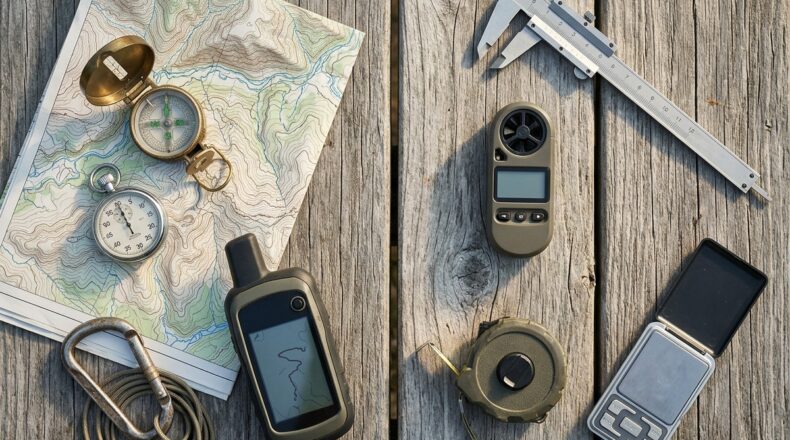
A bass that looks like a solid five-pounder on the boat can shrink to a three-and-a-half on a certified scale....



Info Insight
Why Accurate Measurements Matter in Every Outdoor Hobby (and How to Get Them)
A bass that looks like a solid five-pounder on the...

Budget-Friendly Things to Do in Phoenix This Fall
Fall in Phoenix is a reward for surviving summer. Temperatures...

Long Reads
Why Accurate Measurements Matter in Every Outdoor Hobby (and How to Get Them)
A bass that looks like a solid five-pounder on the boat can shrink to a three-and-a-half on a certified scale. That gap matters if you're...
Latest Updates
What is Geopolitics?

What is Geopolitics? There are several reasons to know the nature and essence to encode the modern world and know how to read it in a present key and, above all, in a future key. In this moment of the strong upheaval of international peace, certain professional figures are increasingly sought after.
To prevent the damage caused by international terrorism, the military forces and the actions of world intelligence have great weight. Still, the experts in Geopolitics who can outline the trends of the wars and identify the current and eligible hot zones are no less important.
What is Geopolitics?
It is the basic tool of Geopolitics experts that allows you to make sense of the world so that you can predict certain scenarios (including many critical ones) and act accordingly to limit the damage. How do we move in this sector? Let’s start with the right contextualization.
It is a matter in fashion, not for the reasons why technological clothes or accessories are in fashion but for the right and desired evolution of the study of the Western world. In the face of international terrorism, it has been realized that it is also and above all resisted by analyzing the borders and movements of individual nations.
Definition
The characteristic of geopolitics is that it analyzes power conflicts in specific spaces. Its definition explains that:
For this reason, he crosses different skills and disciplines in his reasoning: from history to geography, from anthropology to economics, and others. It is not science: it does not have laws, it does not have predictive faculties. It deals with the study of specific cases, for which it is necessary to compare the different representations of the subjects competing for a given territory, on various scales and in different temporal contexts, and between the respective projects, all equally legitimate.
Operation
Not only a geopolitical map but much more is behind how Geopolitics works. According to industry experts:
To compare competing points of view, not to affirm the truth of one. An operation that is possibly up to the decision-maker or narrators, in the sense of those who produce propaganda (narratives). Geopolitics is therefore not the heritage of a political doctrine, an academic discipline, or a specific historical period. It has always existed and will cease only with the end of the human species. Except perhaps continue in the competitions between artificial intelligence that have emancipated themselves from their inventors.
The subject is truly fascinating and socially very useful. But how do you become a professional in geopolitics?
Geopolitical maps
Now that the weight of a geopolitical map in the world balance is clear, here is a post-graduate study that will give you the tools to become an expert on it.
The master
Behind the first level master in “Contemporary military history 1796-1960,” there is the desire to train new geopolitical professionals. The approach, like the thematic area, requires, is multidisciplinary.
Subjects
What does the professional study in Geopolitics? Here is the list of the thematic areas of this didactic process:
- The history;
- Theoretical considerations:
- History and Social Sciences;
- Reconstruction of a military event;
- The Classic War;
- The asymmetric warfare;
- Peace support operations;
- Considerations;
- History and Social Sciences;
- Geographic Map between art and politics;
- The Geopolitical Maps;
- Cards for totalitarianism;
- War Cards,
Who is it for?
Are you sure that these studies on the geopolitical map and geopolitics, in general, can help you? Here is who the study is formally addressed to:
- Belonging to the armed forces (Army, Navy, Air Force);
- Belonging to the law enforcement agencies;
- High school teachers;
- Public officials of extraterritorial realities such as Unesco;
- Researchers, scholars, and lovers of historical subjects;
- Graduates in humanities and law;
You may also like to read, Why young people should vote and do teens should vote?
How to run and count a good election campaign?

Presenting a candidacy and being elected in the elections is not an easy task, but there are many aspects that you must take into account to win the vote of the electorate. Likewise, it will be essential to surround yourself with a human team prepared to carry out this arduous mission. Thus, we want you to know the basic principles of political communication and explain how to run a good electoral campaign.
Steps to run a good election campaign
In the first place, it is important to highlight that political communication has particular features depending on the country or region where the elections are held and based on the electoral system and type of government. However, most of the traits will be common and applicable to most elections.
Therefore, before starting the electoral campaign, it will be essential that you have:
- A strong electoral program with interesting proposals and real objectives
- A team of people to form a list
Second step:
You should look for the strong points that characterize your candidacy or party since these will be the advantages that can make you differentiate yourself from the rest of the electoral representatives and that the voters choose to grant you their vote.
You can base your campaign on some generic feature of the party or focus more specifically on other specific aspects of your electoral program, which will surely be interesting to those who must go to vote.
3rd step:
Next, you will have to create a slogan or slogan that serves as the campaign’s emblem and around which the electoral campaign will revolve. So, you must come up with a phrase that summarizes your philosophy or the goal you want to achieve; It should be noted that there are repeatedly used concepts in electoral slogans such as “solutions” or “trust.”
Similarly, slogans based on “change,” “progress,” “novelty,” “alternative” … are common in the case of parties that previously did not governor were in opposition, so its strong point will be to contribute new ideas.
Another fundamental point for the electoral campaign
It will be to have good photographs of the candidate and the group of people that make up the list. To do this, you must find a suitable setting that is consistent with the proposals you defend and hire a professional who can advise you on all photographic issues and take snapshots.
It will also be very important that you decide how you will contact and impact voters. There are currently many other methods in addition to the traditional electoral posters and postal mail.
Thus, the Internet and social networks are the order of the day and are essential tools for any electoral campaign, especially to reach certain audiences such as younger voters. In this way, it may be interesting to create a Facebook page or a Twitter profile to communicate your proposals and interact with the electorate.
How to count electoral abstention
At the polling station, a register of Census voters who come to vote is kept. Voter abstention does not influence the results of an election. Not so the null votes or the blank votes.
Steps to follow:
- Electoral abstention occurs when a person does not go to exercise their right to vote. Since they are all registered in the Census, the voters who have not gone to vote can be tracked. Although it can be counted, voting abstention does not affect the results of an election, nor is it penalized.
- For a vote to be valid, the ballot must be correctly filled out and inserted in the envelope. On the other hand, if you want to exercise your right to vote as a voter, you must be registered in the Electoral Census and present your ID or passport. Finally, if you are not satisfied with any of the political options presented in the elections, you can vote blank. This is done by inserting the envelope into the empty ballot box, with no votes inside.
- Not all ballots deposited in a ballot box are valid in an election. When they have been altered or damaged, they are considered invalid votes and are discarded.
- Thus, the rest of the votes that could have been cast but have not done so (that is, discarding blank votes and invalid votes) are abstentions: there has been no intention to participate in the democratic process in any way.
Often the results of abstention (expressed in percentage) are used as a representative indicator of the democratic functioning of a country.
You may also like to read, Why young people should vote and do teens should vote?
I want to be a politician: What to study?

Political Sciences, Sociology, Law, and Economics are careers that those who want to dedicate themselves to politics tend to study. However, they also need transversal skills such as communication, stress management, and tolerance for criticism.
Have you followed the last presidential campaign in the United States? Would you like to be the one to manage the coronavirus crisis in our country or decide on what to invest public money in through budgets?
In the first place, it must be clarified that currently, the law does not require having certain studies to engage in politics. Now, this does not mean that you do not need to train. Quite the contrary. You need to prepare and conscientiously. Every ruler must have specific training to hold a political position. Because a said person has an assigned role of great responsibility and requires specific and extensive knowledge to be able to occupy that public position that meets the different social demands.
The most common careers to dedicate to politics
Many politicians and politicians have reached the top of their careers through different university degrees. Among the most common, Political Science and Sociology, Law and Economics, and Business Administration stand out. However, this basic knowledge must be complemented with others, as suggested by the different experts consulted.
To exercise as a politician or politician, one must know how to analyze and interpret the political, economic, legal, and social reality and understand change situations. As well as understanding the structure and functioning of political and legal institutions, public administrations and political systems.
Knowing the basics of democracy and understand the historical dimension of political and social processes and their current impact are other important issues to exercise political.
A president is called to manage a nation’s public resources and be the guarantor of good foreign relations, especially in the globalized world in which we live, and that each time will be more prominent.
The transversal competencies to be a good politician
Specific training, very important. What studies should be taken to acquire the knowledge, skills, and attitudes that the person who wants to dedicate himself to politics should possess?
Specific knowledge is very important to make decisions quickly, effectively, and efficiently. Still, there are also a series of transversal competencies without which it would be very difficult to become a great politician or politician. Get to know them and get ready to be the best candidate!
1. Communication and public speaking
He must communicate decisions to citizens clearly and coherently so that everyone sees his proposals as necessary. It is necessary to transmit information, ideas, problems, and solutions to both specialized and non-specialized audiences.
2. Negotiation techniques and tolerance for criticism
Related to the previous competence is the art of negotiation, that is, knowing how to negotiate, agree, and dialogue to be able to carry out public policies, as well as to be able to approve or take the different measures and decisions that are given with the maximum consensus political and institutional possible.
This transversal competence also implies listening, empathy, and the ability to tolerate criticism. On and off your team. This point, I think, is key to extend it to those you love most. It should be remembered that it is not a dish of good taste for a mother to have to listen to opinions through the media fierce criticism and mockery towards the personal or, worse still, having to observe graffiti insulting your daughter or son on the way to the market.
3. Change and stress management
Every professional in politics is under great pressure, which generates a high level of stress. That is why a good politician has to know how to manage the frustration of working under pressure.
4. Honesty and ethics
Finally, but not least, there is honesty, ethics, thinking about the common good, and not only the best for oneself. It is the most important, transparency in management and honesty. All politicians should have this characteristic to avoid lies, fraud, and extortion. In this way, decisions and projects would be fair. In addition, there would be no work to obtain, only power and prestige.
The sources consulted highlight the importance of those dedicated to politics knowing how to capture the needs of the citizens they represent and how to satisfy them. Of course, always with a critical spirit and without falling into hasty, risky decisions or populist measures may lead to protests, riots, or any type of social conflict.
You may also like to read: Joe Biden’s Long and Rich Political Career
Joe Biden’s Long and Rich Political Career

Joe Biden elected President of the United States. The ex-senator, former vice-president of Obama has a long political career behind him. Take a look back at 48 years of politics that led him to the supreme position.
After an interminable election and a vote count which, as expected, took longer than usual due to the massive number of postal votes, Joe Biden is finally elected 46th President of the United States. After four days of suspense, the Democratic candidate and former vice-president of Barack Obama was given the winner with at least 273 voters, thanks to success in the key state of Pennsylvania, according to major American media including CNN and the New York Times.
The Democrat, who will turn 78 on November 20, will find a fractured America, which he will try to “heal”, as he healed his own wounds. Back on 48 years of a political career which led him to the supreme position. Years filled with victories, blunders, and personal tragedies.
1972, the first term
Joe Biden was 30 years old when he first became a senator in 1972 in the state of Delaware. He manages to narrowly win thanks to the votes of the African-American community, with whom he has been able to forge links. A few days before his inauguration, his wife and one-year-old daughter die in a car accident. Joe Biden, devastated, thinks of suicide but manages to get up and continues alone to raise his two other sons.
1987, the first attempt
First presidential attempt. Joe Biden is entering the Democratic primary. But he was quickly accused of plagiarism. He is accused of having taken over the speech of a British politician, Neil Kinnock, without quoting it. Faced with these accusations, Joe Biden opts for a strategy that he will keep throughout his life: confess his wrongs and apologize. He withdraws from the race despite being one of the favorites.
1987, president of the Judicial Commission of the Senate
1987-1995. For eight years, Joe Biden chaired the powerful Senate Judiciary Commission. In 1991, he notably directed the hearings in the Clarence Thomas affair and tried to block his appointment to the Supreme Court, without success. Clarence Thomas is accused by one of his former colleagues, Anita Hill, of sexual harassment. The Commission buries this testimony and refuses to hear any more.
1994, co-author of the Crime Law
Biden Crime Law. Joe Biden is the co-author of the criminal law known as the Violent Crime Control and Law Enforcement Act. The text is controversial within the Democratic Party because it increases the number of police on the streets and would contribute to the mass incarnation. A law supported at the time by President Bill Clinton.
2000, a law against violence against women
Joe Biden co-drafts a law against violence against women, the Violence Against Women Act. In particular, it allows the creation of a special office within the Ministry of Justice and allocates a budget to investigate these crimes. Despite legislative battles over its legal status, it is still in effect in the United States. Joe Biden even made it a campaign argument.
2003, at the ElysEe
Joe Biden received at the Élysée by French President Jacques Chirac. Year when relations are strained between the two countries because of the outbreak of the war in Iraq. Joe Biden was then a senator and vice-chairman of the Foreign Affairs Committee.
2007, a second attempt
Joe Biden launches a second time in the Democratic primary. In front of him, the young Barack Obama and the experienced Hillary Clinton. In this image, during a debate in 2007 in South Carolina. Later, a blunder, with which he is familiar, will force him to withdraw from the race. Joe Biden says of Barack Obama:
“You’ve got the first well-articulated, smart, clean, beautiful-looking African American.”
He apologizes and gives up. But this blunder is far from harming him because he then approaches Barack Obama to apologize. The two men become friends.
2008, vice-president
Barack Obama chooses Joe Biden as vice president. He knows that Biden will know how to speak with all the senators he has known for some for thirty years. Joe Biden is a man of compromise, a pragmatist who knows how to listen to both camps.
2012, again vice-president
Four more years. Barack Obama is re-elected and leaves with the same team. He keeps Joe Biden as vice president. Springboard for the next election.
2015, death of his son
A new drama strikes Joe Biden. His son Beau, named as his political heir, Attorney General of Delaware, died of devastating cancer. After this disappearance, very affected, Joe Biden decides not to run for the Democratic primary in 2016, leaving Hillary Clinton to face Donald Trump.
2019, the joint “Built Back Better” program
One of Joe Biden’s talents is his great political intelligence. He knows you can’t win alone. As soon as he wins the Democratic primary, he looks to his opponents yesterday, Elizabeth Warren and Bernie Sanders to create a common agenda. “Built Back Better” is a stimulus plan that relies on green energy and aims in particular to make university free for the poorest families. To build it, Joe Biden, the moderate, agreed to negotiate with the leftmost fringe of his party.
2020, a Homeric campaign
Invested by the Democratic Party, Joe Biden embarks on the greatest political race of his life: the presidency. The battle against Donald Trump is tough and long. The result takes time to emerge because postal votes slow down the counting process. But Joe Biden has patience and persistence and is biding his time. His strengths: empathy, sense of compromise, his connection with the African-American community (and Barack Obama), his humility – especially in the face of the Covid-19 pandemic, for which he advocates the strictest health measures -, made the difference in this election. And the urge to get rid of Trump too.
Why is it important to be involved in politics?
Because it gives life to our democracy, it is the call to preserve peace and it is the best way to punish or reward the management of a ruler, among other reasons.
Political participation is a step towards strengthening democracy and towards the inclusion and representation of all. It has many ways of being carried out: voting for a candidate or a political party, belong to a political party; participate in open meetings; support or reject draft revocation of the mandate. Participate in a popular initiative that leads to creating a law, among other mechanisms.
Why is it important to be involved in politics?
If you still need reasons to commit to political participation and its mechanisms, here are 5 reasons that reveal its importance and show you why it is the answer to so many problems and complaints.
Political participation is what gives life to our democracy
In every democracy, citizens must see their interests represented and the best way is through active and informed participation. A functional democracy manifests itself through representativeness: how citizens are identified in those they choose and how visible their interests and concerns are.
The Constitution supports this. The first article says that the US states are democratic, participatory and pluralistic, and the second, that one of the state’s purposes is to facilitate the participation of all in the decisions that affect them.
The long-awaited representativeness is achieved using participation mechanisms, active intervention in accountability and responsible voting, among many others.
Political participation is what can preserve peace
In addition to citizen political participation, democracy is based on dialogue between citizens and inclusion. The latter is achieved when all people enjoy the same rights, freedoms and opportunities (art. 13 of the Constitution), and one of the ways to guarantee it is through the proper representation of all.
Finally, conflicts happen when there are marginalized groups in decision-making and the delivery of well-being and rights. One of the causes of the armed conflict in the US on which there is consensus is the continuous exclusion of an important part of the population in the design of public policies and representation.
Today in post-conflict, and – hopefully – with the lesson learned, the entire country must ensure the comprehensive representation of citizens. This representation is achieved through citizen political participation: that everyone participates in decision-making, in the design of public policies and in the control and balance of the management of those elected to make the will of the people a reality.
Political participation is the best way to reward/punish the management of officials
The mistrust and lack of participation have been taken advantage of by politicians and institutions. If a mayor/mayors or governor does not fulfil his / her promises, there is a revocation of the mandate. There is also the punishment that can be provided to you through the denial of the vote the next time you run for a popularly elected office. The same happens with parties that endorse candidates with a history of corruption or members of corporations who do not represent those who elected them.
Finally, it is with the votes that the performance of a politician is rewarded or punished, said the political philosopher Karl Popper.
Other participation mechanisms can put those who do not do their work on the waist. Citizens can request the holding of an open council if they want to open communication channels with councils, assemblies, mayors, or governors; or call a repeal referendum to reverse an unpopular law against the benefit of the majority.
With citizen political participation, a bridge is created between active citizens and those who make decisions.
Political participation empowers citizens
Democracy faces a vicious circle that does not allow its advance. On the one hand, there is the citizenry: “why should I vote if the same old people are going to win?” And on the other, “nobody is taking care of me, nobody is monitoring me,” say the rulers.
But then whose fault is the state of affairs? Of the two parts. There must be a co-responsibility between citizens and rulers: who chooses and who is elected and controls and is controlled.
Citizen political participation is the best way to take control of what is happening in the state: who is elected or who is not, or which projects and programs are supported and which are rejected. We criticize politicians without realizing that something of us is being represented there, among those in power.
Fine Points For The Job Searchers Before Planning To Attend The Interview Session

In the past few months, the job market has been flourishing competitively. Even when the economy decreases, there has been an augmented number of job seekers available in the present job market. However, some professionals were incredibly triumphant in conducting effective and fast job searches. There are many kinds of back-office jobs available both for educated and illiterate persons. The educated person can able to find a suitable job by searching online or participating in job fairs. If you are wishing to search for a new job then you can make use of top job sites to search for your jobs and career. There are some guidelines for first-time job seekers for driver jobs.
Tips For Fresher To Have Good Job Search:
Attempting to find a new career is not always simple. There are distinct actions available to make it simpler and easier. There are some facts and information available to narrow down your search and make you energetic and optimistic to attend the interview with a positive impression. The first impression seems to be the last so you must attract your interviewer with your pleasing speech and personality. You must know some fruitful points before attending the interview.
1. Know About Company History:
When your career interview is within a locality that you are unknown with, assure that you pre-plan the way in advance. There exists plenty of nervousness on the way, as you ought to understand exactly how to prevent all kinds of complications on the day of your interview. Undergo proper research about the company and its history through search engines, by doing so you will understand better about the specific company and their project work.
2. Look Neat And Clean For Interview:
Assure that your appearance matches the job. If it is a professional job, then go in nearly groomed without earnings and excessive jewelry and neat dress. Add up a resume cover letter if you are applying for the job, this needs to involve some fine information regarding you and why you are suitable for your position. Include more words about your confidence and why you did not apply resume for other individual companies.
3. Find Suitable Employment To Match Your Field:
Moreover, Prior start hunting for a specific job consider your area of interest. If you are following your first job after completion of graduation then you might previously be known which position you are going to apply for. Moreover, young adults and teens who are continuing their education might want to take into consideration of their interests to find employment opportunities which they will enjoy. Have several copies of your resume, recommendation letters as well as other supporting documents in a folder or briefcase to be ready in case there is more than one interviewer.
4. Have Proper Eye-Contact:
Take plenty of rest and eat well before going for the interview so that you can be at the top performance. Give a handshake to all your participants and have eye contact throughout the whole process to display your self-confidence. Never talk anything wrong about previous employees. If you talk bad about one then your potential employers will most like view you as a complainer.
5. Converse Boldly And Clearly:
Speak properly and clearly with an even tone without making use of complicated words. Nothing creates you sound less intelligent other than misusing words, use of slang, poor grammar, and many others. Sit erect and fit your leg firmly down on the floor to show your interest and however do not be very stiff which shows you look nervous.
6. Don’t Lie:
Do not exaggerate or lie on anything since honesty is the best policy even if it indicates admitting a shortcoming. Some opportunities can make you be a fraud if you lie on anything. In some situations react to the words by smiling or nodding so that they create a pleasing appearance on your face. You should not sit like a robot as will make the interview displeased.
7. Free To Ask Your Queries:
You can ask questions freely if you are not clear. It is always vital to ask for clarification instead of sitting simply by having blank look on your face. If you are not passionate about the position after the interview, simply say no.
Staying Informed about UTV News

Riding off-road vehicles like side by side rides and UTVs does not mean that riders are out of touch with all of the latest news and information related to the side by side riding. It is a total misconception that side by side riders are too busy away from society out somewhere splashing around in the mud, hopping puddles, and taking on all kinds of terrain that they cannot be in touch with the rest of the world. Even though the point of being out there in the woods, the desert, and other places is to get away from the hustle and bustle of the comings and goings of society, side by side riders and UTV enthusiasts can still remain in touch with the rest of the world, especially when it comes to updates and alerts related everything UTV.
Economic, social, and political issues raised by the COVID-19 pandemic

Faced with the COVID-19 or SARS-CoV-2 pandemic, I propose to understand and interpret the social, political, and economic dimensions of this pandemic in order to be able to think about the various edges of the crisis and the disputes that exist around its possible overcoming.
The power and importance of open access
Shortly after the COVID-19 genome sequence was identified by a Chinese state laboratory, it was published openly. The consensus is generalized: open, free, and free access to information about the new coronavirus accelerated the investigations and made it possible in a few weeks to obtain advances that would have taken months if trade restrictions had prevailed. On this level, cooperation and open access worked. Will the knowledge, tests, treatments, and vaccines produced thanks to this open access also be openly and publicly available? Open access is not the same as open science. And here public policies and the behavior of the scientific community will be decisive.
Social distancing or collective processing of the crisis
At this point, the debates multiply. Some authors claim that the virus isolates and individualizes. However, the collective applause, the art on the balconies, the popular dining rooms, or the community spaces in the neighborhoods that try to continue to function without breaking the distancing or isolation measures seem to contradict the absolute nature of this statement. As part of the same phenomenon, we should mention the multiplying groups and chats and the intensification of the use of social networks as a way of communicating with others in a state of isolation.
Faced with a crisis with strong subjective and emotional dimensions, the discourse of distancing or isolation would not be the most appropriate and rather it would be necessary to bet on spaces for reflection, encounter, and collective processing of the situation. How to do it by maintaining prevention measures that prevent the spread of infections. And preserve the groups most vulnerable to the virus?
The economy or life?
This crossroads was raised by many governments and economists and reproduced in the media and articles of various kinds. Given this, we could ask ourselves: is it possible to think and develop an economy for life?
I heard that an economy in crisis recovers but that a lost life does not return. If this is so, it will be necessary to dispute how and under what logic this recovery is carried out.
Faced with isolation, teleworking appears as a solution both to maintain activities in a seclusion scenario. And to ensure certain minimum productivity for companies. But can all workers telecommute? Obviously not and this depends both on the type of activity. And the working conditions and habitat that these workers have. Thus, teleworking is presented as an element that can increase precariousness and social and labor inequalities.
Disbelieving or terrified
People react to the pandemic from two poles: skeptics who think that everything is the product of some plan designed in a laboratory, an international conspiracy, or a hypochondriacal exaggeration, and those who feel invaded by terror and maintain that the situation is apocalyptic, terminal.
Some data could support fear: for this virus, there is no vaccine, there is no known treatment or cure, its transmission or contagion rate is more than double that of the most frequent and known influenza and its mortality rate is between 50 and 100 times higher than that of that disease.
But to dismiss the place of the media in creating social panic would be naive at best.
Perhaps, for this reason, the World Health Organization, speaking of a second epidemic. The infodemic or epidemic of over information, which includes false or malicious news, fake news.
Faced with the pandemic, the policies followed by governments can be characterized according to their priorities, as Malamud and Levy Yeyati warn.
China put the state and social responsibility first, Europe trusted society and the states seemed to go along with it. And the United States bet on the market and extreme individualism.
The United States, Brazil, and the United Kingdom deny the crisis and abandon their populations; although the latter country had to abruptly and urgently rectify its policies of “nothing happens” and “letting go, letting go”.
Will a reconfiguration of contemporary multilateralism emerge from the policies followed in the pandemic? It seems that China or Cuba (perhaps also Russia) present themselves to the world as countries of solidarity, while the United States and the European powers close in on themselves and look at other nations with selfishness and suspicion. With few exceptions, cooperation, or at least coordination among countries, was absent.
Many governments take advantage of this unforeseen situation to deepen their authoritarian traits and the careless policies of large majorities.
In some countries, states of siege or curfews are established, even before prevention measures or the strengthening of public health, which seem to aim at dissipating street demonstrations and mobilizations that have taken over squares and cities in Latin America and the Caribbean in the last months.
Brazil, Bolivia, Ecuador, or Peru are examples of this. In Chile, the government allocated more resources to re-equip the carabineros for social repression than to strengthen the health system in the face of the escalation of coronavirus cases. Faced with the war against the new coronavirus, militarism grows in the region as a specter that is once again projected on the societies, the resistance, and the most oppressed groups.
Is it possible to maintain mandatory social isolation with informal economies at 40 or 50%?
Undoubtedly, this is a question that will be answered in practice with experience. But it seems that it is possible with the expansion of support and containment of social policies. Perhaps it is time to think about a universal minimum income. For example, as the promoters of the Tobin Tax and ATTAC have been proposing for some decades.
However, I would like to discuss the belief that isolation is something for the middle or upper-middle sectors and that prevention measures are not followed in popular neighborhoods because poverty generates chaos or anomie. In principle, it is perhaps not idle to point out that the resistance of the population with higher incomes to comply with isolation became more than evident. In contrast, my experience with the most deprived populations allows me to affirm that neighborhoods, communities. And territories deploy care strategies in other ways, with other modalities. Of course, overcrowding makes social distance difficult, of course, informal and precarious workers need income every day. But the persistence and potency of community social organization cannot be underestimated. Also to ensure prevention, if necessary, through isolation or distance. The inhabitants of popular neighborhoods comply with it by creating other forms of care and prevention.
The public policies adopted in the face of the pandemic deepen social inequalities.
In an unequal society, crises occur, impact, and are handled unevenly. Within the multidimensional inequalities, we will highlight some.
Gender and care. As Karina Batthyány points out, the measures of social isolation that are being applied in most countries highlight one of the weakest links in society: care. Although women are the most affected, the solution is not only to distribute care more equitably between men and women at the individual level; but because its importance and value are recognized. And can also be provided in part by society and with the State assuming its responsibility.
Generational. Here we can point out both the dissimilar ways in which the virus affects older and young people. As well as the different relationships of different generations with the digital world. The possibility of autonomy of the youngest that is limited by conditions of isolation, and the situation of precarious jobs (home delivery, jobs in shops), which tend to employ young people and who often continue to work without the possibility of isolation or protection.
Educational. One aspect of these inequalities can be derived from generational inequalities since not all students have the same conditions and possibilities of assuming school tasks at home. Unequal is the housing conditions, the possibilities of parents to accompany the exercises, technological resources, access to materials, shipments by the schools. Not all schools and universities have the same technological resources. And this reinforces inequalities that are expressed in their students and teachers and in their environments. Educational inequalities are also experienced by teachers, who are exposed to greater demands. And the expenditure of their own resources that are almost never recognized or rewarded.
Prospects
Milton Friedman stated that, in a crisis, the actions that are carried out depending on the ideas that “float in the air.” Naomi Klein recovers this in her book The Shock Doctrine. The rise of disaster capitalism (2007) to indicate the induced character of some crises or disasters in contemporary capitalism that feed the shock doctrines.
If we paraphrase Friedman revisited by Klein and passed through the Gramscian sieve, one of the main challenges we have during and after the pandemic is to make “the ideas that float in the air” not those of neoliberal, extractivist and predatory capitalism. A hegemonic dispute.
Based on what we analyze here, it seems that one of the certainties of a non-neoliberal (hopefully non-capitalist) way out of this pandemic will be the strengthening of public health systems. Another should be the universal basic income that guarantees a minimum income for the entire population.
Likewise, this conjuncture reopens and fuels discussions and disputes for the public, usually. How to continue to dispute public space with empty streets? Raoul Vaneigem argues that confinement does not abolish the presence on the street, it reinvents it.
Persevering in the public and common and putting life at the center is a proactive path for today. And for what is to come.
Assuming that prevention is fundamental at this time and perhaps in the years to come. It seems that social responsibility and solidarity. Together with comprehensive, situated, territorialized, unique. And effective public policies (not only state) are a possible path of change. of logic and construction of alternatives. I am referring to other public policies to counteract the social mechanisms of production. And reproduction of inequalities and to advance towards the production of diverse equality, which recognizes and is configured from the difference.
Why political science is related to psychology?

This branch of psychology helps us to better understand society and political science. Political science with psychology is one of those areas of psychology that, not having defined an object of study as other branches of it. That seems to be blurred in the ambiguity of the social sciences. However, that does not mean that it is not relevant.
Why young people should vote and do teens should vote?

Whatever your political preference, it is very important that you participate in the next elections for the governor to be held in your country and express your political will at the polls. Here are some reasons why young people should vote? You should reserve a time on your agenda and be a participant in history by casting your vote when your country’s election will come.
Why young people should vote?
Voting is a right of every citizen. You should vote for your favorite person for these reasons:
Because it is your obligation as a citizen
Among the obligations that we acquire as citizens indicated in Article 36 of the Constitution is the participation of each of us in popular elections. If we want a different country, attached to the rules, part of the task is to do our job. Civic culture is built and inherited.
To change the stereotype of the young
For years, young people have been classified as social groups disinterested in social events, which do not participate in elections. Let’s prove the opposite. Because young people do participate, we are interested in what is happening and we look for representatives who work for the common interests and not for a few. Let’s be the force at the polls!
Because it’s your right
Democracy is a right that we win through the struggle of dozens of years. Being able to choose and speak out about what we want for our country is not something gratuitous. In various parts of the world, voting remains a luxury for millions of women, youth, and minority groups. Let us appreciate the value of democracy and participate in this electoral exercise, which allows us to make ourselves heard and express our opinions, suggestions, and disagreements.
It is important to note that, for the first time, in these elections, citizens living abroad will exercise their right to vote. Although they do not reside in the country, they are still citizens and contribute to strengthening democracy, benefiting family, and friends who still live here. Therefore, the vote is important and they have the tool to cast their vote wherever they are.
Do teens have to vote?
It is possible to imagine that a whole state accepts it, which means that 16-year-olds could also vote in federal elections since the states are in charge of the electoral system.
Adolescents may not make the most sophisticated decisions. We value democracy not because it produces the “best” politics. Although sometimes it doesn’t.
The value is giving all interests an opinion in government decisions and providing an opportunity for political participation.
If it were up to me, I would lower the minimum voting age to at least 14. So, anyone would have a chance to vote on at least one ballot before graduating from school.
The presidential election may be the best incentive to make voting a habit. We believe in universal voting rights for two reasons: All citizens must be able to support their interests and all citizens must enjoy their own will.
And both apply to those who are 16, or even 14, years old. It also applies to those who are 18 or 21, or for that matter, 50 or more. The practical reason for allowing more teens to vote is voting and not voting forms habits.
As it is now, 18 is an unfortunate age to choose for the first time. People tend to have more the habit of voting if they have stable lives rooted in their communities. This is not the best description for many of the young people between 18 and 21 years.