
Sleep quality depends on many factors that people often overlook. Temperature, noise levels, and air quality all play crucial roles in restful nights. However, one element frequently goes unnoticed until problems arise: humidity levels. The moisture content in your sleeping space affects everything from your breathing to your skin health.
Many people struggle with uncomfortable sleeping conditions without understanding the root cause. Waking up with a scratchy throat, dry skin, or congestion often signals improper humidity levels. Fortunately, addressing this issue doesn’t require expensive equipment or complicated solutions. Affordable options exist that can transform your sleeping environment dramatically.
Understanding how to optimize moisture levels in your sleeping area creates lasting benefits. Better sleep leads to improved health, increased energy, and enhanced daily performance. Moreover, the right humidity prevents damage to furniture, electronics, and wooden items in your room. This guide explores practical, cost-effective methods for achieving ideal conditions.
Understanding Ideal Humidity Levels
The human body thrives within specific environmental parameters. Research shows that relative humidity between 30% and 50% creates optimal sleeping conditions. This range supports respiratory health while preventing mold growth and dust mite proliferation. Additionally, it helps maintain comfortable skin moisture without creating dampness.
Levels below 30% create various problems that disrupt sleep and health. Low moisture causes nasal passages to dry out, leading to increased susceptibility to infections. Furthermore, it irritates throat tissues and can trigger asthma symptoms. Your skin loses moisture faster, resulting in itching and discomfort that interrupts rest.
Conversely, humidity above 50% introduces different challenges. Excess moisture encourages mold spores and bacteria growth. These organisms thrive in damp environments and can cause serious health issues. Moreover, high humidity makes rooms feel stuffy and uncomfortable, even at proper temperatures.
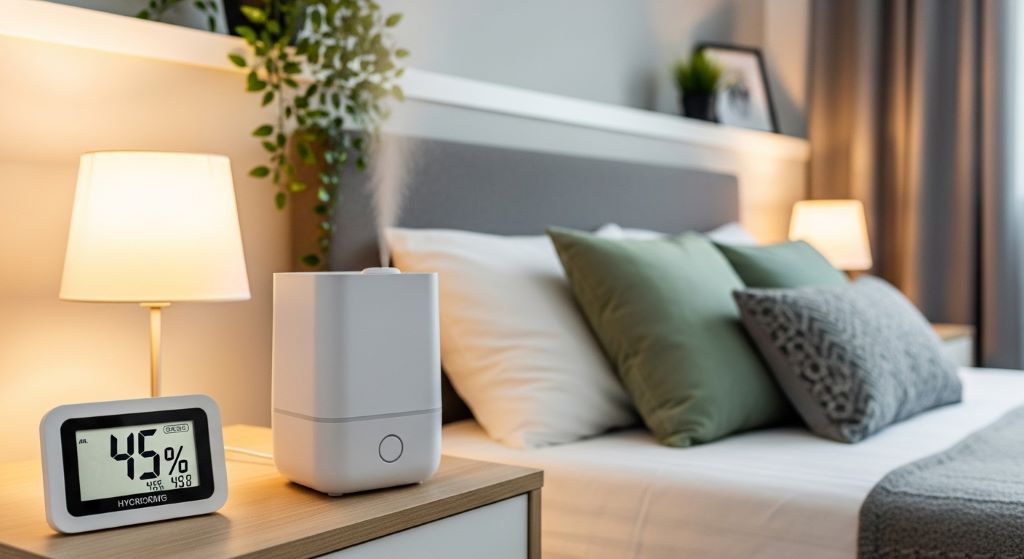
Measuring current conditions helps you understand what adjustments are needed. Simple hygrometers cost less than ten dollars and provide accurate readings. Place one in your bedroom to monitor levels throughout different seasons. This data guides your humidification strategy effectively.
Seasonal variations significantly impact indoor moisture levels. Winter heating systems dramatically reduce humidity, sometimes dropping it below 20%. Summer air conditioning can also decrease moisture content. Therefore, monitoring and adjusting throughout the year ensures consistent comfort.
Recognizing Signs of Inadequate Humidity
Your body provides clear signals when bedroom comfort suffers from improper moisture levels. Learning to recognize these symptoms helps you address problems quickly. Pay attention to physical indicators that suggest environmental imbalances.
Morning symptoms offer the most obvious clues. Waking with a dry mouth or sore throat indicates insufficient moisture overnight. Additionally, nosebleeds or bloody nasal discharge suggest severely low humidity. Cracked lips that persist despite lip balm use also point to environmental dryness.
Skin changes reveal long-term humidity issues. Persistent dry, flaky skin that doesn’t respond to moisturizers needs attention. Increased static electricity when touching objects or getting into bed also signals low moisture. Furthermore, worsening eczema or psoriasis often correlates with inadequate humidity.
Respiratory problems frequently stem from improper moisture levels. Increased coughing, especially at night or upon waking, suggests irritation from dry air solutions requirements. Sinus congestion without other cold symptoms may indicate environmental factors. Moreover, snoring can worsen in overly dry conditions as nasal passages constrict.
Environmental clues within your bedroom provide additional evidence. Wood furniture developing cracks or separations indicates extremely low humidity. Houseplants requiring more frequent watering than usual suggest dry conditions. Additionally, wallpaper peeling at edges or paint cracking signals moisture problems.
Electronic devices can also reveal humidity issues. Increased static shocks when using phones or computers indicate dry conditions. Musical instruments, particularly wood ones, going out of tune more frequently suggests environmental stress. These signs help you assess conditions even without measurement tools.
Choosing the Right Budget Humidifier
Affordable humidifiers come in several types, each with distinct advantages. Understanding these differences helps you select the best option for your needs and budget. Consider room size, maintenance preferences, and specific health concerns when deciding.
Evaporative humidifiers use fans to blow air through wet wicks or filters. These self-regulating devices automatically adjust output based on current humidity. They’re energy-efficient and relatively quiet during operation. However, they require regular filter replacements and weekly cleaning to prevent bacterial growth.
Ultrasonic humidifiers create fine mist using high-frequency vibrations. These units operate almost silently, making them ideal for light sleepers. Additionally, they consume less electricity than evaporative models. The main drawback involves potential white dust from minerals in tap water. Using distilled water eliminates this issue.
Steam vaporizers heat water to create warm mist. These simple devices cost the least initially and kill bacteria through boiling. However, they consume more electricity and can increase room temperature slightly. Furthermore, hot steam creates burn risks, making them unsuitable for homes with children or pets.
Impeller humidifiers use rotating disks to fling water into diffusers. These budget-friendly options produce cool mist without heating elements. They’re safe around children and consume minimal power. Nevertheless, they can be noisy and require daily cleaning to prevent mold growth.
Size considerations affect performance and value significantly. Small units work well for bedrooms up to 300 square feet. Medium-capacity models handle spaces between 300 and 500 square feet. Oversized humidifiers waste water and energy in small rooms. Conversely, undersized units run constantly without achieving desired humidity levels.
Setting Up Your Humidifier Effectively
Proper placement maximizes humidifier effectiveness while preventing problems. Location impacts both performance and safety in important ways. Follow these guidelines to optimize your setup and avoid common mistakes.
Distance from your bed affects comfort and safety. Position the unit at least three feet away from where you sleep. This prevents direct mist exposure that can dampen bedding or cause discomfort. Additionally, it reduces noise disruption from water bubbling or fan operation.
Elevation improves mist distribution throughout the room. Place humidifiers on nightstands, dressers, or small tables rather than directly on floors. Higher positions allow mist to disperse before settling. Moreover, elevated placement prevents water damage to carpets or flooring from potential leaks.
Clearance around the unit ensures proper airflow and prevents moisture damage. Leave at least 12 inches of space on all sides of the humidifier. Avoid placing units against walls or in corners where air circulation is limited. Furthermore, keep them away from curtains, papers, or anything that shouldn’t get damp.
Surface protection prevents furniture damage from moisture exposure. Use waterproof mats or trays underneath humidifiers to catch drips and condensation. This simple precaution saves expensive furniture from water rings or warping. Additionally, it makes cleaning spills much easier.
Electrical safety requires careful attention during setup. Never place humidifiers where they might get knocked into sinks or tubs. Use grounded outlets and avoid extension cords when possible. Moreover, ensure cords don’t create tripping hazards, especially in dark bedrooms at night.
Maintaining Your Humidifier for Optimal Performance
Regular maintenance prevents problems and extends equipment lifespan significantly. Proper care also protects your health by preventing bacterial or mold contamination. Establish simple routines that keep your humidifier functioning effectively.
Daily tasks take minimal time but provide maximum benefits. Empty any remaining water each morning to prevent bacterial growth in stagnant water. Rinse the tank with clean water before refilling. Additionally, wipe down exterior surfaces to remove dust or moisture buildup.
Weekly cleaning removes mineral deposits and prevents contamination. Disassemble the unit according to manufacturer instructions. Soak removable parts in white vinegar for 20-30 minutes to dissolve mineral buildup. Then scrub all surfaces with a soft brush, paying special attention to corners and crevices.
Deep cleaning every month ensures thorough sanitization. Use hydrogen peroxide or diluted bleach solution to kill any remaining bacteria or mold. Rinse all parts thoroughly multiple times to remove cleaning product residue. Allow everything to air dry completely before reassembling.
Filter maintenance varies by humidifier type. Evaporative models require filter replacement according to manufacturer schedules, typically every 1-3 months. Check filters weekly for mineral buildup or discoloration. Some filters can be rinsed and reused, while others need replacement. Therefore, keep spare filters on hand.
Water quality significantly impacts maintenance needs. Distilled water prevents mineral deposits that clog components and create white dust. If using tap water, descale your humidifier more frequently. Additionally, consider using demineralization cartridges designed for your specific model.
Optimizing Humidity Levels Throughout the Day
Strategic humidifier operation balances comfort with efficiency. Running units constantly wastes water and electricity while potentially over-humidifying spaces. Smart usage patterns maintain ideal conditions without excess.
Timing humidifier operation maximizes benefits during critical periods. Start running your unit 1-2 hours before bedtime to reach optimal levels by sleep time. This preconditioning creates comfortable conditions without overnight over-humidification. Additionally, it allows you to assess comfort and adjust settings before sleeping.
Monitoring humidity helps prevent over-humidification problems. Check your hygrometer regularly and adjust humidifier output accordingly. Most budget models offer adjustable mist settings. Lower output during humid days and increase it during dry periods. This responsive approach maintains consistent comfort.
Seasonal adjustments account for changing outdoor conditions. Winter typically requires more humidification due to heating systems. Spring and fall may need minimal supplemental moisture. Summer sometimes needs no humidification at all. Therefore, be prepared to pause use during humid months.
Room ventilation affects humidity retention and air quality. Crack a window slightly during humidifier operation to prevent excess moisture buildup. This allows fresh air circulation while maintaining adequate humidity. However, close windows during extremely cold or dry weather to conserve moisture.
Nighttime settings should prioritize quiet operation and safety. Use lower mist settings that provide adequate moisture without excessive noise. Ensure the tank has sufficient water to run through the night without refilling. Moreover, verify that automatic shut-off features work properly before sleeping.
Complementary Strategies for Bedroom Comfort Enhancement
Humidifiers work best when combined with other environmental controls. These additional measures create comprehensively comfortable sleeping conditions. Moreover, they often cost nothing to implement while providing significant benefits.
Houseplants naturally increase humidity through transpiration. Spider plants, Boston ferns, and peace lilies release moisture while purifying air. Place several plants around your bedroom for cumulative effects. Additionally, they add aesthetic value and improve overall air quality.
Water bowls placed strategically around the room provide passive humidification. Put shallow dishes on radiators or near heat sources for faster evaporation. Change water daily to prevent bacterial growth. This simple method supplements mechanical humidifiers effectively.
Shower steam can temporarily boost bedroom humidity. After showering, leave the bathroom door open to let moisture disperse. This works especially well for adjacent bedrooms. However, monitor levels to avoid over-humidification from this method.
Laundry drying indoors releases significant moisture into the air. Hang damp clothes in your bedroom overnight occasionally during dry periods. This provides substantial humidification without electricity costs. Nevertheless, ensure adequate ventilation to prevent mustiness.
Reducing heat loss preserves both warmth and humidity. Seal drafts around windows and doors with weather stripping. Use heavy curtains to insulate against cold outdoor air. Additionally, these measures reduce heating costs while maintaining comfortable conditions.
Troubleshooting Common Humidifier Problems
Even well-maintained humidifiers occasionally develop issues. Understanding common problems and solutions prevents frustration and ensures consistent performance. Address these challenges promptly to maintain bedroom comfort.
White dust accumulation indicates mineral content in water. Switch to distilled water or install a demineralization filter. Clean all surfaces thoroughly to remove existing deposits. Additionally, consider humidifiers specifically designed to minimize mineral release.
Musty odors signal bacterial or mold growth inside the unit. Perform immediate deep cleaning with disinfectant solutions. Increase cleaning frequency going forward. Moreover, ensure the unit dries completely between uses to prevent organism growth.
Inadequate mist output suggests several possible problems. Check water levels and refill if necessary. Clean or replace clogged filters that restrict airflow. Additionally, verify that mist nozzles aren’t blocked by mineral deposits.
Excessive noise disrupts sleep and indicates mechanical issues. Check for proper assembly of all components. Ensure the unit sits on a level, stable surface. Furthermore, clean fan blades and moving parts that might create friction.
Water leakage creates safety hazards and property damage. Inspect seals and gaskets for cracks or deterioration. Tighten all connections and ensure proper tank seating. Replace damaged components immediately to prevent continued leaking.
Health Benefits of Proper Humidity
Maintaining optimal moisture levels provides numerous health advantages. These benefits extend beyond immediate comfort to long-term wellness. Understanding these effects motivates consistent humidity management.
Respiratory health improves dramatically with proper humidity. Moist air helps thin mucus, making breathing easier and reducing congestion. Additionally, it soothes irritated airways and reduces coughing. People with asthma often experience fewer symptoms in properly humidified environments.
Immune function benefits from adequate moisture levels. Dry air solutions implementation creates conditions where viruses spread more easily. Proper humidity helps maintain the protective mucus barriers in your nose and throat. Therefore, you’re less susceptible to colds and flu.
Skin health thrives in balanced humidity conditions. Adequate moisture prevents excessive water loss from skin cells. This reduces dryness, flaking, and irritation naturally. Moreover, it can decrease eczema flare-ups and other skin conditions.
Sleep quality improves when breathing comes easily through the night. Proper humidity prevents the dry throat and congestion that disrupts rest. Additionally, comfortable skin doesn’t itch or feel tight, allowing deeper sleep. These factors combine to create genuinely restorative rest.
Allergy symptoms often decrease in properly humidified spaces. While you might think moisture worsens allergies, the opposite is true within optimal ranges. Adequate humidity prevents nasal passages from becoming irritated and overly reactive. However, levels must stay below 50% to prevent mold growth.
Budget-Friendly Humidifier Maintenance Tips
Maintaining humidifiers affordably ensures long-term cost-effectiveness. Smart strategies reduce ongoing expenses without compromising performance. These tips help you maximize value from your investment.
Homemade cleaning solutions work as effectively as commercial products. White vinegar dissolves mineral deposits naturally and inexpensively. Hydrogen peroxide provides excellent disinfection at low cost. Additionally, these products lack harsh chemicals that might irritate respiratory systems.
Filter longevity extends through proper care and maintenance. Rinse reusable filters weekly to remove surface buildup. Soak them monthly in vinegar solution to maintain efficiency. Replace only when they become brittle, discolored, or ineffective despite cleaning.
Water choices impact long-term costs significantly. While distilled water prevents problems, it increases ongoing expenses. Consider installing a home water filter that removes minerals. This provides suitable water for humidifiers at lower long-term cost.
Energy efficiency reduces electricity costs over time. Use timers to run humidifiers only when needed. Choose models with adjustable output to avoid wasting power. Additionally, proper maintenance ensures units operate at peak efficiency.
Preventive care avoids expensive repairs or replacements. Never let humidifiers run dry, which damages heating elements or pumps. Store units properly during off-seasons to prevent deterioration. Moreover, address small problems immediately before they become major failures.
Conclusion
Maintaining proper humidity in your bedroom transforms sleep quality and overall health. Budget humidifiers provide effective dry air solutions without requiring significant financial investment. Understanding ideal moisture levels, recognizing problem signs, and choosing appropriate equipment creates the foundation for success.
Proper setup, regular maintenance, and strategic operation maximize humidifier effectiveness. Complementary strategies like houseplants and improved insulation enhance results further. Additionally, addressing problems promptly prevents minor issues from becoming major headaches.
The health benefits of adequate humidity extend beyond immediate comfort. Improved respiratory function, better skin health, and enhanced immune response all result from proper moisture levels. Furthermore, quality sleep gained through optimized bedroom comfort improves every aspect of daily life.
Budget-conscious maintenance strategies ensure long-term affordability. Simple cleaning routines, smart water choices, and preventive care protect your investment. These practices deliver consistent performance without ongoing expensive requirements.
Investing time in understanding and managing bedroom humidity pays dividends through better health and rest. Start with simple measurements to assess current conditions. Then implement appropriate solutions based on your specific needs and budget. The resulting improvement in sleep quality and daily energy makes every effort worthwhile.
Frequently Asked Questions
How often should I clean my bedroom humidifier?
Empty and rinse your humidifier daily to prevent bacterial growth in standing water. Perform thorough cleaning with vinegar weekly to remove mineral deposits. Deep cleaning with disinfectant should happen monthly. These regular maintenance tasks prevent health issues and keep your unit functioning efficiently. Neglecting cleaning can lead to mold growth and contaminated mist that worsens air quality instead of improving it.
Can I use tap water in my budget humidifier?
You can use tap water, but distilled water is better for most humidifiers. Tap water contains minerals that create white dust and build up inside the unit, reducing efficiency and requiring more frequent cleaning. If using tap water, increase your cleaning frequency and expect to replace filters more often. Some budget models include demineralization filters that make tap water suitable. Consider your local water hardness when making this decision.
What humidity level is best for sleeping?
The ideal humidity range for sleeping is between 30% and 50%, with 40-45% being optimal for most people. This range supports comfortable breathing, prevents dry skin, and inhibits mold growth. Use a hygrometer to monitor levels accurately. Adjust your humidifier settings seasonally as outdoor conditions change. Individual preferences vary slightly, so experiment within this range to find your personal comfort zone.
How do I know if my bedroom is too humid?
Signs of excessive humidity include condensation on windows, musty odors, visible mold growth, and feeling clammy or sticky. Your hygrometer reading above 50% confirms over-humidification. Additionally, allergies or respiratory symptoms may worsen in overly humid conditions. If you notice these signs, reduce humidifier output or pause use temporarily. Increase ventilation to allow excess moisture to escape and prevent mold development.
Are budget humidifiers as effective as expensive models?
Budget humidifiers can be equally effective for small to medium bedrooms when properly maintained. The main differences involve build quality, advanced features, and convenience rather than basic functionality. Expensive models may offer quieter operation, larger tanks, automatic humidity controls, and longer warranties. However, basic units adequately maintain proper humidity levels with diligent care. Choose based on your specific needs, room size, and desired features rather than price alone.
Related Topics:
Stick Vacuum Runs Then Stops Red Light Flashing: Complete Troubleshooting Guide
Using a Leaf Blower to Dry a Wet Lawn: A Practical Guide