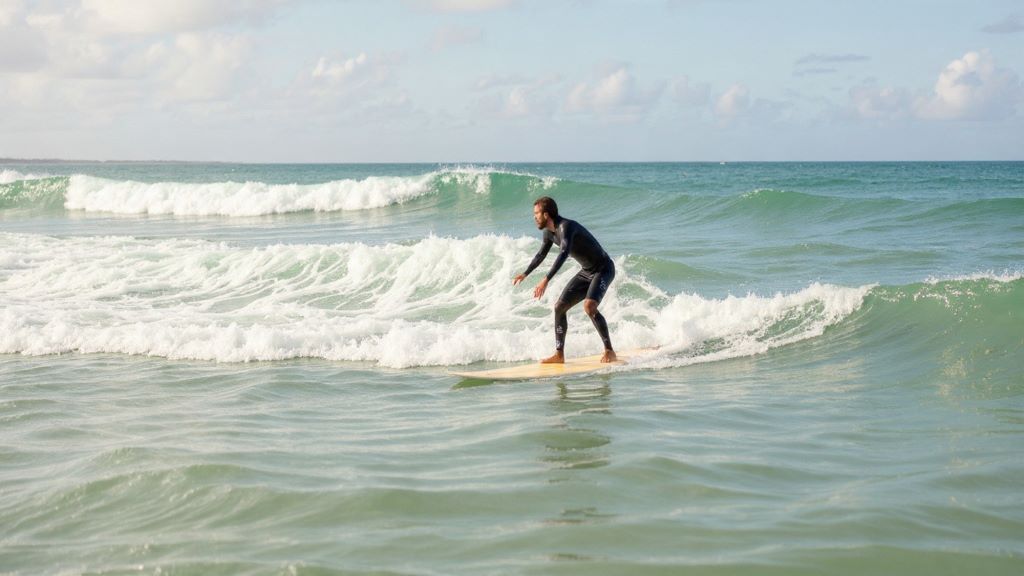
Catching small waves can be tricky. Many surfers struggle because they are riding the wrong board. The length of your surfboard makes a huge difference in how easily you can catch and ride smaller swells. At Cool Surfing Gear, we understand that choosing the right board transforms your surfing experience, especially when the waves are not pumping.
Small waves require more paddle power and flotation to generate speed. Therefore, selecting the proper surfboard length is essential for maximizing your wave count on those mellow days. A longer board provides more surface area, which helps you glide across flat sections and catch waves earlier. However, finding the perfect balance between length and maneuverability is key.
When you learn how to determine the right length surfboard, you will notice immediate improvements in your small wave sessions. The right dimensions help you paddle faster, catch waves sooner, and maintain momentum through slower sections. Additionally, the appropriate length reduces frustration and increases your overall enjoyment in the water.
Why Surfboard Length Matters in Small Waves
Small waves lack the power and push of larger swells. Consequently, surfers need boards that compensate for this reduced energy. Length directly impacts your ability to generate and maintain speed in weak conditions.
Longer surfboards offer several advantages in small waves. First, they provide greater paddling efficiency because of increased surface area. Second, they create more stability, which helps beginners and intermediate surfers feel confident. Third, they allow you to catch waves earlier in the lineup, giving you more rides per session.
Shorter boards struggle in small waves because they require more speed to perform. Without adequate wave power, short boards sink and stall. Meanwhile, a longer board keeps you afloat and gliding smoothly across the face of the wave.
Ideal Surfboard Lengths for Different Skill Levels
Your skill level plays a major role in selecting the right surfboard length. Beginners need different dimensions than experienced surfers.
Beginners
New surfers should ride boards between 8 and 10 feet long. These longer boards provide maximum stability and paddle power. The extra length makes catching waves significantly easier, which builds confidence quickly. Furthermore, the added volume helps you stand up and maintain balance during your first rides.
Intermediate Surfers
Once you have mastered the basics, you can ride boards between 7 and 9 feet. Intermediate surfers benefit from slightly shorter boards that offer more maneuverability while still providing adequate flotation. This range allows you to practice turns and generate speed in small waves without sacrificing wave-catching ability.
Advanced Surfers
Experienced surfers can handle boards as short as 6 to 8 feet in small waves. However, many advanced riders still choose longer boards for summer sessions because they maximize wave count. According to Surfline, even professional surfers switch to longer boards when the waves are small and mushy.
How Body Weight Affects Surfboard Length
Your weight directly impacts the volume and length you need. Heavier surfers require more flotation to stay on top of the water.
As a general rule, add one foot of board length for every 50 pounds of body weight when surfing small waves. For example, a 150-pound surfer should consider boards around 7 to 8 feet long, while a 200-pound surfer might need an 8 to 9 foot board.
Volume is equally important as length. The combination of length, width, and thickness determines total volume. More volume equals better flotation and easier paddling in weak surf. Therefore, consider both measurements when shopping for a small wave board.
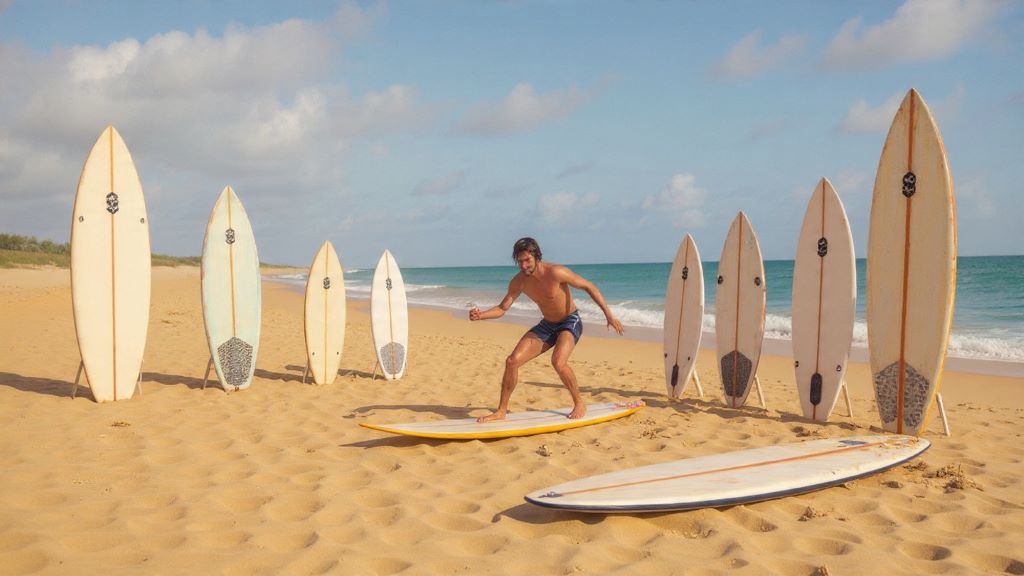
Best Surfboard Shapes for Small Waves
Length is just one factor in surfboard design. Shape also influences performance in small waves.
Longboards
Longboards typically measure 9 feet or longer. They are perfect for tiny waves because of their exceptional glide and stability. The traditional longboard shape features a rounded nose and wide tail, which creates maximum surface area. This design allows you to catch waves early and ride them all the way to shore.
Funboards
Funboards range from 7 to 8.5 feet long. They bridge the gap between longboards and shortboards, offering a blend of paddling power and maneuverability. The funboard shape works well for surfers who want to practice turns while still catching plenty of waves.
Fish Boards
Fish boards are shorter but wider and thicker than traditional shortboards. They usually measure 5 to 6.5 feet long but pack significant volume. The wide outline and swallowtail design help generate speed in weak waves. Fish boards excel in knee-high to chest-high surf.
Mid-Length Boards
Mid-length boards measure between 6.5 and 8 feet. They have become increasingly popular for small wave surfing. These boards combine the paddle power of longboards with the turning ability of shortboards. The mid-length category includes egg shapes and mini-mals, which are ideal for summer conditions.
Wave Height and Surfboard Length Guidelines
The size of the waves you surf influences your ideal board length. Smaller waves require longer boards for adequate speed generation.
For ankle to knee-high waves, choose boards 8 feet or longer. These tiny waves lack any real power, so maximum length helps you catch them and maintain momentum. Additionally, the extra glide allows you to ride waves that other surfers miss.
For waist to chest-high waves, boards between 6.5 and 8 feet work well. These waves have more push, allowing you to ride slightly shorter boards while still catching waves easily. Moreover, this range provides enough maneuverability to perform basic turns.
For head-high and larger waves, you can reduce board length significantly. However, many surfers still prefer longer boards in the 7 to 8 foot range for better wave-catching ability, especially in crowded lineups.
Width and Thickness Considerations
Length alone does not determine how a surfboard performs. Width and thickness also play crucial roles in small wave surfing.
Wider boards provide more stability and paddling surface. A board that measures 22 to 23 inches wide offers excellent flotation for small waves. The extra width helps you generate speed through flat sections and maintain balance during turns.
Thicker boards add volume without increasing length. A board with 2.5 to 3 inches of thickness floats higher in the water and paddles faster. Consequently, thicker boards catch waves earlier and glide more efficiently in weak surf.
The combination of length, width, and thickness creates the total volume. For small waves, prioritize higher volume over all other factors. According to The Inertia, volume is the most important measurement for matching a surfboard to your ability and the wave conditions.
Testing Different Lengths
The best way to find your ideal surfboard length is through experimentation. Rent or borrow different boards to test various dimensions in small waves.
Start with a longer board than you think you need. Many surfers are surprised by how well they perform on extra length. The increased wave count and speed generation often outweigh any perceived lack of maneuverability.
Pay attention to how easily you catch waves. If you are missing waves that others are catching, you probably need more length or volume. Conversely, if you feel like the board is too sluggish during turns, you might benefit from reducing length slightly.
Keep notes about each board you try. Record the dimensions, wave conditions, and your impressions. This information helps you identify patterns and narrow down your preferences.
Common Mistakes When Choosing Surfboard Length
Many surfers make errors when selecting board length for small waves. Avoiding these mistakes saves time and money.
The most common mistake is riding a board that is too short. Ego often drives surfers to choose smaller boards than they can handle. However, riding an undersized board in small waves guarantees frustration and fewer rides.
Another mistake is ignoring personal fitness level. Surfing requires significant paddling strength. If you are not in excellent shape, add extra length to compensate. The additional flotation reduces the physical demands of paddling.
Finally, some surfers forget to account for local wave conditions. If your home break consistently produces small, mushy waves, invest in a board specifically designed for those conditions rather than a high-performance shortboard.
Conclusion
Selecting the best surfboard length for catching small waves depends on multiple factors. Your skill level, body weight, fitness level, and local wave conditions all influence the ideal dimensions. Generally, longer boards between 7 and 10 feet work best for small wave surfing because they provide superior paddling power, stability, and speed generation.
Remember that small waves require more board than large waves. Do not let ego prevent you from riding the length that maximizes your performance and enjoyment. Experiment with different dimensions, pay attention to volume, and choose shapes designed specifically for weak surf.
The right surfboard length transforms frustrating sessions into fun-filled days in the ocean. Invest time in finding your perfect board, and you will catch more waves and progress faster as a surfer.
Frequently Asked Questions
What is the best surfboard length for a beginner in small waves?
Beginners should ride surfboards between 8 and 10 feet long in small waves. This length provides maximum stability, paddling efficiency, and wave-catching ability, which helps new surfers build confidence and catch more waves during their learning phase.
Can I use a shortboard in small waves?
You can use a shortboard in small waves, but it will be significantly more challenging to catch waves and generate speed. Shortboards require powerful waves to perform well. Most surfers find that boards 7 feet or longer work much better in small, weak surf conditions.
How does my weight affect the surfboard length I need?
Heavier surfers need longer boards with more volume to stay afloat and paddle efficiently. Add approximately one foot of board length for every 50 pounds of body weight when surfing small waves. Weight directly impacts the flotation you need for optimal performance.
What is better for small waves: a longboard or a funboard?
Both longboards and funboards work well in small waves, but they offer different experiences. Longboards provide maximum wave-catching ability and glide, while funboards offer more maneuverability. Choose based on your skill level and whether you prioritize catching waves or practicing turns.
Should I choose a longer surfboard if I am not very fit?
Yes, longer surfboards are ideal if you are not in peak physical condition. The extra length provides more flotation, which reduces the effort required to paddle and catch waves. This makes surfing more enjoyable and less physically demanding, especially in small waves.
Related Topics:
The Role of Surfing in Pre-Colonial Hawaiian Society: A Cultural Legacy
Exploring the Best Channel Islands Surf Spots in California