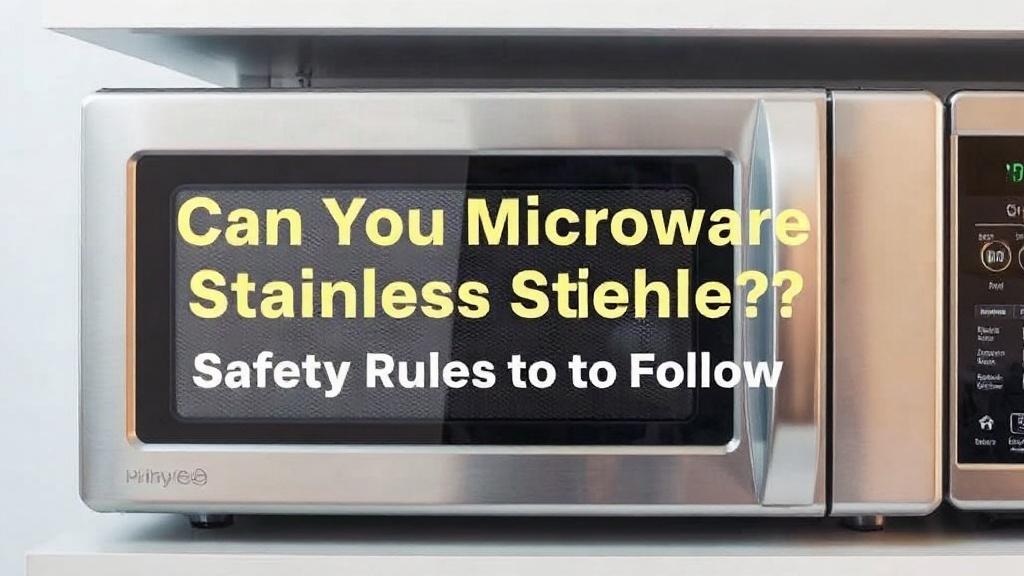
A cold bowl of soup, a stainless steel container, and 90 seconds on the clock. You press start, then wonder whether the metal will spark or the food will heat up fine. It’s one of the most common kitchen safety questions people ask.
Quick answer: You can microwave stainless steel only when the manufacturer labels the item microwave-safe. Bare, thin metal reflects microwaves and can arc, spark, or damage the oven. Most steel cookware and unmarked containers are not safe, so check the label first and use glass or ceramic as a default.
This article explains the physics behind the risk, the exceptions that actually work, and the rules to follow so you can decide with confidence instead of guessing.
Can you microwave stainless steel?
The question comes down to how microwaves behave around metal. A microwave oven generates electromagnetic waves that make water molecules in food vibrate, and that friction creates heat. Those waves cannot pass through most metals. They bounce off the surface instead.
With a smooth, thick metal object, reflection is fairly predictable. The trouble starts at edges, corners, and thin sections. Microwaves build up electric charge at those points, and the charge can jump through air as a spark — the same effect as static electricity, but in bursts. That sparking is called arcing, and it can scorch the oven’s ceiling, pit the metal, or start a small flame.
Arcing isn’t the only outcome to watch for. Metal can also reflect enough energy back toward the magnetron to stress the component over repeated exposure, which shortens the oven’s life even without a visible spark. And because the waves never reach food shielded behind steel, part of the meal stays cold while the rest overheats — a quiet problem that shows up later at the dinner table rather than during the cycle.
Why some metal is allowed
You have probably seen a frozen meal with a metallic film load go straight into a microwave. That is because engineers design specific materials to cope with the field. Aluminum foil in tiny, flat strips stays safe when it sits under a layer of food. Thin metal film trays are measured to avoid charge buildup. These are calculated exceptions, not a general permission slip for metal.
Stainless steel containers fall into a gray zone because the material itself is not the whole story. Shape, thickness, size, and whether a lid is on all change the outcome.
What “microwave-safe” actually means
A microwave-safe label means the product passed testing for that use. Glass, ceramic, and labeled plastics are obvious examples. For metal, a safe rating usually means the item has rounded corners, a proper coating, and no exposed sharp edges.
| Factor | Safer | Riskier |
|---|---|---|
| Label | Marked microwave-safe | No label or “oven-safe only” |
| Edges | Rounded, smooth | Sharp corners, exposed rims |
| Thickness | Thick, solid walls | Thin, foil-like walls |
| Contents | Food covers the base | Empty or half-empty container |
Takeaway: stainless steel is not banned outright, but it needs an explicit microwave-safe rating before it goes inside.
Why does it matter if you microwave stainless steel?
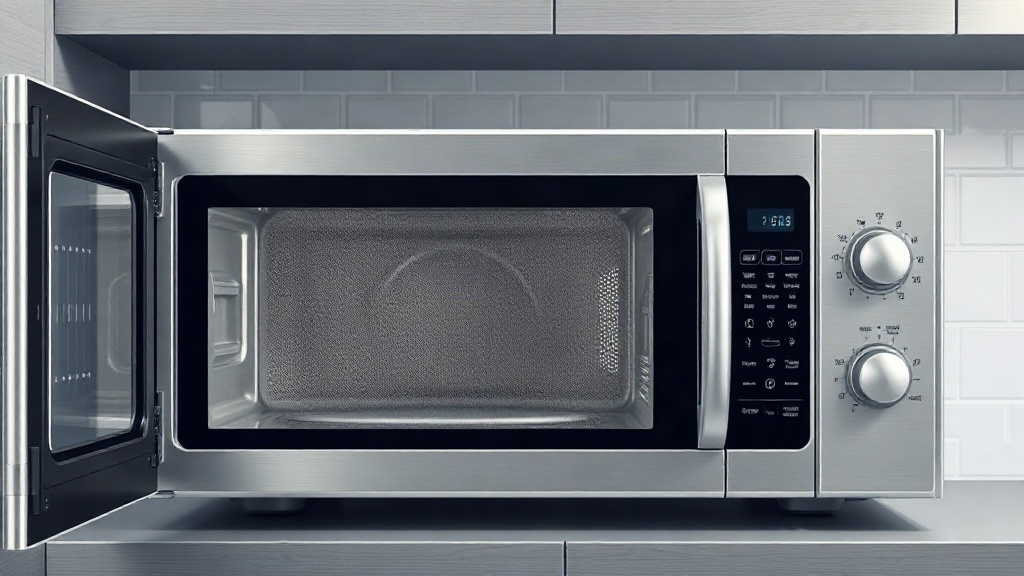
Getting this wrong has real consequences. The most obvious is damage to the appliance. A single bad arc can crack a glass turntable, scorch the interior wall, or ruin the magnetron that generates the waves — a repair that often costs more than a new oven. Food covered with burning sparks is also a genuine fire risk.
There is a subtler issue too: uneven heating. Metal blocks microwaves from reaching part of the food. A stainless steel bowl with a steel rim may leave the center of the meal cold while the exposed top is piping hot. That unevenness is a food safety concern with leftovers, when you need everything reheated through.
People reach for stainless steel containers because they dislike plastic and find glass heavy. Those are fair reasons. The fix is not to abandon steel for the microwave, but to choose pieces rated for it or transfer food to a plate first. It costs seconds and saves the oven.
Consider the cost comparison in concrete terms. A replacement turntable plate runs fifteen to forty dollars, a scorched interior panel can’t really be repaired, and a failed magnetron typically means buying a new unit outright. Against that, a labeled microwave-safe bowl costs less than a single service call. The math favors caution every time you hesitate over an unmarked container. There is also the question of what happens after a small arc. Even when the oven survives, pitted metal on the container creates new sharp edges and rough spots, which are exactly the features that concentrate charge and spark again next time. A piece that arced once should be retired from microwave duty permanently rather than tested a second time.
Shallow, smooth steel with a microwave-safe label is far less likely to spark than a deep pot that fills most of the cavity. Size and clearance matter as much as material.
Takeaway: the stakes are appliance damage, fire risk, and unevenly heated food — all avoidable with a quick label check.
Best practices
Start with the label. If a container is marked microwave-safe, follow the instructions exactly, including time limits and recommended fill levels. If the label is missing, treat the item as unsafe for the microwave and use another vessel.
Match the container size to the portion. A large steel vessel holding a small amount of food leaves wide bare surfaces exposed to the field, and those areas are where trouble begins. Choose the smallest rated container that comfortably holds the meal, so food covers as much of the interior base as possible. Give the food a stir partway through, even if the container instructions don’t demand it. Moving the contents redistributes moisture and evens out the heat, which reduces the chance of a dry patch sitting against bare metal. A quick stir also lets you glance at the base for any sign of sparking you might have missed.
Set up the container correctly
Place food so it fully covers the bottom of the container. A bare steel surface with nothing to absorb the energy is far more likely to spark. Keep the container roughly two inches away from the oven walls and never let steel touch the interior surface directly.
Keep the lid issue straight
A tight-fitting steel lid turns a container into a sealed metal chamber. Leave lids off, or vent them if a plastic lid is involved. Stir food halfway through so heat spreads evenly and any hot spots calm down.
Choose your timing and check often
Use shorter bursts — 30 to 60 seconds — and check the result before adding more time. Watch for sparks, crackling, or a strange burning smell, and stop immediately if any appear. Use oven mitts; steel gets hot from the food even if the metal itself doesn’t absorb microwaves.
Never microwave a sealed steel container or a metal thermos. Pressure builds with nowhere to escape, and the result can be a dangerous rupture.
Glass and ceramic containers remain the simplest default. They heat food evenly, and you never have to second-guess a label. [INTERNAL_LINK_1]
Takeaway: check the label first, cover the base with food, leave clearance, and use short bursts with a check each time.
Common mistakes to avoid
The biggest mistake is assuming “stainless steel” is one uniform category. A steel water bottle, a baking pan, and a rated food container behave very differently. Skipping the label check is where most problems begin.
Another mistake is microwaving steel with no food inside. People do this to dry a container or warm it up. An empty metal vessel offers no water molecules to absorb energy, so the field has nowhere to go but the edges — a textbook recipe for arcing.
Watch for hidden metal too, not just the container itself. Gold-rimmed plates, twist ties, foil-lined lids, and metal-handled utensils resting in the food all behave like small antennas. People focus on the bowl and forget the accessories, then blame the steel when a trim ring or a stray clip is what actually sparked. Another overlooked error is running the microwave with the steel container pressed against a metal rack or the turntable’s metal spindle. Contact between two metal surfaces concentrates energy at the joint and produces buzzing or arcing even when the container itself is rated safe.
Watch the nesting and stacking habit
It is tempting to stack two steel containers or nest a smaller piece inside a larger one. Contact points between metals concentrate charge and spark. Use one container at a time.
Do not ignore the early warning signs
Sparks, a buzzing sound, or a metallic burning scent are not normal. Many people assume the microwave is just noisy and let it run. Stop the cycle, unplug the oven if needed, and let it cool before inspecting for damage.
Some people also mistake “dishwasher-safe” for “microwave-safe.” Those are different tests. A sturdy steel pan may survive any dishwasher cycle and still arc in seconds.
If an item sparked, the microwave may still work. Check the interior for scorch marks and test with a mug of water before trusting it with a full meal.
Takeaway: treat each piece on its own merits, never run an empty steel container, and stop the oven the moment you see or hear trouble.
FAQ
Is it safe to microwave stainless steel for just 30 seconds?
Short bursts reduce exposure but do not remove the risk. An unmarked steel container can arc within five seconds. A labeled microwave-safe piece is the only version worth trying, even briefly.
What happens if I accidentally microwave a stainless steel spoon?
A single small utensil often just sparks or reflects energy without lasting damage. Stop the oven, remove it, and inspect the interior for scorch marks before using the appliance again.
Are stainless steel water bottles microwave-safe?
Almost never. Bottles are sealed, deep, and usually unmarked for microwave use. The pressure and arcing risk make them one of the worst choices for reheating.
Does stainless steel heat up in the microwave?
The metal itself absorbs little energy directly. It gets hot because it sits against hot food. That means the rim of the container can scald your hand even after a short cycle, so use a mitt.
Can I microwave a stainless steel container if it has a plastic lid?
Only if the container and lid are both labeled microwave-safe, and you vent or remove the lid. Mixing a rated base with an unrated lid defeats the point.
Conclusion
Stainless steel and microwaves can coexist, but only on the label’s terms. Bare, unmarked, or thin steel carries real arcing and fire risk, while a container tested and rated for microwave use is a reasonable choice. Cover the base with food, leave clearance from the walls, skip the lid, and use short bursts.
Your next step is simple: pull out the container you were about to use and read the bottom. If there’s no microwave-safe marking, transfer the food to a glass or ceramic dish. That one check keeps your oven, your kitchen, and your meal safe every time you ask can you microwave stainless steel.